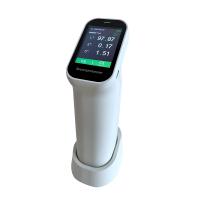
The tomato processing industry uses Colorimeters and specific standards to facilitate color measurement.
Color is one of the most valuable characteristics when shopping for food. The agri-food industry knows that consumers consider a product's look, smell, taste and texture when deciding to buy it. For this reason, the department conducts quality control to quantify and establish criteria for more appropriate values for each organoleptic characteristic of food products.
So, for example, the tomato processing industry assesses color using instruments and standards created specifically to measure these products.
Tomato Color Measurement
Color can be measured in tomato-derived products such as sauces, pastes, juices or ketchups. It is usually measured objectively using coordinate coordinates and the calculation of the color difference (ΔΕ) between the standard and sample. These coordinates represent different values. Thus, the L* coordinates show values related to sharpness or brightness, while the a* coordinates show values related to the red-green component and the b* coordinates show values related to the yellow-blue component. ΔΕ, on the other hand, determines the color difference, measuring the distance between points in a three-dimensional space (such as CIELab* or Hunter Lab color space).
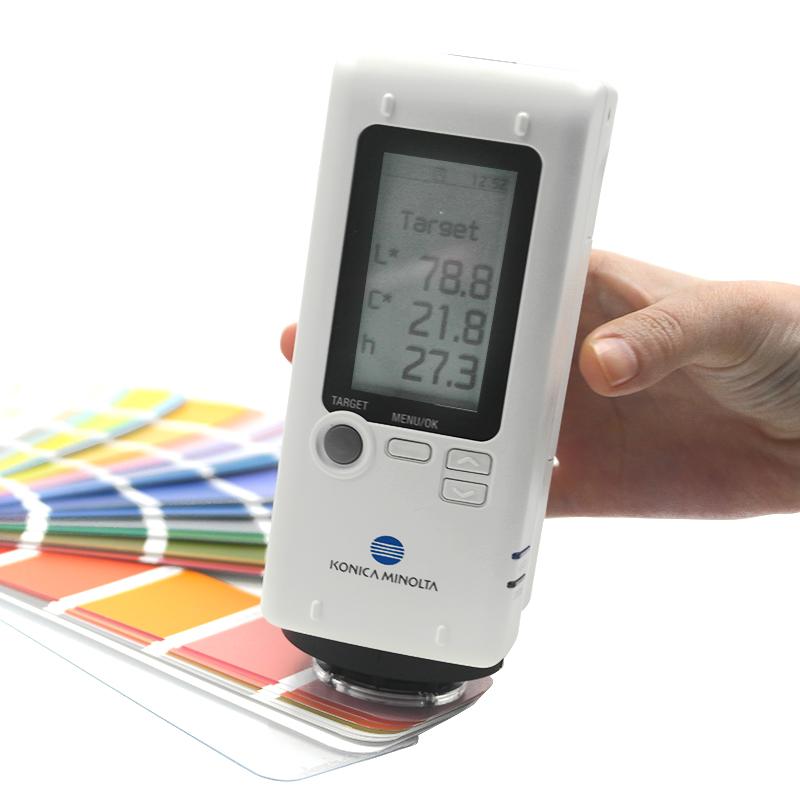
Colorimeters and Specific Standards for Tomato Measurements
The industry dedicated to tomato processing has considerable importance in the agri-food sector. It is therefore no surprise that manufacturers of measuring instruments consider marketing Colorimeters and specific standards for measuring tomatoes and their derivatives.
Instruments and standards of this type are helpful for color readings as they contain specific indicator formulas for tomato color in sauces, pastes, juices and ketchups.
Specific Colorimeters for tomato measurements also include specific "tomato red" color standards. Now, there are European standards and American standards, which are visually different. In the case of European standards, it can be said that they are verified in reference materials. The Institute or the research centers of the Commission of the European Communities are the main standardization bodies. The European standard is designed to be similar in color to tomato paste of the so-called "Italian plum tomato" variety.
Other organoleptic properties of tomato products
The tomato processing industry also considers other organoleptic properties when evaluating the quality of its products. These include texture, smell or taste.
In this sense, in addition to the sensory tests that can be carried out through the food tasting process, there are also objective tests using measuring instruments.
Therefore, while properties such as texture, smell, and certain appearance and taste tests can be performed through sensory testing, certain elements related to appearance and taste need to be objectively quantified through the use of measuring instruments.
In this way, as we have seen before, both appearance-related color and flavor-related sugar content in products can be objectively quantified. Therefore, to adequately control the quality of tomato-derived products, it is also necessary to measure the index of refraction (o Brix) to determine the sweetness of sauces, pastas, juices or tomato sauces.
Amount of sugar Brix
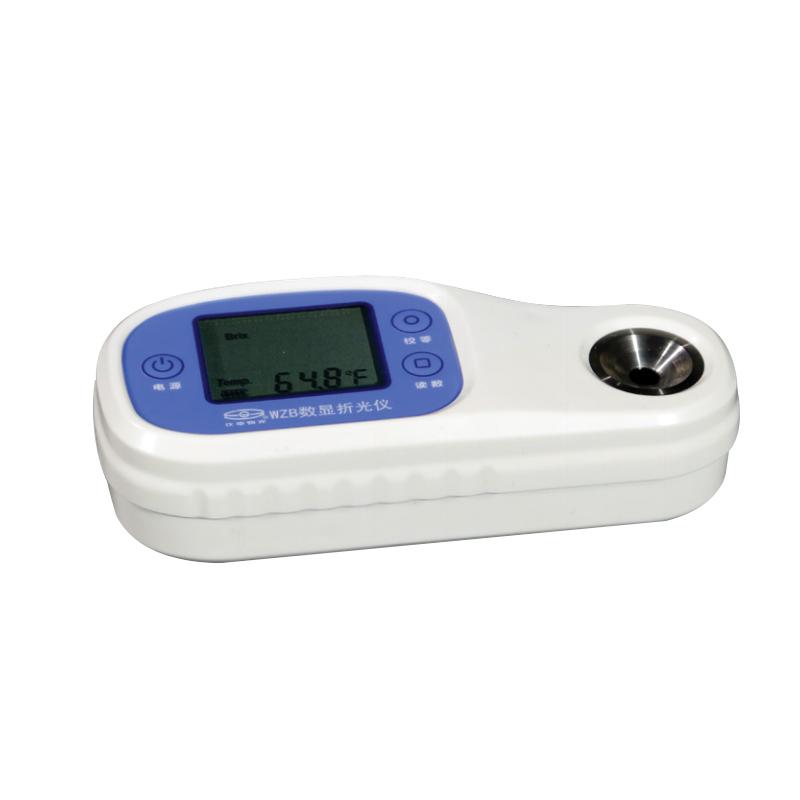
Total soluble solids is used to measure the sugar content in fruits and vegetables. This amount is determined in degrees Brix or the index of refraction.
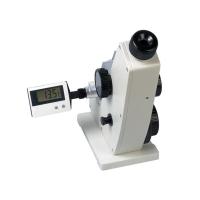
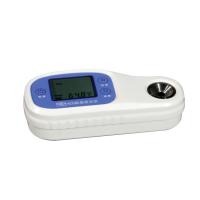
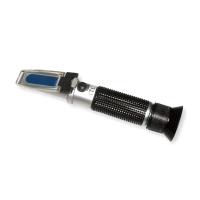
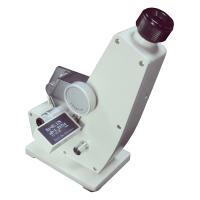
For this purpose, the food industry uses refractometers, which are measuring instruments based on the physical principle of light refraction. Refraction is the change in direction of light or other radiation that occurs when it passes obliquely from one medium to another of a different density.
Refractometers usually provide Brix values in addition to measuring the refractive index. Therefore, it is not uncommon to find quantitative information on Brix on the labels of tomato products.