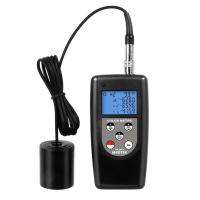
The Gardner color scale is used for transparent materials and substances such as oils, varnishes or resins.
The Gardner color scale is one of many established gradients for color measurement. Specifically, the scale is used to measure color in clear liquids, ranging from light yellow to dark brown.
Products from petroleum and pine wood - such as oil, varnish, rosin or gasoline etc. - use this scale in quality control during the manufacturing process.
color
The visible spectrum, the range that the human eye can perceive, ranges from approximately 700nm (red) to 400nm (violet) wavelengths. Thus, short wavelengths correspond to violet, while long wavelengths correspond to red. In between is the entire spectrum of colors that humans can perceive. Undetectable to the human eye, it detects ultraviolet and infrared rays.
As for the color, we can say that it is not an intrinsic property of the material, but a result of the interaction of radiation (light/source) with the object, detected by the Detector (observer), and with a definite interaction of light with the object (geometry) . As such, it is a psychophysical sensation, a mental response to physical stimuli. Humans have specialized cells that detect different wavelengths in the visible region of the electromagnetic spectrum.
Objectively Measure Color
Now, in order to measure color objectively, different models and color scales have been developed, each suitable for one sector or another. So, for example, among color models, there is the CMYK model - the subtractive model usually used in the graphics industry - the RGB model based on additive composition, usually used in digital media - or the CIE model.
Regarding the color scale, it needs to be said that, depending on its application, the color scale is also very large. So, for example, we can find measurements based on the color space CIE laboratory, in the Gardner color scale (for oils, varnishes, resins and fatty acids) or the Saybolt color scale (for measuring color in fuels). Other products can also use specific scales for color measurement, such as controlling the color of waste water and drinking water by the scale apha (American Public Health Association); controlling the color of beer and grape juice by the EBC (European Brewing Convention) unit; o by calculating the ICUMSA (International Committee for Uniform Methods of Sugar Analysis) values to assess color in sugar and molasses.
In the case of Gardner color, it is common practice for many companies to measure it by visual comparison, however, it needs to be remembered that this measurement is not objective and can lead to errors. In contrast, objective measurements made with calibrated equipment are recommended because they remove subjective elements in visual comparisons, such as interpretation and the experience of the subjects.
Gardner color scale
The Gardner Color Scale is designed to measure the color of standards or liquid standards in oils, varnishes, fatty acids and resins. This scale establishes a yellowing scale from 1 to 18, where 1 is light yellow and 18 is dark brown.
For example, ASTM D1544, Standard Test Method for Color of Clear Liquids (Gardner Scale), establishes a standard test method for clear liquids using the Gardner scale.
On the other hand, ASTM D6045, Standard Test Method for Color of Petroleum Products by Automated Tri-Stimulus Method, establishes a standard test method for color measurement of petroleum products and defines the correlation with the Gardner color scale.
ASTM D6166, Standard Test Method for Color of Pine Tree Chemicals and Related Products (Instrumental Determination of Gardner Color) establishes a method for measuring the color of pine chemical products using the Gardner color scale described in the ASTM D1544 standard.
measuring instrument. Colorimeters and Color Scales
The standards used for the test methods specified in ASTM D1544 follow a gradation from 1 to 18, each with chromaticity coordinates, luminous transmittance, and transmittance tolerances specified in the standard.
As for the equipment used for the test method specified in the standard ASTM D1544, it needs to comply with a series of instructions specified in the standard, involving the type of light source, the surrounding field of view, the field of view, and the separation of the standard from the sample.
Regarding the equipment required for ASTM D6045 standardized testing, the wavelength range needs to be between 380 and 780nm. In addition, the standard establishes a series of specifications that these devices need to meet, such as linearity, wavelength accuracy and geometric conditions. These Spectrophotometer s need to be able to calculate tristimulus (CIE XYZ) values using Standard Illuminant C (CIE) and the CIE 1931 Standard Observer.
Regarding the standard ASTM D6166, it is indicated that the device is capable of measuring transmitted color and reporting the result on the Gardner color scale. Otherwise, the standard indicates that an instrument capable of measuring transmitted color and reporting tristimulus values or chromaticity coordinates using standard illuminant C and a 2º observer can be used.
standardized test
Color measurement test in transparent liquid. ASTM D1544 standard
ASTM D1544, Standard Test Method for Color of Clear Liquids (Gardner Color Scale), sets a method test that covers the measurement of clear liquids by comparison with an arbitrary numbered glass standard.
The method is suitable for oils, varnishes, fatty acids, polymerized fatty acids and resin solutions.
The process involves filling a glass tube with the material under test and comparing it to a glass standard. Subsequently, it is necessary to determine which standard is similarly high in brightness and saturation as the sample.
This method establishes repeatability and reproducibility standards.
Test method for measuring color of petroleum products. ASTM D6045 standard
ASTM D6045, Standard Test Method for Color of Petroleum Products by Automatic Tri-stimulus Method, sets out the method tests covering the automatic color determination of the color of various petroleum products, such as automotive and aviation gasoline, aviation turbine fuel, naphtha, kerosene, medicinal white oil, diesel fuel oil, heating oil and lubricating oil, by automatic tri-stimulus method. However, according to the standard, this test method is not suitable for solid samples, petroleum products containing colorants and petroleum products with extreme fluorescence.
This method indicates that transmittance measurements are made to determine CIE tristimulus values (according to CIE Standard Illuminant C and CIE 1931 Standard Observer). They are then instrumentally converted to Saybolt colors or ASTM colors by the appropriate algorithm and the color of the sample is reported in accordance with other test methods referenced in the standard.
According to the standard, the determination of the color of petroleum products is mainly used for production control purposes and is an important quality characteristic because the color is easily observed by the product user. In fact, sometimes color is an indicator of the sophistication of a product. Therefore, a change outside the established range may indicate possible contamination with another product.
Measures the color of chemical products derived from pine trees. ASTM D6166 standard
ASTM D6166, Standard Test Method for Color of Pine Chemicals and Related Products (Instrumental Determination of Gardner Color) establishes a method for measuring the color of pine-derived chemical products such as tall oil, tall oil fatty acid, or rosin, among others.
The standard states that the method established therein is more accurate than the method described in ASTM D1544.
Regarding the precision and bias of this method, the standard states that the color of three materials was studied in 1996, with the participation of 13 laboratories. The method determines the repeatability limit and reproducibility limit, and the corresponding standard deviation. With regard to bias, the standard states that bias has not been determined because there is no adequately accepted reference material to determine the bias of the procedure in this test method.