The enamel slurry becomes a colloidal suspension system due to the addition of clay, water and electrolytes when the enamel frit is ground into a slurry.
Through the adsorption performance of the clay colloid on the heterogeneous ions and some ions in the water solvent, the finely dispersed particles of the enamel frit are ion-exchanged to form a water-soluble film of a certain thickness, and the suspension capacity of the enamel slurry is enhanced.
The composition of the enamel slurry and the particle size of the enamel slurry have a relatively important influence on the suspension performance, mainly depending on the amount of certain ions they can exchange.
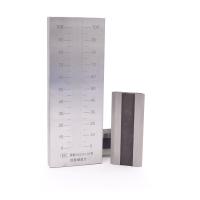
The thickness of the enamel slurry has an impact on the enamel operation and the quality of the enamel product. Generally speaking, the finer the enamel slurry, the better its suspension, the lower the firing temperature, the more fully the reaction between the enamel lichen and the iron billet, and the higher the adhesion strength of the enamel lichen. However, when the enamel slurry is too fine, it is easy to increase the consistency of the enamel slurry, increase thixotropy, make it difficult to paint, and tend to shrink. When the enamel paste is too thick, the suspension will be reduced, and it will easily precipitate, and the surface fineness of the porcelain layer will be poor, which will affect the gloss.
Various enamel pastes have different requirements for the thickness of the enamel paste due to their different uses. For example, the mesh number of lichen and titanium enamel is 140 mesh, and the sieve allowance is 1.0~1.5g; the sieve of curly enamel is 140 mesh, The sieve allowance is 3.0~4.0g; the bright base material is sieved with 200 mesh steel plates at one time, and the sieve allowance is 4.0~5.0; the cast iron white lichen is sieved with 200 mesh, and the sieve allowance is 0.5~1.0g; The black bright lichen is sieved with 200 mesh, and the sieve residue is 6.0~8.0g.