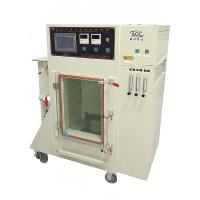
Over the past few years, cyclic corrosion testing (CCT) has become common practice in the automotive industry.
CCT is designed to accelerate corrosion in a laboratory environment to test how materials used in the automotive industry will react to the weather, stimuli and conditions encountered on the road. This in turn enables manufacturers to prepare materials accordingly, which contributes to the longevity and durability of modern vehicles.

What is a Cyclic Corrosion Test?
CCT is performed in several different ways depending on the type of exposure the manufacturer wants to test. In some cases, materials are submerged in water or in corrosive materials.
In other tests, the material was subjected to a "drying" process in an external environment. In other cases, materials may be sprayed or exposed in the CCT chamber. It is not uncommon for CCT to be a somewhat complex multiple exposure process, where the material is subjected to different compounds one after the other.
Why is CCT popular in the automotive industry?
Hyundai excels in almost any situation, from parking outside the Roosevelt Hotel to splashing mud, silt and grime on a spring mountain road. Therefore, the materials used to make modern vehicles need to be strong and durable.
Unfortunately, manufacturers are unable to perform rough road tests on every brand new vehicle they produce to determine how these components will hold up to road salt and corrosive materials. This is where CCT comes in.
By providing a platform that manufacturers can use to test automotive materials without damaging the vehicle itself, CCT allows manufacturers to equip their cars with durable, road-ready materials that already exist and are done in the lab.
Which auto parts need to test the cyclic corrosion test CCT?
CCT is used to test various automotive components.
In general, any component that will come into contact with corrosive substances or present a risk of galvanic or crevice corrosion will be tested in a CCT chamber. If a part proves to be susceptible to corrosive materials, it is often coated with a material designed to prevent corrosion and keep the part intact.