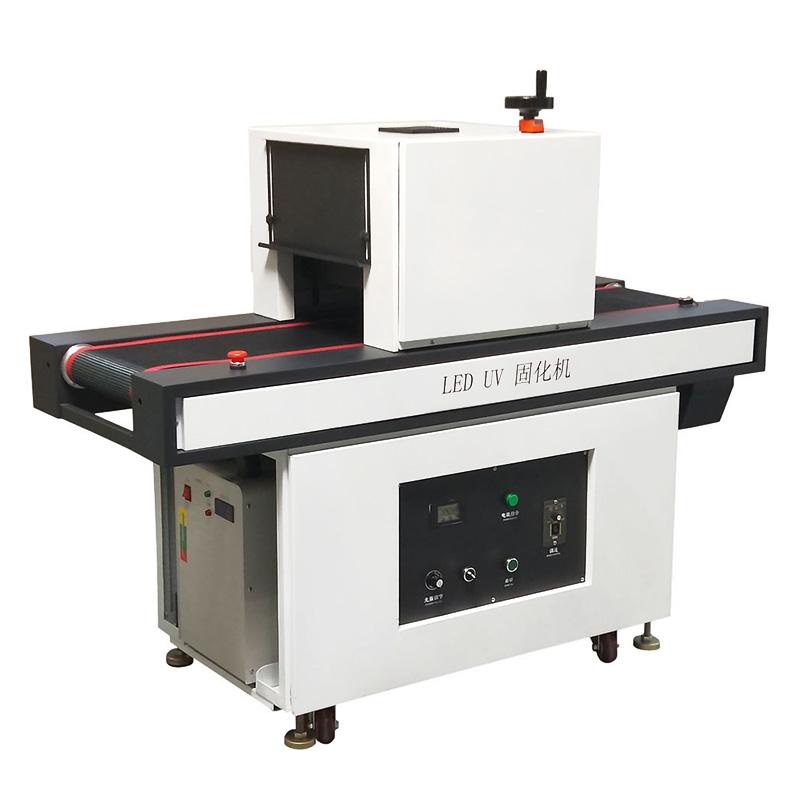
Ultraviolet ink, also known as UV ink, is made of ultraviolet radiation of a certain wavelength and cured by instantaneous photochemical reaction polymerization. UV curable inks were first used in heavy plate printing in the United States in 1969. In 1971, Japan began to apply it to metal printing and self-adhesive printing. It is an environmentally friendly ink that has developed rapidly in recent years. It has the characteristics of instant curing, no volatile solvent, simple and convenient use, etc., and quickly occupied the packaging and printing market.
Composition of UV ink
The main components of UV ink are polymerized prepolymers, photosensitive monomers, and photoinitiators, and the auxiliary components are colored pigments, fillers, additives (leveling agents, defoamers, polymerization inhibitors), etc.
1. Polymer prepolymer is an important component that determines the performance of UV varnish coatings, and is the basic component of UV inks. It is a film-forming material whose properties play an important role in the curing process and the properties of the cured ink film. Generally classified according to the skeleton structure. The skeleton structure affects the hardness, friction resistance, adhesion, light resistance, chemical resistance and water resistance of the coating. From a structural point of view, oligomers are low-molecular resins containing "C=C" unsaturated double bonds, such as acryloyl, methacryloyl, vinyl, allyl, etc. There are mainly epoxy acrylic resins, polyurethane acrylic resins, polyester acrylic resins, polyether acrylic resins, polypropylene acrylate resins, unsaturated polyester resins and other resin types. Under the same conditions, the photocuring speed of acryl is very fast, so the oligomers are mostly acrylic resins.
2. Photosensitive monomer (reactive diluent)
UV inks and UV varnishes need to have a viscosity suitable for the applicator when coating. Generally, adding 20%~80% monomer can reduce the viscosity of prepolymer. At the same time, the monomer polymerizes itself and becomes part of the cured film.
Reactive diluent, also known as cross-linking monomer, is a functional monomer. Its role in the ink is to adjust the viscosity, curing speed and cured film properties of the ink. Reactive diluents also have "C=C" unsaturated double bonds in structure, which can be acryloyl, methacryloyl, vinyl and allyl. Given the high photocuring speed of acryl, most reactive diluents in use today are acrylate monomers. Due to the different content of acryloyl group, it can be divided into three types: monofunctional group, bifunctional group and multifunctional group. Functional reactive diluents have different diluting effects and curing speeds. In general, the more features, the faster the cure, but the less effective the dilution.
Traditional reactive diluents, such as styrene and first-generation acrylate monomers, are highly toxic. Some acrylate monomers are strong irritants to the skin. In order to reduce the stimulation of reactive diluents to the skin, there are usually two methods: one is to increase the molecular weight of the monomer through the ring-opening polymerization of ethylene oxide, propylene oxide and hexyl ester; the other is to change the ester structure of the monomer; One is to change the previous alcohol esterification method. After adding alcohol to the acryl group, the irritation effect of the multifunctional monomer on the skin is greatly reduced. For example, when neopentyl glycol diacrylate is synthesized by esterification, its pH value (skin irritation index) is 4.96, while when it is synthesized by addition method, its pH value is 0.3.
In recent years, some monomers with better performance have been developed, such as alkoxy acrylate, carbonate monoacrylate, imidazolyl monoacrylate, cyclic carbonate monoacrylate, epoxy silicone monomer, silicone Acrylate and vinyl ether monomers. Some of them have already been commercialized. The selection of monomers should follow the following principles:
a. Low viscosity, good dilution effect;
b. Rapid curing;
C. Good adhesion to materials;
d. Less irritation and toxicity to the skin;
e. The coating has no peculiar smell.
3. A photoinitiator is a substance that absorbs radiant energy and produces reactive intermediates that initiate polymerization through chemical changes. It is the main ingredient required for any UV curing system. Photoinitiators can be divided into hydrogen capture type and split type: the hydrogen capture type is a bimolecular photoinitiator that needs to coordinate with a compound containing active hydrogen (usually called a co-initiator) to form a free radical through a hydrogen capture reaction ; The pyrolysis type is a single-molecule photoinitiator, which is decomposed into free radicals in the molecule after being excited by light.
(1) Hydrogen loss type
Take benzophenone (BP) as an example: when benzophenone is used alone, olefinic monomers cannot be photopolymerized, and the demand for it as a photoinitiator is different. Their reaction mechanism is different for alkyl or aryl. Oxygen can readily quench excited benzophenones when hydrogen atoms are extracted from alcohols or ethers. When hydrogen atoms are extracted from amines, the amine system is not easily quenched by oxygen because the ketone forms an excited state complex with the amine immediately after forming the excited state, avoiding the energy transfer to the oxygen molecule. Compared with alcohol ether systems, the possibility of energy transfer to the monomer is also reduced. Therefore, amines are generally used in practical applications. In addition to benzophenones, this class of photoinitiators also includes anthraquinones and thioxanthones, such as 2-isopropylthioxanthone (ITX), which is commonly used in UV inks.
(2) Pyrolysis type
Take benzoin ether as an example: benzoin ether was once a widely used photoinitiator in practice, and its characteristic is that its excited state can be directly decomposed into two free radicals. The free radicals generated can initiate monomer polymerization. The excited state of benzoin ether has a short lifetime and is not easily quenched by oxygen or styrene, so it can be used for styrene polymerization. And benzoin ether also has different degrees of thermal decomposition even in the absence of light, and has poor storage stability. Generally, stabilizers or polymerization inhibitors should be added. Currently commonly used is benzoin dimethyl ether (651). This kind of photoinitiator is commonly used in UV ink, such as 1173, 184, 369, 907 and so on. In recent years, some new photoinitiators have been developed, such as acyl phosphorus oxide 819 and BAPO developed by Ciba. It can still absorb well at 400 cylinders, and the photoinitiation efficiency is high; the absorption of the generated free radicals moves to the short-wave direction, which has the effect of "photobleaching"; it is beneficial to the light assimilation of the trunk and deep layers; the product is colorless , so it won't turn yellow. It is very suitable for screen printing UV ink with thick ink film. Due to the high price of acyl oxide phosphorescent initiators, they are often mixed with other photoinitiators, such as Ciba's 1700 (75% 1173+25% BAPO), 1800 (75% 184+25% BAPO).
The following principles should be followed when selecting a photoinitiator:
a. High light absorption efficiency in the UV range;
b. Good relative stability;
d. Good compatibility with prepolymers and monomers;
e. Small smell;
f. Low cost.
4. Other additives
Additives are mainly used to improve the performance of the ink. Additives commonly used in UV inks include stabilizers, leveling agents, defoamers, dispersants, waxes, etc.
(1) Stabilizer
Stabilizers are used to reduce thermal polymerization during storage and improve ink storage stability. Commonly used are hydroquinone, p-methoxyphenol, p-benzoquinone, 2,6-di-tert-butylcresol, etc.
(2) leveling agent
Use a leveling agent to improve the leveling performance of the ink layer, prevent shrinkage, smooth the surface of the ink film, and increase the gloss of ink printing.
(3) Defoamer
The defoamer is used to prevent and eliminate the air bubbles generated during the manufacture and use of the ink.
(4) Dispersant
The dispersant can make the pigment and binder in the ink wet well, so that the pigment has good dispersibility in the ink, shorten the grinding time during ink manufacturing, reduce the oil absorption rate of the pigment, and produce high-concentration ink; prevent Agglomeration and precipitation of pigment particles in ink. Dispersants are generally surfactants.
(5) wax
Wax is mainly used to change the rheological properties of ink, improve water resistance and printing performance (such as adjusting viscosity), reduce dirt, paper removal and other problems, and form a smooth wax film on the surface of the dry ink film to improve the friction resistance of printed products . In UV inks, wax also acts as an air barrier, reducing oxygen polymerization and facilitating surface curing. However, adding too much wax to the ink or choosing the wrong type of wax can reduce the gloss of the ink, impair the transfer performance of the ink, and prolong the drying time.