Salt spray corrosion testing is used to evaluate the corrosion resistance of metals, alloys, coatings and plastics. It can be used to evaluate the performance of materials in atmospheric and marine environments. This test can be used to evaluate new materials or compare different materials.
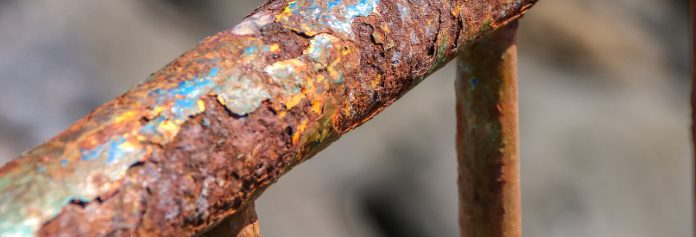
Corrosion test
Weldments intended to function in corrosive liquids, solids or gases may be subjected to appropriate laboratory-type corrosion tests which provide partial but satisfactory information on how the weldment will perform under actual service conditions.
Corrosion testing is specified in only a few codes and specifications, as most alloys and welding consumables are selected for a specific application based on previous experience.
In the field of welding, corrosion tests are performed on welded joints of stainless steel and nickel alloys to evaluate their resistance to corrosive environments in service. Corrosion testing comes in many forms, all of which involve making welded specimens in relatively thin material and immersing them in reagents at a temperature and for a length of time prescribed by the relevant code or code.
The most relevant of these are those designed to test resistance to pitting or intergranular corrosion. In welding technology, intergranular corrosion alternately known as sensitization, carbide precipitation and weld decay.
A suitable test for pitting corrosion is described in ASTM G48 "Standard Test Method for Pitting and Crevice Corrosion Resistance of Stainless Steel and Related Alloys Using Ferric Chloride Solutions".
ASTM Evaluation Tests for Corrosion Testing
The various ASTM evaluation tests used to detect intergranular corrosion are summarized below:
1. A 262 Practice A
This is the oxalic acid etch test. The test consisted of electrolytically etching polished samples with lamps/cm in a 10 weight percent (wt%) oxalic acid solution for 21.5 minutes at room temperature
In this test, chromium carbides or nitrides are preferentially dissolved and the microstructure gives an idea of chromium depletion, which is the cause of intergranular attack. If chromium carbide is not present, steps will be created at the grain boundaries due to the different etch rates of differently oriented grains. This test can be used to screen alloys for other tests.
2. A 262 Practice B
This is the ferric sulfate test applied to austenitic stainless steels. In this test, samples with a surface area of 5-20 cm2 are exposed for 120 hours to a boiling 600ml solution of 50wt% H2SO4 + 2.5wt% Fe(SO4) in an Erlenmeyer flask equipped with an Allihn condenser.
The samples were weighed before and after exposure, and the corrosion rate was calculated based on the weight loss. It detects the sensitivity associated with the Σ phase in chromium-nickel-molybdenum stainless steels (316, 316L, 317, 317L), which is responsible for rapid intergranular attack mainly in some specific nitric acid environments. The test was unable to localize telomere attachment sensitivity, which was only found in certain HNO3 acidic environments.
The ferric sulfate-sulfuric acid test did reveal a sensitivity related to the Σ-like phase composition in the stabilized stainless steels, AISI 321 and 347 grades.
3. A 262 Practice C
This is a nitric acid test, also known as the Huey test. In this test, a weighed 20-30 cm area of sample 2 was exposed to 600 mL of boiling 65 wt% HNO 3 in a one-liter flask equipped with a reflux condenser for five 48-hour periods.
After every 48 hours, the solution in the flask was changed and the sample was weighed. Determine the corrosion rate for each cycle and the average of five cycles. This test detects susceptibility to rapid IGC or intergranular attack associated with chromium carbide (Cr) precipitates and Σ-like phase precipitates.
Sigma-like phase precipitates are present in molybdenum-containing alloys and also in stable grades of austenitic stainless steel, such as types SS321 and Ss347. Such attacks may not be visible using a microscope. The test also revealed the susceptibility of all grades of stainless steel to terminal grain attack.
4. A 262 Practice D
This is a nitric hydrofluoric acid test. In this test, samples were tested in 10% HNO3-3% HF solution at 70°C for two 2 hrs (fresh solution was used for each cycle). This test is only applicable to molybdenum-containing grades of austenitic stainless steels (AISI 316, 316L, 317, 317L), and only exposes intergranular attack-sensitive 3C2) precipitates associated with chromium carbide (Cr), which have not been observed to correlate with Σ Intergranular attack associated with phase or terminal grain corrosion results in rapid intergranular attack for some nitric acids.
5. A 262 Practice E
This is the copper sulfate-sulfuric acid test. In this test, specimens were embedded in metallic copper filings and then immersed in boiling 6 wt % anhydrous copper sulfate and 16 wt % sulfuric acid for 24 hours. After the test, the specimen is bent through 180° using a mandrel with a diameter equal to the thickness of the specimen. The bent specimen is then examined under low (5 to 20X) magnification.
6. A 708
This test is similar to A 262 Practice E, except that a copper sulfate-sulfuric acid solution is used without the addition of copper, and the test duration is 72 hours.
7. G28
While all of the above tests apply to austenitic stainless steel alloys, this test applies to nickel alloys such as Hastelloy, Inconel, Inconel, and Carpenter 20 Cb-3. The testing procedure is identical to A 262 Practice B.
How important is corrosion testing?
As a corrosion engineer, you know that corrosion never sleeps. If left unchecked, corrosion can damage your product and reduce its useful life and integrity, rapidly eroding materials. You need to find ways to protect your metal from corrosion, and one common way to do this is through corrosion testing.
Salt spray corrosion test
Salt spray corrosion is a type of corrosion caused by the reaction of metals with a salt solution. This type of corrosion is especially harmful to metals because it causes pits and holes to form in the metal's surface. There are many different test methods that can be used to evaluate the susceptibility of metals to salt spray corrosion. One of these tests is the ASTM B117 test method.
The ASTM B117 test method involves exposing a metal sample to a salt spray solution for a period of time. The amount of corrosion that has occurred on the metal surface is then assessed. This test can be used to help determine the corrosion resistance of metals in environments where salt solutions are present.
A common way to conduct salt spray corrosion testing is to use a salt spray cabinet. The cabinet is filled with an atomized saline solution, creating a mist. The mist then comes into contact with the metal sample to be tested. Cabinets are typically set to maintain a temperature of 35 degrees Celsius and a relative humidity of 95%. This environment causes accelerated corrosion of the metal.
