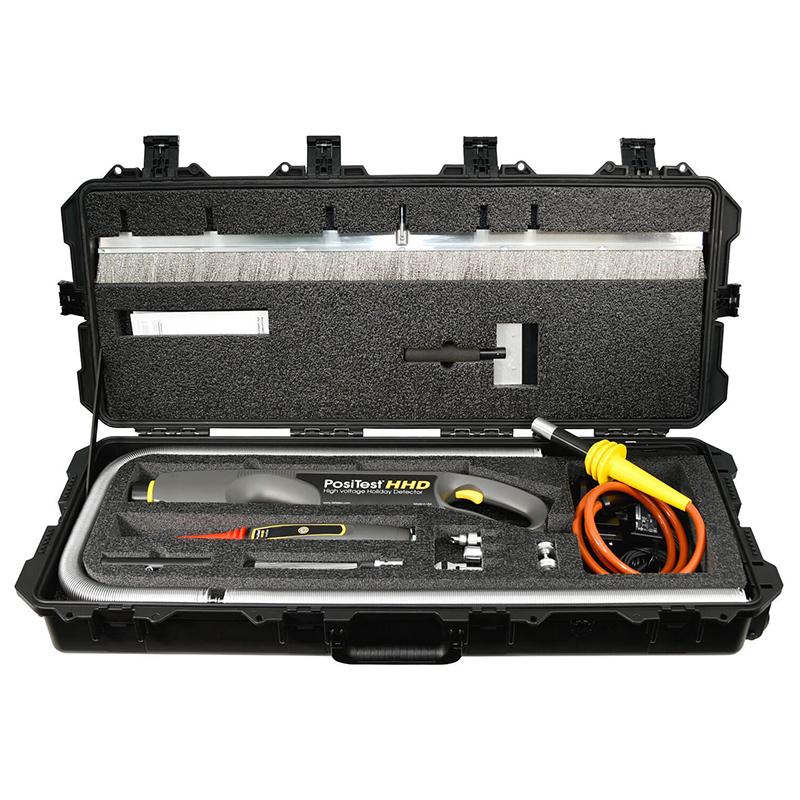
The output voltage of the high-voltage pulse type leak detection instrument is usually around 900~15000V, and in some cases, the voltage can be as high as 40000V. This instrument is used to locate holidays (film discontinuities, void spots, inclusions, or areas of low film thickness) in non-conductive coatings applied to conductive substrates. This unit is typically used for protective paint films of 3004000pm (12-160mil) thickness. The Tester consists of a power source (such as a battery or a high-voltage coil), a detection electrode, and a ground connection wire from the Tester to the painted substrate.
The probe electrodes are then passed over the surface. Arcing will occur at any gaps, voids, film discontinuities, gaps between electrode and substrate, and the Detector will sound simultaneously.
Connect the ground wire as directly as possible to the metal parts. If the high-voltage leak point Detector cannot be directly contacted, a trailing ground wire can be used, provided that the part under test is also grounded. This connection can be made by direct contact (when the pipe is placed on moist soil) or by securing the ground wire at some point between the ground and the component.
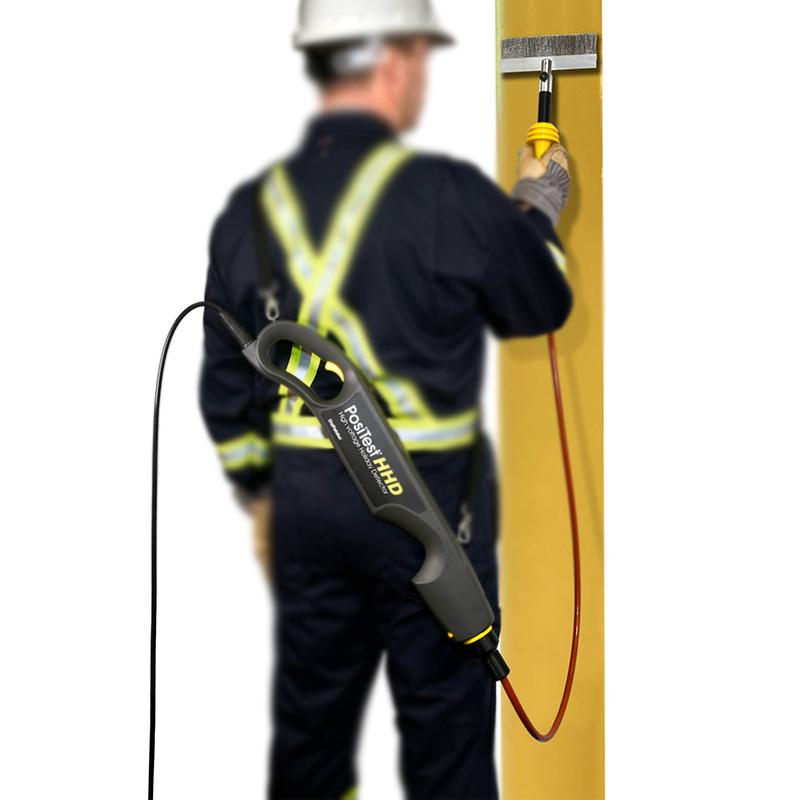
On concrete members, attach the ground wire to the rebar in the concrete, or if there is no rebar, place the bare ground wire on the unpainted concrete surface and secure with a sack filled with wet sand.
The voltage shall be fixed at the value specified or indicated by the reference standard. If no indicators are provided, the US industry adopts a fixed voltage of 4V/um100V/mil based on experience. In Europe, the commonly used method is slightly different according to experience, 5V/um (125V/mil) or may also cause pinholes or other types of defects in the coating of the substrate, such as; low film thickness), and the voltage Fixed at the lowest value that the instrument can fix. Raise the voltage enough to create sparks at the resort location. Check each coat with this fixed voltage.
Note: Inspectors should obtain permission for the following matters.
Coating pinholes as this is a destructive test. North and South Tide Tips: Excessive fixed voltage will damage the coating. Testing before the solvent content is released can do the same damage. Once a spark occurs through the coating to the substrate, there needs to be a leak in the coating even if there were no pinholes or cracks in the coating prior to testing.
When using the instrument, move the electrode at a speed of 0.3m/s (1ft/s) each time (according to NACE RP 01-88). If the electrode is moved too quickly, missed coating points may be missed. If you move too slowly, you may damage points of thin paint film or beyond what the support engineer requires.
The accuracy of the instrument can be tested with a voltmeter connected between the probe and the ground connection, and the instrument can also be calibrated in this way. Voltmeters are required for holiday Detectors because of the pulse nature of the signal. For most users, the instrument is returned to the manufacturer for calibration.
The high-voltage leak Detector is equipped with a variety of electrodes:
1. Flat pressure spring electrode for pipeline coating;
2. Smooth neoprene plate electrode (filled with conductive carbon black), used to test thin film coatings, such as: melt adhesive epoxy coating;
3. Bronze brush electrode, usually used for glass flake reinforced coating. High voltage leak Detectors generate high power. This instrument is not inherently safe. May cause an explosion if used in an explosive environment. Therefore, when working in ship cabins or storage tanks, excellent explosion measurements are required.
High pressure leak Detectors are more thorough than low pressure types. Not only can it detect holidays or pinholes penetrating the substrate, but it can also find hidden defects in coatings such as low film thickness or holiday spots.