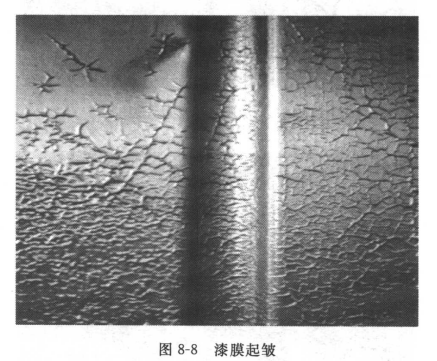
wrinkled
Film wrinkling typically occurs in oil-based, alkyd and phenolic paints. For example, the surface of linseed oil swells due to the absorption of oxygen from the air, causing wrinkling of the unoxidized coated body surface. Drying agents are often added to these coatings to speed up drying. Some are used to accelerate surface curing, while others are used to dry evenly from bottom to top. If the paint contains too much surface drying agent, wrinkling may occur in thicker areas of the coat. Diamond salt is often used as a surface desiccant, and zinc compounds are used as desiccants. Due to the toxicity of lead, lead dryers are no longer used.
Temperature plays an important role in wrinkling. Due to the increase in temperature, the surface of the wrinkle-free coating will cure much faster than its body during the baking process, and severe wrinkling will occur. Applying thick film coatings at lower temperatures, or rapid drying of the coated surface and moisture from the primer in hot weather can cause wrinkling.
bleeding
When coatings containing coal tar (epoxy, asphalt, polyurethane, etc.), asphalt paint, etc., are applied over a white or colored finish, the tar and asphalt will always penetrate (migrate) into the finish and cause discoloration.
Sometimes even removing the asphalt coating with sandblasting can have the same effect. A portion of the bitumen will remain on the steel surface causing bleeding of the white or colored finish. It is impossible to completely correct coating defects. Aluminum powder paint can be used to seal discoloration, but it is difficult to completely prevent color bleeding.
discoloration
Fading, bleeding, discoloration, etc. occur shortly after the coating is applied, which can damage the aesthetics and decorative properties of the coating. At this point, the coating has been damaged.
Resin is often the main cause of discoloration. For example, cycloresin and linseed oil are prone to yellowing and darkening, and aromatic polyurethanes are also prone to yellowing when exposed to sunlight.
Pigments can also cause color changes. For example, lead pigments become darker and darker in an atmosphere containing sulfides. Cuprous oxide in antifouling paint will also turn black in sulfur water. Orange pigments are more active, tend to darken, and will turn dark brown. Other yellow pigments may turn gray or white. Some pigments are suitable for indoor exposure only. Will fade or discolour if used in an outdoor environment.
