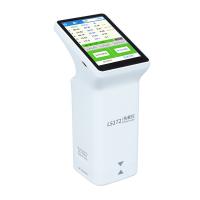
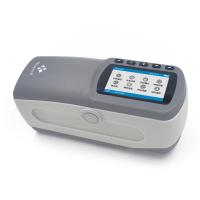
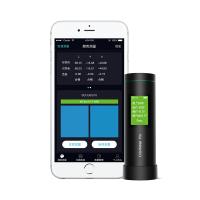
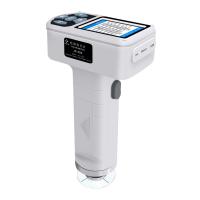
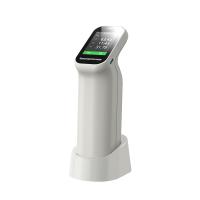
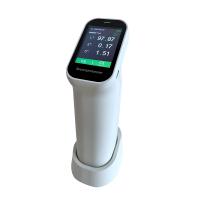
The basic function of the Colorimeter is to test the color difference of different objects and express it with data. The current Colorimeter can also establish color standards and control color quality. It is also an indispensable instrument for computer color matching. However, there are so many types of Colorimeters and brands, it is often difficult to choose a Colorimeter. And they are all called Colorimeters (colororimeter), but the prices are also very different, and the measured results will be different.
So when choosing a Colorimeter, what should we do to choose a cost-effective instrument? The following "performance indicators" are what you should pay attention to when choosing.
1. Whether the selected instrument is "color difference meter" or " spectroColorimeter "
The accuracy of the Colorimeter is relatively low, and the accuracy of the spectroColorimeter is relatively high. These two color measurement methods are different. A spectroColorimeter can measure the "reflectance curve" of each color, but a Colorimeter cannot. There are many kinds of light sources in the spectroColorimeter, but only one kind of Colorimeter.

2. The Spectrophotometer can be divided into two measurement and observation modes: "0/45 degree" and "d/8 degree integrating sphere".
"0/45" can only be used to measure smooth surfaces, not for computer color matching. "d/8 degree integrating sphere" can be used to measure various surfaces and can be used for computer color matching.
3. Differences of various "d/8 degree integrating sphere" Spectrophotometer s
Most companies choose "d/8 degree integrating sphere" Spectrophotometer , but Beichao reminds you: There are still great differences between different brands and models, resulting in different measurement accuracy.
In addition to the microprocessor and related circuits, the spectroColorimeter is mainly composed of four parts: light source, integrating sphere, spectral light path and photoDetector. This is also the main index to measure the pros and cons of an instrument.
4. Is it "dual-beam measurement principle" or "single-beam measurement principle"
Dual-beam instruments have two split beam paths and two Detectors. The light source flashes only once during the measurement, and the sample and reference white are also measured. This overcomes the error caused by system changes, and the accuracy of the measurement data is very high. But the cost of the instrument is high.
Single-beam instruments have only one beam splitter and one Detector. Therefore, the measurement source is flashed twice, and the sample and reference white light are measured separately. However, the systematic error (difference in light source intensity distribution, light path change, temperature change, circuit drift, etc.) during the two measurements is taken as the difference between the sample and the reference white light, so the error is relatively large.
5. Light source
Stronger manufacturers choose "cled", which has the advantages of long life, high light intensity, high "signal-to-noise ratio" (measurement signal/noise), and high measurement accuracy. Some small manufacturing factories use "tungsten lamp" type instruments, which have disadvantages such as low light intensity, long heating time, short life, and inaccurate measurement of the blue light segment.
6. Integrating sphere
Good quality will not turn yellow in 5 or 6 years, and poor quality will turn yellow in 2 or 3 years.
The above are the main points to pay attention to when buying a Colorimeter. I hope it will be helpful for you to buy a Colorimeter.