ISO 9227是在人工气氛中进行的腐蚀测试。这是盐雾测试的一种形式。ISO 9227 对于检测有机和无机涂层中的不连续性、孔隙和损坏以及评估金属材料的耐腐蚀性特别有用。这也是确定金属材料(带或不带防腐蚀保护)的比较质量是否得到保留的方法。
然而,重要的是要意识到这样一个事实,即对盐雾作用的抵抗力和耐腐蚀性之间没有直接的相关性,因为最终使用条件下的腐蚀应力与测试期间的腐蚀应力明显不同。这样,结果不应用作不同涂层体系长期行为的比较指南,也不应将不同材料相互排序。
盐雾测试通常用于检测有机和无机涂层中的不连续性、孔隙、缺陷和损坏,并用于质量控制目的。
ISO 9227
该测试并不能直接指示所有条件下的耐腐蚀性,因为有许多因素会影响腐蚀的进展:腐蚀可能因环境条件和应使用被测材料的位置而异。该标准指示检查金属材料在腐蚀侵蚀下是否保持其质量。
ISO 9227 给出了识别以下方面的说明:
设备进行测试的主要特点
化学溶液的特点和应如何使用
3种主要类型的测试
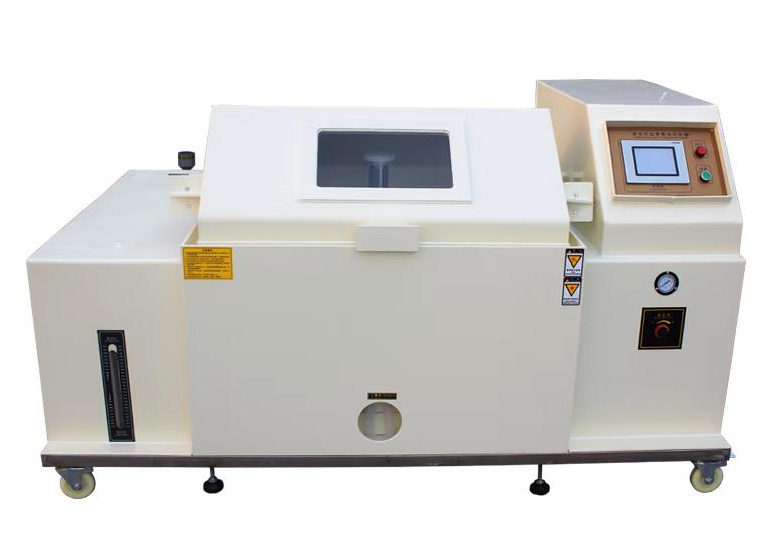
确定的设备是用于盐雾测试的测试室,标准定义了该室的一些特定特征,例如罩的形状,应防止小水滴落在试样上,测试柜的大小和尺寸。
3种类型的测试
中性盐雾 (NSS)
醋酸盐雾
铜加速乙酸盐雾(CASS)测试
NSS - 中性盐雾测试适用于金属及其合金;金属涂层;转化涂层;阳极氧化涂层;金属材料上的有机涂层。
AASS - 醋酸盐雾试验用于测试铝上铜+镍+铬或镍+铬或阳极涂层的装饰涂层的耐腐蚀性。
CASS - 铜加速乙酸盐雾试验用于测试铜+镍+铬或镍+铬或铝阳极涂层的装饰涂层的耐腐蚀性。
ISO 9227给出了有关柜体温度,雾化压力,试样在测试柜内的位置,操作条件和结果分析的指示。
测试的持续时间取决于所指的被测设备材料的现有处方,如果未指定,则时间应由测试的承运人According to其客户决定。
盐雾测试设备
所有测量设备都需要校准。更新校准的日期不应与测试日期一致。
腐蚀外壳应至少针对腔室的空气温度进行校准。如果需要,还可以校准以下腔室组件:
室内空气饱和器温度。
腔室气压表(雾化器压力)。
Corrosion chambers can be fitted with relative humidity sensors. Calibration is not required as calibration is not used during salt spray testing.
Equipment should also be calibrated before use, which may include the following:
Portable pH meters, use certified buffer solutions and calibrate according to the manufacturer's instructions. The pH of the first solution was 4.01 and the pH of the second solution was 7.01. An acceptable tolerance is +/- 0.01. When finished, rinse the electrodes with the electrode rinse solution.
Salinity refractometer, calibrated using a standard refractometer liquid solution. The salinity refractometer can directly read the percentage of sodium chloride in the range of 0% to 28%, and has automatic temperature compensation function.
Conductivity meters, which are calibrated using standard solutions, are used to check the conductivity of water and salt solutions.
If necessary, the temperature of the chamber can be continuously monitored with an independently calibrated data logger or, depending on the model, the chamber has an Ethernet output to view and save this curve or has internal logging.
For salt spray testing, it may be sufficient to manually read the chamber temperature daily using the chamber display on the tracking meter.
For measurements upon saline solution exposure, the collection rate was manually controlled using a collection container placed at the sample height. The collection rate should be in the range of 1 to 2ml/h/80 cm².
*Run the test on a 24 hour cycle, with the empty chamber and collection funnel positioned, record the temperature and ensure it stays within a tolerance of 35°C +/- 2°C (50°C +/- 2°C for CASS). Make sure the salt mist collection rate is within the expected range of 1-2ml/h/80 cm². Record all results. Check that the pH of the collected solution meets the requirements of the standard. Record all results. Adjust the pH of the saline solution in the solution tank, if necessary, to compensate for any change in pH after collection; bring the collected solution to meet the requirements of the standard.
Saline exposure is by atomization using compressed air. The air delivered to the nozzle should be "heated and humidified" by the air saturator, and the temperature of the air saturator in the chamber is adjusted according to the pressure at the atomizer pressure gauge. (See table in ISO 9227-2017 for reference).
Preparation of saline solution
Use a conductivity meter to check whether the conductivity of the water has been measured and monitored, and whether it meets the requirements of the standard. (Less than 20μS/cm at 25°C±2°C)
使用校准的盐度折光仪测量和监测盐溶液的浓度,并符合标准要求。使用校准的pH计测量和监测盐溶液的pH值,并满足标准要求。
NSS溶液 - 中性盐溶液,在让溶液稳定数小时后,测量并记录盐度和pH值。任何pH调节都可以使用试剂级盐酸(HCL)来增加酸度,或者使用摄政级氢氧化钠(NaOH)或碳酸氢钠(NA2CO3)来降低酸度。酸度。记录所有结果。
AASS溶液 - 醋盐喷雾,将冰醋酸添加到中性盐溶液中,使pH值达到标准中规定的要求限值。任何pH调节都可以使用冰醋酸来增加酸度,或者使用摄政级氢氧化钠(NaOH)或碳酸氢钠(NA2CO3)来降低酸度。记录所有结果。
CASS溶液-氯化铜二水合物(CuCl2 2H2O)加入到中性盐溶液中,得到浓度为0.26g/L(+/- 0.01g/L)的任何pH调节都需要使用冰醋酸来增加酸度或摄政级氢氧化钠(NaOH)或反应级碳酸氢钠(NA2CO3)来降低酸度。保存所有结果。
样品的制备
在开始测试之前,应彻底清洁测试样品。这不应包括使用研磨剂或溶剂。此过程需要与客户达成一致。处理样品时应始终戴乳胶手套。在开始测试之前,应拍摄每个样本的照片。
测试的进行
在开始使用样本进行测试之前,这可能需要额外的测试来证明结果。在开始测试之前,可能需要评估腔室的腐蚀性。有关更多详细信息,请参阅标准。
开始测试周期
According to测试标准将样品放入腔室中。
According to测试标准中的表格设置腔室空气饱和器的温度。
确保没有样品隐藏其他样品,并且一个样品的液滴不会落在其他样品上。
在腔室内的样品周围插入干净、空的盐雾收集容器,推荐在样品的高度,切勿在样品或任何其他可能从上方沉入其中的物体下方。
检查室温是否在可接受的范围内。
检查空气饱和器的温度是否在可接受的范围内。
检查雾化器气压是否在可接受的范围内。
用雾化盐溶液在35°C +/- 2°C的恒定腔室温度下连续喷洒(CASS为50°C +/- 2°C)。
验证收集的溶液是否在可接受的流失率范围内。
检查罐中的盐溶液是否小于5.0%+ / -1.0%NaCl。
记录罐中盐溶液的pH值。
Check that the pH of the collected saline solution is within the acceptable range.
Exceptions are allowed for continuous testing, on the one hand to record the daily sediment collection rate and the pH of the collected solution, and on the other hand for daily verification.
Record the conductivity of the deionized water at the point of use.
Monitor the salt water level in the tank and make sure there is enough salt water for the next 24/48 hours. (supplement for planning the weekend). Please note that on weekends, rooms need to be open for a minimum of 1 hour / 24 hours.
Photos taken before the test starts and at the time specified by the customer.
Daily checks are necessary to ensure that standards are met and parameters vary within limits.
Save all settings.
Test samples are treated differently depending on the material.
Refer to the test standard and agree on the correct procedure with the customer.
Latex gloves should always be worn when handling specimens.
Photographs of the samples should be taken.
Records of out-of-tolerance as well as downtime and its duration, including details of any changes made, should be noted in the test report.
