1. Defects in the secondary primer
According to the type of surfacer commonly used in automobile painting, it can be divided into three types: self-drying surfacer defects, drying surfacer defects and quick-drying surfacer defects.
1. Defects of self-drying surfacer
During the construction, there are mainly three kinds of defects: not covering the bottom, slow drying and wrinkling of the bottom.
(1) Not covering the bottom means that the paint has poor hiding power (testing instrument: hiding power paper), and the bottom layer cannot be completely covered after spraying, so that the paint film exposes the primer (top coat). There are two main reasons for the analysis: one is that the paint is not stirred evenly before spraying, the pigment or filler (body pigment) is deposited at the bottom, the upper part of the paint has less pigment, and the covering power is poor after spraying, resulting in exposed bottom; The material is adjusted too thin and sprayed too thinly. Fortunately, this kind of defect can be avoided by first spraying after effective stirring, and secondly, using wet-on-wet continuous spraying when spraying.
(2) Slow drying. The paint contains too much resin and is caused by excessive spraying, or the temperature is too low when spraying and the weather is too cold. Solution: For slow drying after spraying caused by too much resin content, the construction method of thin spraying and two coats can be used to make the paint film dry in time (testing instrument: drying time Tester); for slow drying caused by low temperature and cold weather, An appropriate amount of cobalt-manganese-lead mixed liquid drier can be added to promote drying.
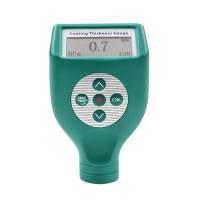
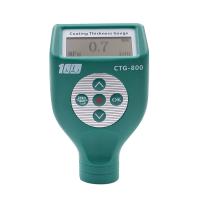
(3) Wrinkling at the bottom: first, the paint film is too thick (testing instrument: coating Thickness Gauge) and not fully dry, and wrinkling occurs when spraying topcoat or intermediate paint; second, topcoat or intermediate coating The performance of the paint is different from that of the primer. If nitro paint or polyurethane paint is sprayed on the surface of the paint, it is easy to cause wrinkles at the bottom. Solution: One is to spray the topcoat after the paint is effectively dry; the other is to spray a thin coat of nitro-lacquer or polyurethane paint first, and wait until the paint film after spraying is dry on the surface and there is no wrinkle at the bottom , and then evenly spray one, you can prevent.
2. Defects of drying secondary primer
During the construction and baking process, there are mainly two defects: bubbling and air bubbles.
(1) Bubbles mainly occur in putty parts. Reason analysis: First, the bottom putty is too thick and not fully dried, and the water vapor in the putty (referring to water-quality putty) evaporates rapidly during baking to lift up the paint film and cause bubbling; The bottom putty has a loose texture and good air permeability. If there are pores such as welds under the putty layer, the moisture in the gaps will volatilize during drying and pass through the putty to push up the paint film and cause bubbling. The solution to this kind of bubbling: one is to wait for the bottom putty to dry effectively before applying the paint; the other is to fill the pores such as welds with heat-resistant sealant before putting on the putty, and then put on the putty and apply the bottom paint.
(2) The main reason for bubbles is that when the paint is baked at too high a temperature or the baking time is too long, rice-shaped, bean-shaped, finger-shaped bubbles are produced. The solution is to strictly control the baking temperature and time according to the drying performance of the paint, which can be avoided.
3. Defects of quick-drying secondary primer
Quick-drying surfacer such as nitro, perchlorethylene surfacer, etc., the defects in the construction process are mainly poor filling and leveling. The reason analysis is mostly because the solid content of the quick-drying surfacer is low, the solvent content is high, and the paint film is too thin after drying, resulting in poor filling and leveling properties. The simple solution is to use the quick-drying performance of the paint to spray several coats continuously until the defects such as sand marks are filled and smoothed, and then it can be prevented.
2. Defects in intermediate paint
It mainly refers to the defects caused by the amino paint and the polyurethane paint. The defects caused by the amino-based paint are basically similar to the defects caused by the drying surfacer, so the defect analysis and solution can refer to the drying surfacer. The defects of polyurethane paint are mainly pinholes and bubbles, and the analysis of the reasons is mostly caused by improper use of solvents or excessive spraying.
Solutions: First, when spraying, special matching thinners should be selected according to different seasons; second, the paint film should not be too thick when spraying. As long as these two essentials are mastered, defects can be prevented.