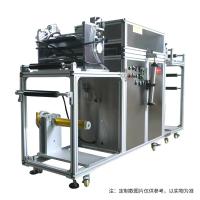
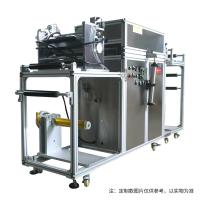
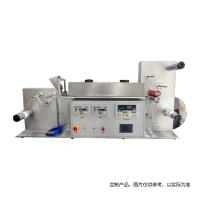
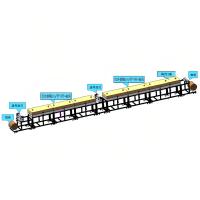
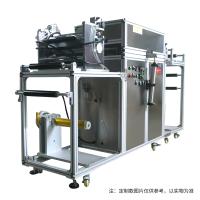
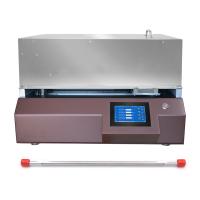
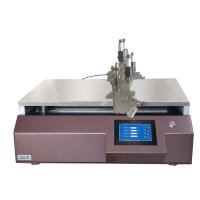
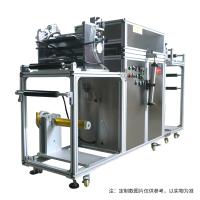
overview
Most of the coating processes currently used in the market are slit coating, ultrasonic spray coating, knife coating and roller coating.
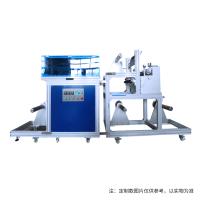
slot coating
As an accurate wet coating technology, the coating liquid is squeezed and sprayed out along the gap of the mold under a certain flow rate and pressure, so as to be transferred to the substrate. It has the advantages of fast coating speed, high precision and uniform wet thickness.
ultrasonic spraying
Also known as ultrasonic spraying. The piezoelectric effect is used to convert electrical energy into high-frequency mechanical energy, thereby atomizing the liquid. The liquid coating is atomized into fine particles by an ultrasonic atomization device, and then evenly coated on the surface of the substrate by a certain amount of carrier gas to form a coating or film.
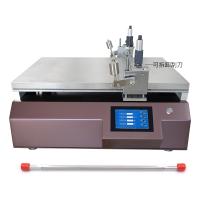
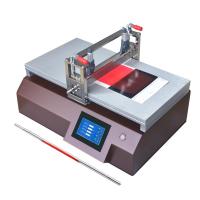
Scratch
Use a glue roller to make the substrate directly contact with the coating, and apply the slurry on the substrate within a certain gap. The gap between the scraper and the substrate determines the coating thickness.
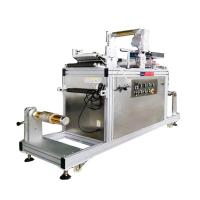
roller coating
Divided into the same direction roller coating and reverse roller coating. In the same direction roll coating, the coating applied by the roller in the same direction is distributed in an extrusion shape, with a small amount of coating and a thin coating. The principle is that the rotation direction of the spraying wheel is consistent with the forward direction of the object to be painted, and the object to be painted has the pressure of the roller. Reverse roller coating is the opposite. The paint is distributed in a free state, the coating amount is large, and the coating is thick.
Steps
1. Fix the material head on the coating machine
2. Adjust the size of the gap between the material head and the substrate by adjusting the knob