Amino topcoat is used most in the coating of ordinary and mid-range cars, especially for coating drying production lines, almost all of which use amino drying topcoat (testing instrument: oven). The defects and solutions encountered in actual production are introduced as follows.
Defects caused by amino drying topcoat mainly include bubbling, air bubbles, pinholes, loss of gloss, uneven gloss, peeling, impurities, color fading, color loss, bottom exposure, orange lines, sand marks, flow, sagging, etc.
1. Bubbling
Bubbles are mainly produced during the drying process, and there are large bubbles (the size of a palm), medium bubbles (the size of an egg), and small bubbles (the size of a pinball). For the bubbling of the amino topcoat, it is mostly because the water of the primer is not fully dried after water grinding, or the bottom putty is too thick and not fully dried, so that the water or the solvent in the putty evaporates rapidly after high temperature, forming a steam layer to lift the paint film And produce bubbling. Sometimes there is residual water accumulated in the base layer, and the residual water becomes water vapor during the drying process and penetrates the putty from the weld and other parts to lift the top coat and cause bubbling. Sometimes there is residual water flowing along the inside of the large slab and accumulating on the surface of the profile. If it is not cleaned in time, during the drying process after the topcoat is applied, the residual water will become water vapor at high temperature and quickly volatilize and penetrate the coating to generate stress. The paint is finer and denser, and the water vapor cannot evaporate under the top coat, and the top coat is pushed up to form bubbles. To solve this kind of bubbling, one is that the bottom layer needs to be dried effectively before applying the topcoat; the other is that the pores such as welds should be filled with heat-resistant sealant before painting, and then primer and primer should be applied. putty.
2. Bubbles
There are three reasons for the analysis of bubbles: one is the improper solvent used for thinning; the other is that the paint film is too thick (testing instrument: coating Thickness Gauge), and the solvent in the inner layer of the paint film is heated and volatilized rapidly during the drying process Bubbles are formed on the surface, and pit-like defects are formed after the bubbles burst; Third, the baking temperature in the drying room is uneven, such as the circulation fan in a certain part is damaged, which causes the paint film to be damaged due to the high temperature of the non-circulating air. The membrane produces air bubbles. The solution to this defect: First, use the correct solvent when thinning; Second, the topcoat should not be too thick, especially for the edges and other parts, and more attention should be paid; Third, the baking temperature should be uniform, and it should not be too high or baked If the time is too long, check whether the drying equipment is operating normally before baking, and then dry it.
3. Pinhole
It is mainly caused by improper use of solvents, and attention should be paid to the quality of solvents.
4. Lost light
Sometimes after the amino topcoat is dried, the paint film tends to be dull. The reason analysis is that the baking temperature is too low, if the paint baking temperature needs to be above 100°C, and the actual drying temperature is below %&&', the paint film after baking will often lose gloss. However, this defect mainly occurs during the drying process of the amino alkyd topcoat, while the drying temperature of the aminoacrylic topcoat will only affect the drying of the paint film due to the low drying temperature, and it is not easy to cause loss of gloss. Therefore, attention should be paid to the baking temperature (testing instrument: oven).
5. Uneven gloss
Uneven gloss (detection instrument: gloss meter), one is caused by the uneven thickness of the sprayed paint film, such as the thick paint film part has good gloss, and the thin paint film part has poor gloss; As a result, the smoothness of the bottom layer of the same surface is inconsistent, the gloss of the smooth part is good, and the gloss of the rough part is poor. Therefore, attention should be paid to the construction method and quality.
6. Uncover
Peeling often occurs during the construction and baking of ribbon paint. For example, after the ribbon paint on the exterior of a large and medium-sized bus is dried, sometimes the ribbon paint will be peeled off, resulting in rework. Analysis of the reasons: First, the topcoat is too glossy after drying, and the ribbon paint is sprayed without sanding. During the drying process, the topcoat is too smooth, which affects the adhesion of the ribbon paint (testing instrument: adhesion Tester) Cause peeling; The second is that the ribbon paint is dried at a low temperature after spraying.
If the temperature is too low or the baking time is too short, the ribbon paint is not dry enough to cause peeling; the third is if the baking temperature of the ribbon paint is too high or the baking time is too long, the paint film will become brittle and peel off due to excessive baking. Solution: Pay attention to the construction method, and control the baking temperature and baking time. You can avoid peeling off the skin.
7. Impurities
Causes of impurities: First, the drying room is dried without cleaning, so that the circulating fan in the drying room will fly the dust with the circulating air and contaminate the surface of the paint film to form impurities; second, the impurities in the paint are sprayed or sprayed without filtering Impurities are caused by unclean tools or unclean spraying environment. Solution: The drying room and fan equipment should be kept clean, the spraying tools and spraying environment should be kept clean, and the paint should be filtered before spraying. When impurities are evident, rework is required.
8. Fading
Amino topcoat sometimes loses color when it is cleaned at the end, that is, the color is easy to be wiped off when it is cleaned, which affects the appearance quality. Analysis of the cause: The main reason is that the paint has not been dried effectively. For example, if the baking temperature of the top coat of the passenger car is too low or the baking time is too short, the paint film has not been dried effectively. Wipe off top coat color. Solution: Effectively dry the paint film to prevent fading.
9. Discoloration
Color fading mainly occurs in the ribbon paint of passenger cars. For example, after the ribbon paint is sprayed, the color of the paint film at that time has reached uniformity, but after drying, discoloration (uneven color or even exposed bottom) often occurs. Reason analysis: First, the hiding power of the ribbon paint itself is poor, and color loss occurs during the drying process; second, there are too many light-colored pigments in the ribbon paint, the tinting power is poor, and it is difficult to cover the bottom layer, such as a white topcoat sprayed with a light pink ribbon When painted, it is easy to produce color loss. Solution: One is to adjust the color ribbon paint, and re-spray with the good color paint; the second is to spray the light color ribbon paint appropriately thicker, or spray one more layer to prevent color loss during baking.
10. Out of the bottom
Bottom exposure often occurs during the baking process of light-colored amino topcoats. For example, when white amino is sprayed wet-on-wet, it is often easy to have bottom exposure and affect the quality. Reason analysis: First, the covering power of the paint itself is poor; Second, the color difference between the color of the bottom layer and the color of the top coat is too large, such as the bottom layer is dark gray or the color of the putty on the bottom layer is too dark, and it is easy to show the bottom after spraying white amino topcoat; The third is that if the paint is adjusted too thin, the sprayed paint film is too thin and the bottom will appear. Solution: When the bottom is partially exposed, a partial respray of the color amino topcoat is carried out; when there are many defects at the bottom, the whole vehicle needs to be reworked. In addition, before spraying the topcoat, you should pay attention to the inspection of the topcoat before spraying, and pay attention to the construction method when spraying, which is also an important measure to prevent the bottom from being exposed.
11. Orange pattern
The orange pattern produced by amino topcoat is caused by the poor leveling of the paint itself. For example, the leveling property of aminoacrylic acid and amino polyester drying paint is better, and it is generally not easy to produce orange pattern, while amino alkyd drying paint Or the leveling of ultra-fast-drying amino drying paint is poor, and usually the orange pattern is easy to appear if the construction method is not careful; the second is that the paint tone is too thick is also a reason Therefore, attention should be paid to the quality and construction method of the paint.
12. Sand marks
Sometimes, after the amino topcoat is applied and dried, obvious sand marks are often found on the paint film along the light, which not only affects the appearance quality, but also has a certain influence on the smoothness and gloss of the paint film. The main reason is that the water sandpaper used in water sanding before coating the topcoat is too coarse. For example, sand marks are not easy to be produced after water sanding with 360 water sand paper, but sand marks are easy to be produced after water sanding with water sand paper below 180 . In addition, if the topcoat is too thin and the paint film is too thin, it is easy to show the underlying sand marks. Therefore, attention should be paid to the construction quality and operation method to prevent sand marks.
13. to flow, to hang
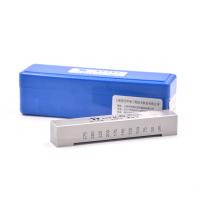
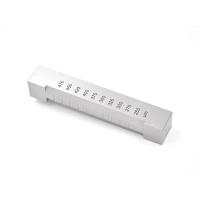
For the amino drying topcoat, it should have the characteristics of thick coating and not easy to flow and sag (testing instrument: Sag Tester), but some amino topcoats tend to flow and sag after spraying. This kind of defect is not only related to improper spraying operation method (such as excessive spraying air pressure, too close spraying distance or too slow moving speed of Spray Gun, etc.), but also has a lot to do with improper solvent used for the paint. For example, the volatilization speed of the solvent used in summer should be relatively slow, so that the paint film after spraying has better leveling property; while the solvent used in winter should be volatilized at a relatively fast speed, so as to prevent the paint film from flowing when spraying thickly , Sagging. Therefore, special attention should be paid to the choice of solvent and construction method.