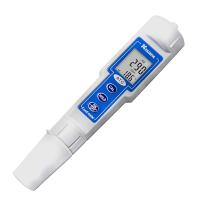
The 1.0-level conductivity meter is a high-precision conductivity measuring instrument, which is usually used in laboratories and industrial fields to measure the conductivity of samples such as aqueous solutions, chemicals, pharmaceuticals, and food. The following is a detailed introduction to its selection points and precautions:

select points
Measuring range: Choose a conductivity meter that suits the required measuring range in the laboratory or industry. Typically, laboratory conductivity meters have a range of 0.01 μS/cm to 1000 mS/cm, while industrial conductivity meters have a wider range.
Accuracy: Select the accuracy according to your needs. Typically, a Class 1.0 conductivity meter has an accuracy of 0.5% or better. For some more accurate applications, a higher accuracy conductivity meter can be selected.
Automatic Temperature Compensation: Choose a conductivity meter with automatic temperature compensation to ensure accurate measurements when the temperature changes.
Temperature measurement range: Choose a conductivity meter with a wide temperature measurement range to ensure accurate measurement results at different temperatures.
Ease of Operation: Choose a conductivity meter that is easy to operate and has an easy-to-read display for lab personnel or workers.
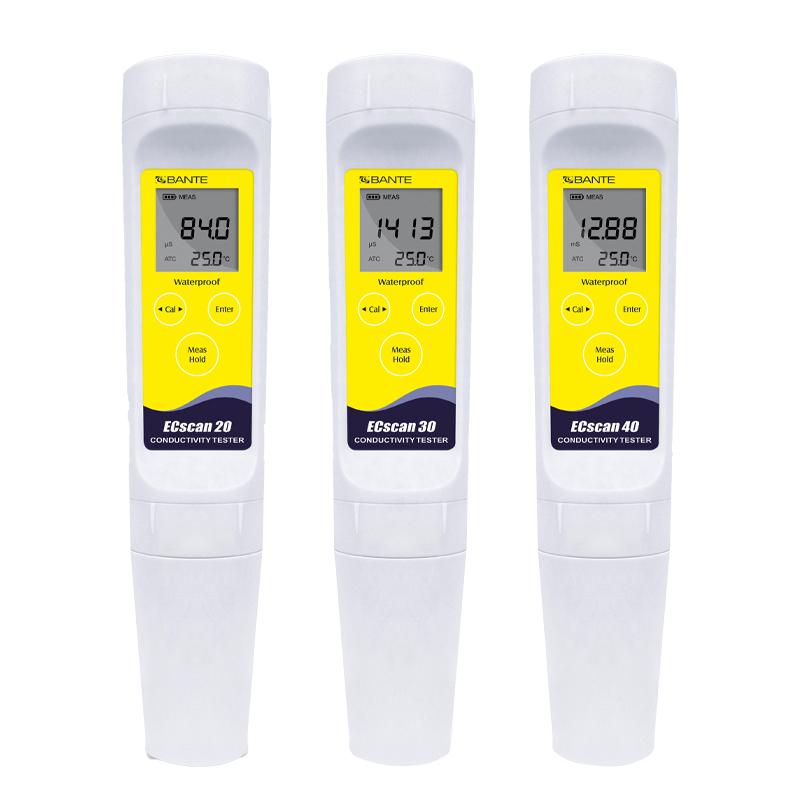
Precautions
Choose the right electrode: choose different types of electrodes according to your needs, such as glass electrodes, plastic electrodes or metal electrodes, etc.
Avoid Drying: When using a conductivity meter, avoid drying the electrodes. To keep the electrode in good condition, it can be soaked in salt water or other suitable protective solution.
Avoid chemical contamination: When using a conductivity meter, avoid contact with chemicals to avoid contamination and damage to the electrodes.
Clean the electrode: After using the conductivity meter, the electrode should be cleaned in time to ensure its long-term accuracy and stability.
Storage conditions: When the conductivity meter is not in use, it should be kept in a dry, dark and well-ventilated place to prevent moisture, exposure, pollution and damage.