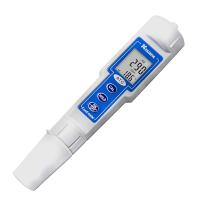
The liquid conductivity meter is an instrument used to measure the conductivity of liquids, and is often used in water treatment, pharmaceuticals, food processing, chemical production and other fields. The following will introduce the selection points and precautions of the liquid conductivity meter in detail.
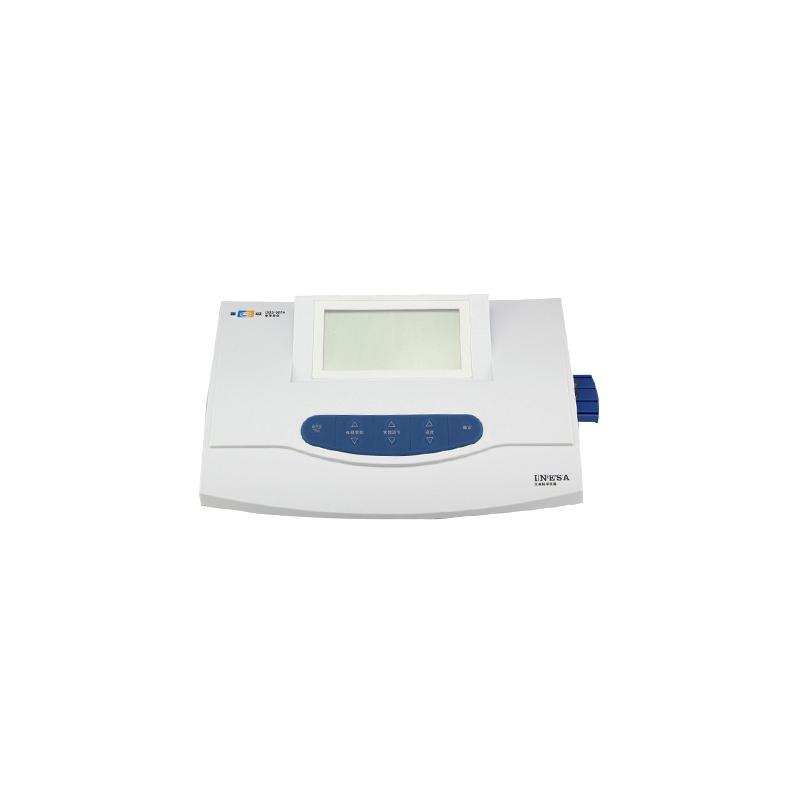
select points
Measuring range: Select the liquid conductivity meter according to the conductivity range of the liquid to be measured. Usually, the measuring range of the liquid conductivity meter is 0.01 μS/cm~100 mS/cm.
Accuracy requirements: Select a liquid conductivity meter with high or low accuracy requirements according to actual needs. Generally speaking, liquid conductivity meters with high precision requirements are more expensive.
Display mode: The liquid conductivity meter can use LED or LCD display, choose the display mode that suits you.
Automatic temperature compensation function: The conductivity of liquid changes with temperature, so the liquid conductivity meter with automatic temperature compensation function can obtain more accurate measurement results.
Electrode types: There are various types of electrodes, and different electrodes are suitable for different liquids. Select the appropriate electrode type according to actual needs.
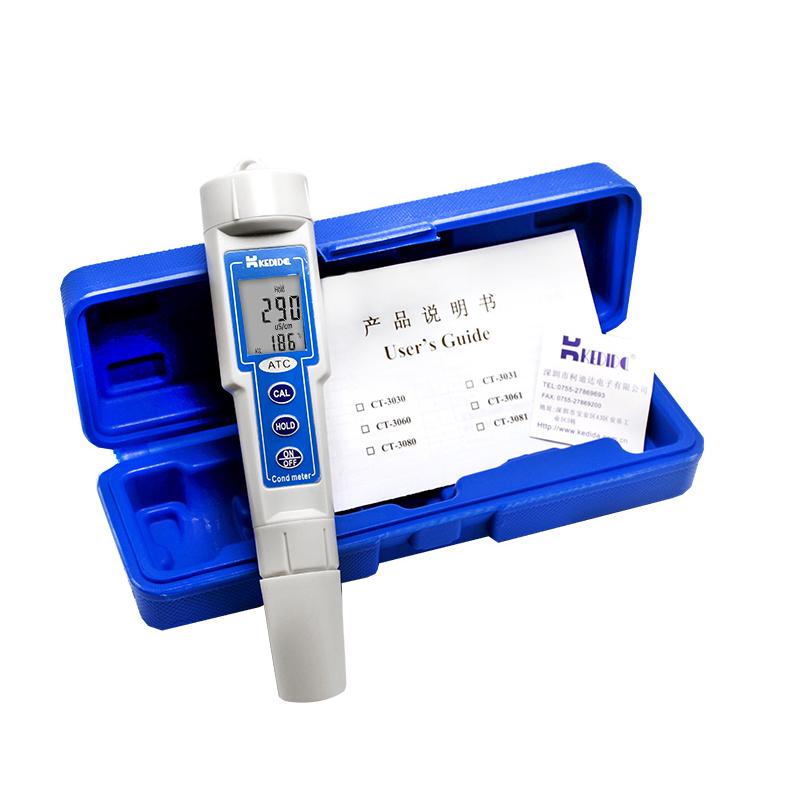
Precautions
The liquid conductivity meter should use special electrodes, and different electrodes cannot be mixed, otherwise the measurement accuracy will be affected.
Calibration should be performed before use to ensure the accuracy of the measurement results.
The electrode of the liquid conductivity meter should be kept clean. After use, it should be cleaned in time and placed in a dry place, so as not to affect the life of the electrode and the measurement accuracy.
During use, care should be taken to avoid mechanical damage to the electrode, such as falling, collision, etc., so as not to affect the measurement accuracy and electrode life.
Avoid exposing the liquid conductivity meter to high temperature, humidity and other harsh environments for a long time, so as not to affect the performance and life of the instrument.