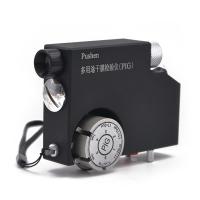
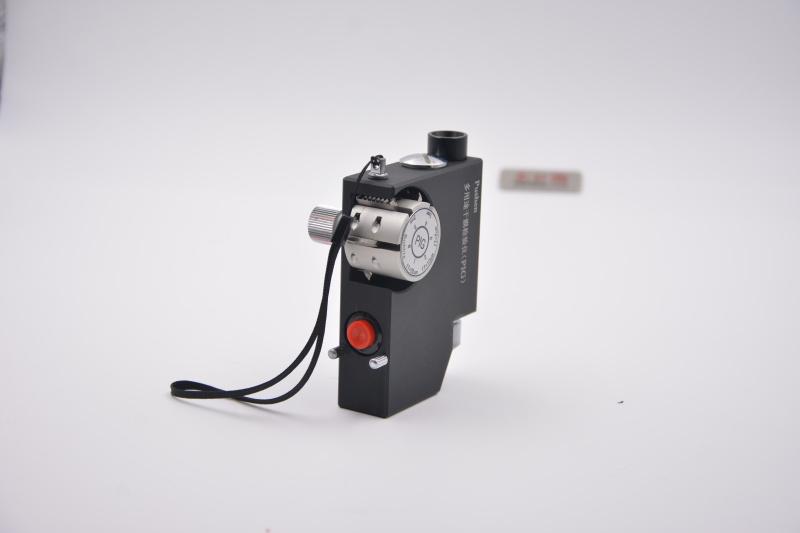
The dry film Detector is an instrument specially used to measure the thickness of the dry film of paint. In the paint industry, the dry film thickness is an important index to evaluate the surface quality and service life of the paint, so it is very important to choose a suitable dry film Detector. The following are the key points and precautions for dry film Detector selection:

select points
Measuring range: When choosing a dry film Detector, you should consider whether its measuring range can cover the range of dry film thickness to be measured. Generally speaking, the measuring range of the instrument should be between 0-3000um.
Accuracy: The accuracy of the dry film Detector is a very important indicator, because the higher the accuracy, the more accurate the measurement result. Therefore, when choosing a dry film Detector, you should choose an instrument with high precision.
Repeatability: Repeatability refers to whether the results of repeated measurement of the same sample by the instrument are consistent under the same conditions. When choosing a dry film Detector, you should choose an instrument with good repeatability.
Display method: The display method of the dry film Detector should be convenient and fast. Generally speaking, the digital display method is more common, and some advanced instruments also have LCD screen and backlight function.
Report output: Some advanced dry film Detectors can output detailed reports, including data, statistical information, charts, etc., which are very useful for coating production and quality control.
Precautions
Calibration: Before using the dry film Detector, it needs to be calibrated first. The purpose of calibration is to ensure the accuracy and reliability of the instrument.
Cleaning: Before measuring, the instrument should be cleaned to avoid contamination such as dust or grease from affecting the measurement results.
Environmental conditions: dry film detection is affected by environmental conditions, such as temperature, humidity, etc. The ambient conditions should be kept stable while taking the measurements.
Sample preparation: Before taking the measurement, the sample should be fully dried to prevent moisture from affecting the measurement results. At the same time, attention should also be paid to the sample preparation and handling methods to avoid scratches and stains on the sample surface from affecting the measurement results.