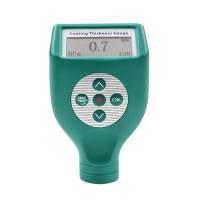
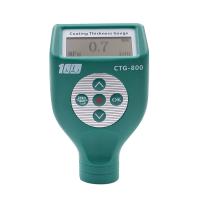
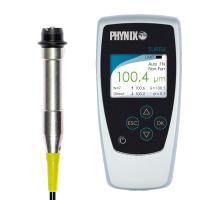
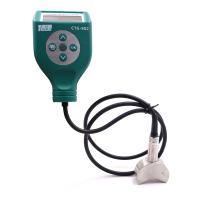
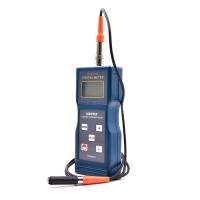
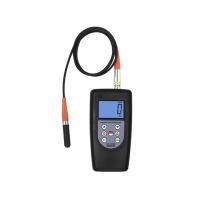
The ultrasonic coating Thickness Gauge is a non-destructive coating Thickness Gauge that can be used to measure the interface between the coating and the substrate, as well as the coating thickness. It works by using the reflection and refraction properties of ultrasonic waves as it travels between different media to measure coating thickness.
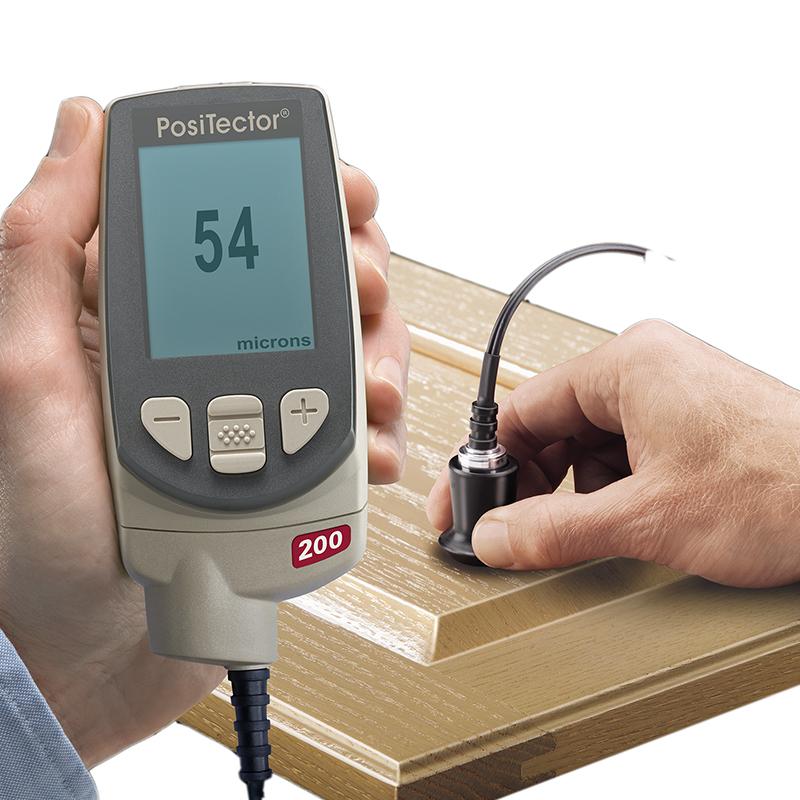
select points
Application field: Ultrasonic coating Thickness Gauge is suitable for measuring the coating thickness of metal and non-metal materials. Different models of ultrasonic coating Thickness Gauges are suitable for different types of materials, so the instrument should be selected for the specific application area.
Measuring range: The measuring range of an ultrasonic coating Thickness Gauge is usually between a few microns and a few millimeters. Depending on the needs, an instrument with an appropriate measurement range should be selected.
Accuracy and Resolution: Accuracy and resolution are important parameters for measuring coating thickness. Instruments should be selected with sufficient accuracy and resolution to meet the requirements of a particular application.
Sensor Type: Sensor types for ultrasonic coating Thickness Gauges include single crystal, dual crystal, and small angle sensors. The appropriate type of sensor should be selected according to the needs.
Instrument functions: Some ultrasonic coating Thickness Gauges have additional functions, such as data storage, data transmission, automatic calibration and automatic detection, etc. Depending on the need, an instrument with appropriate capabilities should be selected.
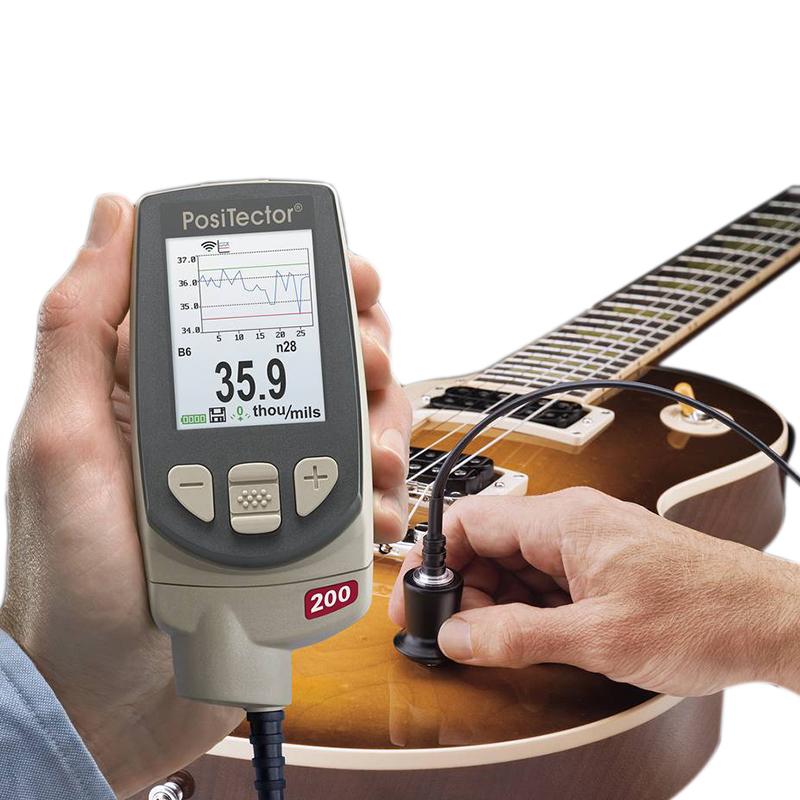
Precautions
Before use, you should know the sound velocity, density and other parameters of the measured material to ensure the measurement accuracy and accuracy of the instrument.
Choose the appropriate sensor according to the thickness of the coating, and use the sensor correctly according to the instructions.
When measuring, make sure that the sensor is in close contact with the surface of the measured material, and keep the sensor perpendicular to the measured material.
Instruments are calibrated regularly to ensure their accuracy and reliability.
Avoid exposing the ultrasonic coating Thickness Gauge to too high or too low temperature environment, so as not to affect its performance and life.
Follow the operating steps in the instructions for use, and pay attention to the maintenance and maintenance of the instrument.