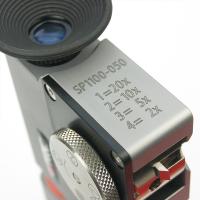
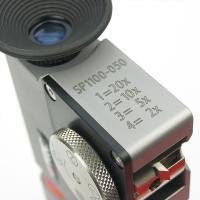
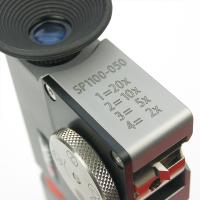
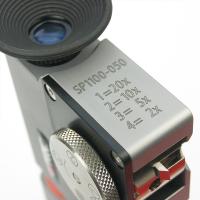
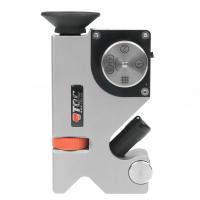
A destructive Thickness Gauge is a device used to measure the thickness of a material, typically in situations where destructive testing is being performed on the material. Its working principle is to destroy the measured material by mechanical force or chemical treatment, and then calculate the thickness of the material by measuring the residual thickness after destruction.
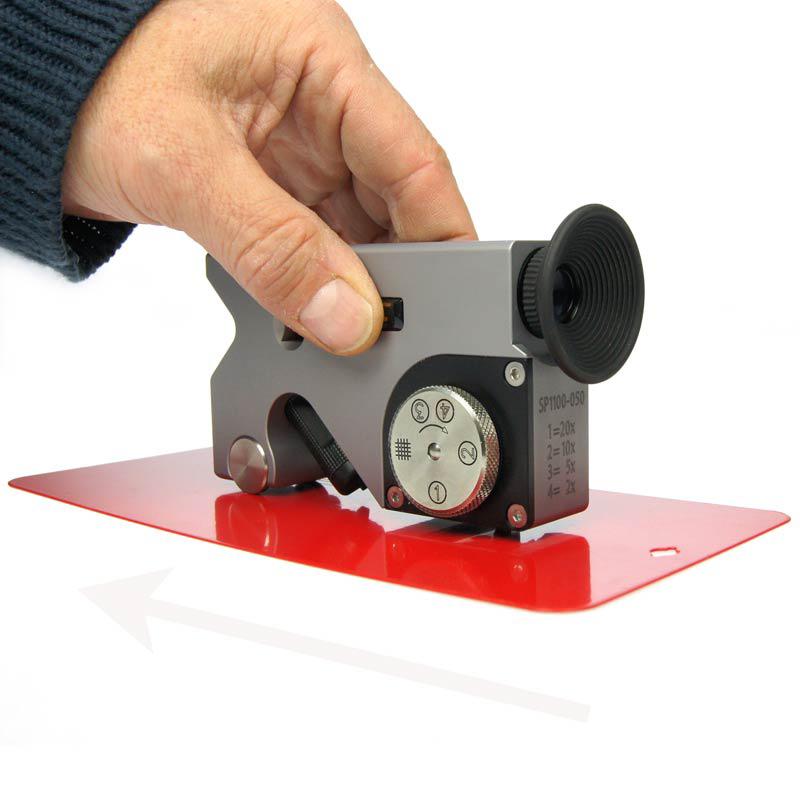
When selecting a destructive Thickness Gauge, the following points should be kept in mind:
What to measure: Different destructive Thickness Gauges are suitable for different types of materials. An instrument that matches the material to be tested should be selected to ensure measurement precision and accuracy.
Measuring range: According to actual needs, select a destructive Thickness Gauge with a suitable measuring range. If you want to measure thicker materials, you need to choose an instrument with a larger measuring range.
Accuracy and resolution: Choosing an instrument with high precision and resolution can improve the accuracy of the measurement. Typically, the higher the accuracy and resolution, the more expensive the device will be.
Instrument size and weight: An instrument of appropriate size and weight should be selected according to the use environment and actual needs. If you need to measure in a small or confined space, you should choose a small and light instrument.
When using destructive Thickness Gauges, the following should be noted:
Safety: Safety precautions should be taken when using destructive Thickness Gauges, such as wearing personal protective equipment, avoiding direct viewing and touching the test material, etc.
Calibration: To ensure the accuracy and precision of the measurement results, calibration should be performed periodically. Calibration should be performed with standard materials of known thickness.
Operation precautions: When using the destructive Thickness Gauge, it should be operated according to the operating instructions provided by the manufacturer, and the corresponding safety regulations should be followed. For different types of materials, different test methods should be selected.
Maintenance: Regularly clean and maintain the destructive Thickness Gauge to ensure its normal operation and prolong its service life. When storing, it should be placed in a dry, light-proof and ventilated place to avoid damage and pollution.