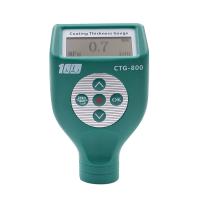
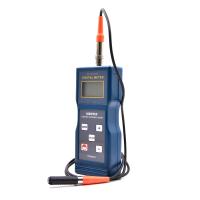
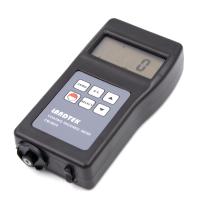
The coating Thickness Gauge is a device used to measure the thickness of the surface coating, which is widely used in the quality control and quality inspection process in the automobile, aviation, construction, chemical and other industries. The importance of choosing the right coating Thickness Gauge for ensuring measurement accuracy and production efficiency goes without saying. The following are some key points and precautions for the selection of coating Thickness Gauges:

select points
1. Measuring range: Select an appropriate measuring range according to the thickness range of the coating layer to be measured. In general, the measurement range should cover the minimum and maximum coating thicknesses required to be measured.
2. Accuracy: Measurement accuracy is an important index of coating Thickness Gauge. In general, the higher the precision, the more accurate the measurement. Therefore, when choosing a coating Thickness Gauge, you should choose an instrument with high precision.
3. Measurement method: The coating Thickness Gauge has two measurement methods: contact type and non-contact type. Contact measuring instruments usually need to be placed on the surface to be measured for measurement, while non-contact measuring instruments can measure by means of infrared rays or lasers. When choosing, you should choose the appropriate measurement method according to the actual needs.
4. Data storage: The data storage function can record the measurement results to facilitate subsequent data analysis and comparison. Therefore, when choosing a coating Thickness Gauge, you should choose an instrument with data storage function.
5. Ease of use: The coating Thickness Gauge should be easy to use, including features such as simple operation, clear display, and small size, so that operators can perform quick measurements.
Precautions
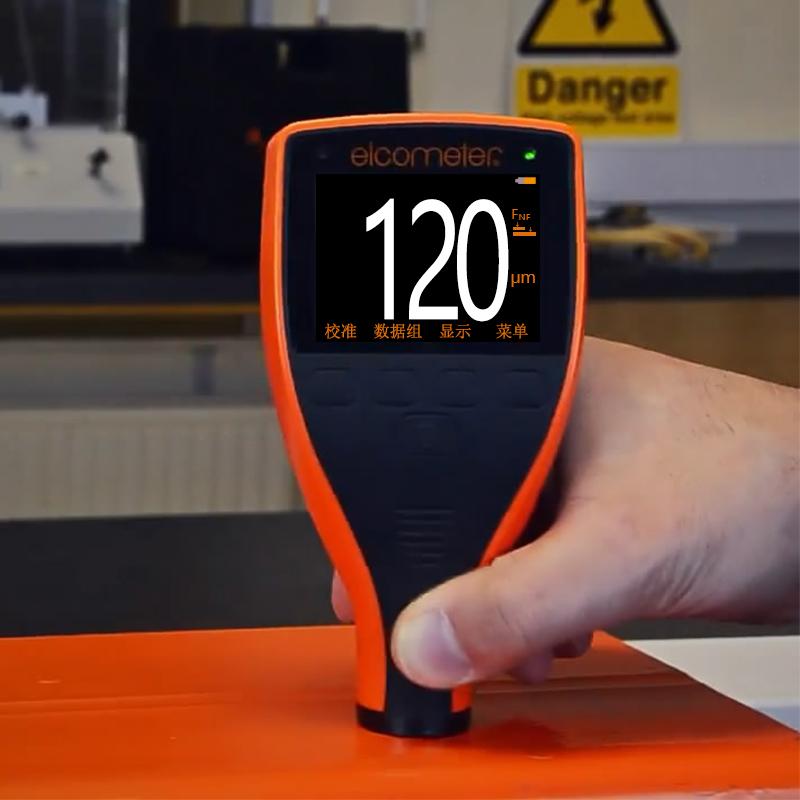
1. Before measuring, make sure the surface to be tested is dry and clean to prevent the measurement accuracy from being affected.
2. The correct probe should be used to ensure the measurement accuracy. Different probes are suitable for different types of coatings.
3. When performing contact measurement, the instrument probe should be placed perpendicular to the surface to be measured, and ensure that the gap between the instrument and the surface to be measured is not greater than 1/3 of the probe diameter.
4. When performing non-contact measurement, care should be taken to avoid external interference to ensure measurement accuracy. At the same time, ensure that the distance between the instrument and the surface to be measured is within the specified range.