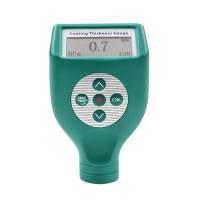
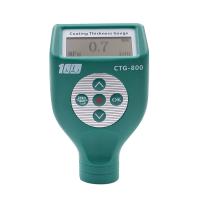
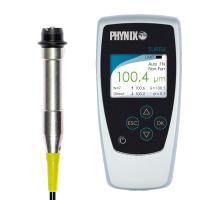
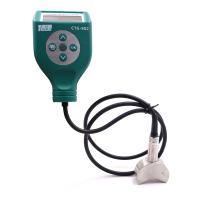
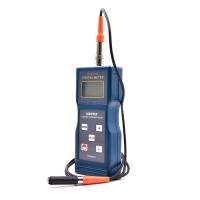
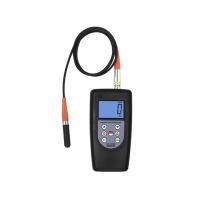
The current coating Thickness Gauge has a relatively large error in measuring the coating thickness below 10 microns, mainly for the following reasons:
Measurement Accuracy Limitations: Coating Thickness Gauges have limited measurement accuracy, usually in the range of a few microns. When the measured coating thickness is less than the measurement accuracy of the measuring instrument, the error will be relatively large.
Measurement method limitation: The measurement method of the coating Thickness Gauge is generally magnetic induction or eddy current type, which is difficult to accurately measure non-magnetic or non-conductive coatings.
Surface treatment limitation: When the thickness of the coating is less than 10 microns, the surface treatment will affect the measurement results. For example, the smoothness and flatness of the coating surface will have a great influence on the measurement results.
Measurement environment limitations: The measurement results of the coating Thickness Gauge are also affected by the measurement environment. For example, the temperature, humidity and other parameters of the measurement environment will also have a certain impact on the measurement results.
Therefore, when the measured coating thickness is less than 10 microns, it is necessary to consider the influence of the above factors on the measurement results, and at the same time select more suitable measurement methods and instruments to ensure the accuracy of the measurement results.

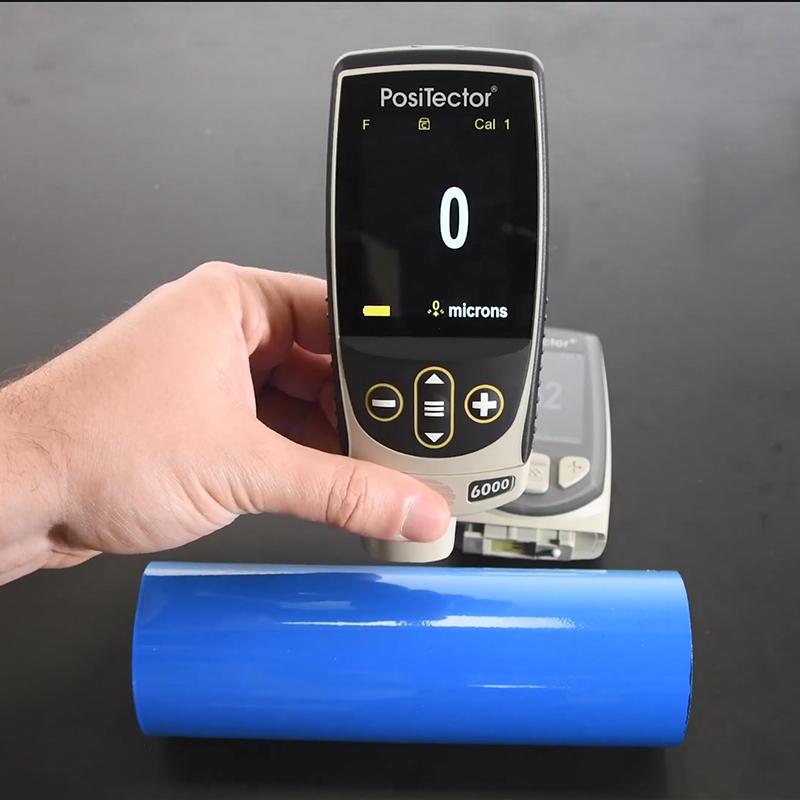
The steps to correctly use the coating Thickness Gauge to measure ultra-thin coatings are as follows:
Prepare the coating Thickness Gauge: first make sure the coating Thickness Gauge is calibrated and properly warmed up. In addition, it is also necessary to ensure that the probe of the coating Thickness Gauge is clean and free of any impurities.
Prepare the coating sample to be tested: remove any impurities on the coating sample, such as dust, grease, etc., and ensure that the coating surface is smooth and smooth.
Adjust instrument parameters before measurement: For ultra-thin coatings, the parameters of the coating Thickness Gauge need to be adjusted appropriately. Usually, the sensitivity of the instrument needs to be adjusted to the highest level in order to measure the coating thickness more accurately.
Measuring the coating thickness: Gently stick the probe of the coating Thickness Gauge to the coating surface, make sure it is in full contact with the surface, and read the coating thickness. During the measurement, make sure that the probe of the coating Thickness Gauge is kept perpendicular to the coating surface, and maintain a stable measurement speed.
Processing measurement results: According to the measurement results of the coating Thickness Gauge, the coating is judged and evaluated to ensure that the quality and performance of the coating meet the requirements.
When measuring ultra-thin coatings, it is necessary to pay attention to details such as the sensitivity of the instrument, the cleaning of the probe, and the treatment of the coating surface to ensure the accuracy and reliability of the measurement results. In addition, if a large number of measurements are required, the method of multi-point measurement can be used to obtain more accurate coating thickness data.