Molecular materials refer to materials composed of a large number of molecules, in which the molecules are linked together by covalent bonds or physical interactions to form a polymer structure. Polymer materials usually have good plasticity, flexibility, wear resistance, chemical corrosion resistance, insulation, heat insulation and other characteristics, so they have been widely used in various fields.
Significance of coating film
The main purpose of polymer material coating is to increase the functionality and applicability of polymer materials.
Improve surface quality: Coating film can improve the surface quality of polymer materials, make the surface smoother and smoother, remove surface defects, and improve the aesthetics and touch of materials.
Increased durability: The coating film can improve the wear resistance, scratch resistance, and chemical resistance of polymer materials, prolong its service life, and reduce maintenance and replacement costs.
Improve protection performance: The coating film can increase the waterproof, anti-fouling, anti-corrosion and other protective properties of polymer materials, making it more suitable for various harsh environments and special applications.
Improve functionality: Coating films can increase the functional properties of polymer materials such as electrical insulation, thermal conductivity, and optical transparency, and expand their application range.
Improve production efficiency: Coating film can realize effective continuous coating, improve production efficiency, save time and cost.

The role of film coating machine
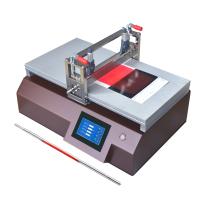
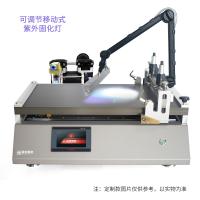
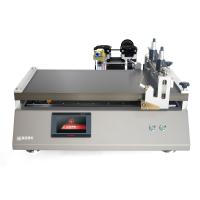
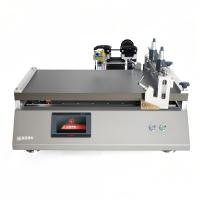
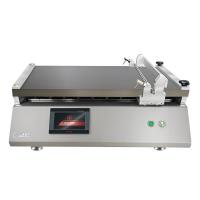
Film coating machine plays a very important role in polymer coating, it is a kind of equipment used to prepare coating film with uniform, accurate thickness and surface quality.
In polymer coating, the coating machine plays a role in the following ways:
Provide uniform coating: the coating machine uses devices such as rollers or scrapers to evenly coat the polymer coating on the substrate, so as to achieve uniform coating and consistent thickness.
Precise thickness control: Coating machines are usually equipped with adjustable parameters such as pressure, coating speed and coating thickness, through which the thickness of the coating film can be accurately controlled to meet the application requirements of different coating film thickness requirements.
Control surface quality: The roller or scraper of the film coating machine can properly cut and trim the polymer coating, so as to ensure that the surface of the coating film is flat and smooth, and there are no surface defects such as bubbles and particles.
Improve efficiency: the film coating machine can realize effective continuous coating, improve production efficiency, save time and cost.

Coating step
The following are the steps of general polymer material coating:
Prepare the film coating machine and materials: adjust the film coating machine to the appropriate thickness and speed settings, and prepare the polymer materials to be coated.
Prepare the substrate: Select the appropriate substrate, such as glass, metal plate or plastic sheet, and prepare the substrate to be coated.
Place the polymer material on the rollers of the Film Applicator and fix it.
Place the substrate on the bottom of the Film Applicator and secure it with the fixture.
Start the Film Applicator to evenly coat the polymer material on the substrate until the desired thickness and quality are achieved.
Wait for the film to dry, usually hours or days, depending on the type and thickness of the polymer.
The coating film is peeled off from the substrate and subjected to the necessary post-processing such as cutting or baking.
NBCHAO reminds you: Different types of polymer materials require different film coating machine settings and film coating conditions, so adjustments need to be made according to specific conditions. In addition, it is also necessary to pay attention to safe operation to avoid the adverse effects of polymer materials and the safety problems of film coating machine operators.