(1) Requirements for composite putty
The performance requirements of composite putty are similar to those of putty except thick coating and softness. Recently, due to the forced drying of acrylic polyurethane coatings, the heat resistance requirements for composite putties have increased accordingly.
(2) Identification of thick coating and adhesion
As far as composite putty is concerned, the requirements for these two properties have not yet reached the level of putty, but there are still certain requirements.
In particular, the recently developed new composite putty, which has the functions of both putty and composite putty, has also increased its requirements in terms of adhesion and thick coating. The method of identification, as shown in Figure 4-2-35, is to first scrape about 10mm of composite putty on the old coating film and steel plate, and after it hardens, conduct the test by tapping on both sides.
Composite putties currently on the market already have products that can fully withstand this test, and this level can be used as a reference to identify the composite putties used.
(3) Appraisal of heat-resistant adhesion
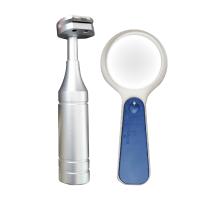
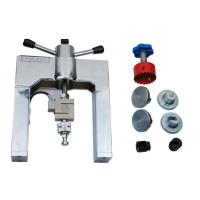
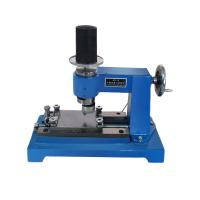
If the heat resistance of the composite putty is poor, after heating, the edges of the putty coating film will peel off and crack. This is because the coating film will expand when heated, and shrink when cooled, and the stretching force of the putty with a large stretching ratio will be greater than the adhesion with the bottom layer, so peeling will occur. (Related instrument: adhesion Tester) Especially when the composite putty layer is thickly coated with surfacer and topcoat layer, the solvent of these paints will infiltrate the putty layer. If it is heated before drying, the infiltration will be intensified, and the shrinkage will also increase after cooling, and the edge of the composite putty coating will be more likely to peel off. To avoid this phenomenon, a composite putty with certain heat resistance should be selected. Select the identification method as shown in Figure 4-2-36. Apply composite putty with a thickness of more than 10mm on a scrap iron plate, heat it to 80°C and keep it for 30 minutes, then cool it down, and check the edge of the coating film to see if there is any peeling phenomenon.

(4) Identification of interlayer adhesion
This test is also of great significance for blister resistance. The so-called interlayer adhesion refers to the adhesion between the layers of the coating film , and for the composite putty layer, it means the adhesion between it and the surface layer (surfacer and topcoat). If this property is not good, it can cause peeling between the coatings, or "bubbling" at the interface between the coatings. Generally speaking, the adhesion between the composite putty layer and the upper and lower layers is not bad, and "bubbling" rarely occurs, but you still need to be careful about it in the rainy summer season.
The identification method of interlayer adhesion is shown in Figure 4-2-37 and Figure 4-2-38.
Check the adhesion between the composite putty layer and the putty, as shown in Figure 4-2-38 1, first scrape the composite putty with a thickness of about 1/10mm on the putty coating, pay attention not to be too thick, and then use a knife on the composite putty layer Carve a cross, the depth should reach directly to the putty layer (as shown in the picture), and then stick the adhesive tape firmly (see Figure 4-2-38), and then tear it off forcefully. If the adhesion between the composite putty and the putty A peeling phenomenon occurs.
To check the adhesion between the composite putty layer and the secondary slurry layer, as shown in 2 in Figure 4-2-37, engrave a cross on the secondary slurry coating, stick the adhesive tape on it, and tear it apart to see the result. Note that the thickness of the secondary paste should be about 1/10mm, not too thick.
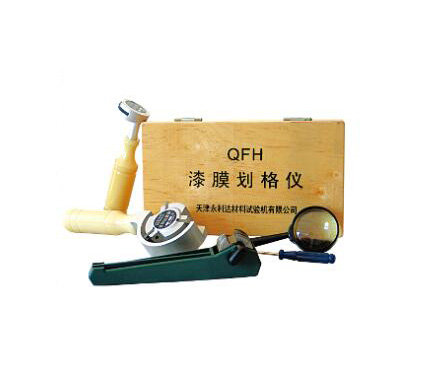
A more rigorous test is shown in Figure 4-2-39. The method is to use a small knife to carve checkerboard-shaped scratches. The smaller the interval between the vertical and horizontal lines of the checkerboard, the harsher the test conditions. Checkerboard-shaped scratches often directly cause damage, and one piece falls off, which loses the meaning of the test. It is more suitable to engrave a cross shape on a thick coating film, and engrave a checkerboard shape with an interval of about 2mm on a thin coating film.


Some composite putty coatings have good interlayer adhesion when they are first painted, but after a period of use, due to climate change expansion and contraction of the coatings are inconsistent, which makes the adhesion performance worse, and there are gaps between the coatings. Gap, resulting in "bubbling" phenomenon. Therefore, the ability to maintain the coating adhesion for a long time has a significant impact on ensuring the quality of the coating film.
To identify the interlayer adhesion performance of this long-term outdoor exposure, it is necessary to conduct tests to promote interlayer separation. As shown in Figure 4-2-40, the specific method of this test is to attach the original used putty and the new product to be used to the same putty surface respectively, cover the surface with a wet towel, leave it for one night, and then Uncover the towel and repeat the above test to determine.

In fact, in the above tests, there are more or less peeling phenomena, and the quality of the adhesion performance should be judged by comparing the size .
(5) Water resistance, abrasiveness and other operational properties
The difference test of water resistance has a lot to do with whether the coating is easy to foam. The water resistance is poor, and there are many components , so it is easy to "bubble". The test is shown in Figure 4-2-41. Soak the test piece coated with composite putty in water. After one week, check whether there are blisters, swelling, softening, and peeling off. This kind of test also needs to use the comparative method to judge its pros and cons.
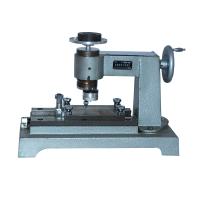
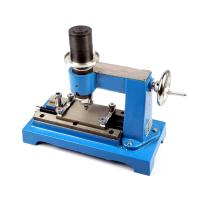
Abrasiveness (relevant equipment: grinding machine) is an important inspection item of composite putty, and the judgment of this performance will be clear after actual operation, so there is no need to repeat it. However, for a certain compound putty, it should be judged correctly whether to use wet grinding method or dry grinding method. Objectively speaking, the time required for grinding per unit area should be used for comparison and judgment.
Others, such as the difficulty of scraping operations, the difficulty of handling air holes and edge joints, should be compared and judged through actual operations. The key to judging the problem lies in how to shorten the operation time.