Z-direction tensile strength refers to the ability of paper to withstand tensile loads in its thickness direction (also known as Z-direction). Paper has three directions: lengthwise (also known as the machine direction), widthwise (also known as the landscape direction), and thickness direction (also known as the Z direction). When manufacturing paper and paper products, physical properties in these three directions often need to be considered. Z-direction tension is an important physical property of paper, which is usually used to evaluate the lamination performance of paper, the performance of paper under conditions such as hanging, stretching and bending, and the stability of paper during printing, copying, writing, etc. . The measurement method is usually carried out using a Z-direction tensile Tester.
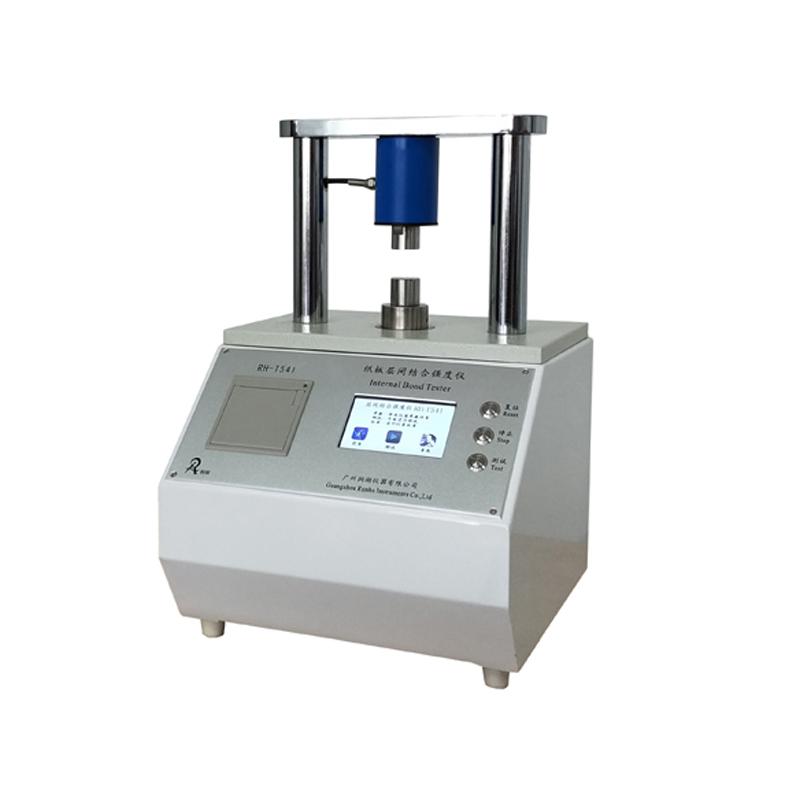
Its determination method is as follows:
Standard device:
Use a Z-direction tensile Tester with standard specifications. The instrument usually consists of a tension sensor and a moving fixture, and is used to determine the tensile force of paper or cardboard in the vertical direction.
Sample Preparation:
According to the standard, cut the sample into the specified size and shape, usually the sample size is 15mm×70mm. Care should be taken during sample preparation to avoid tensile or compressive deformation of the sample during cutting or processing.
Measurement operation:
Place the sample on the moving fixture of the Tester and apply a certain load. By measuring the resulting force and displacement, the tensile resistance of the sample in the vertical direction is calculated.
Beichao reminds you: when performing the measurement, you should pay attention to the preparation and storage of the sample to avoid the influence of external factors on the quality of the sample. At the same time, we should also pay attention to the operating specifications to ensure the accuracy of the measurement results. In addition, attention should be paid to the calibration and maintenance of test instruments to ensure the accuracy of measurement results.
