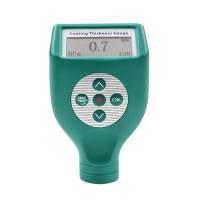
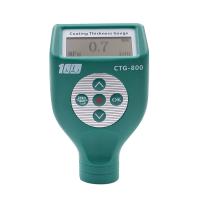
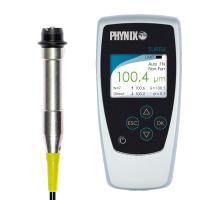
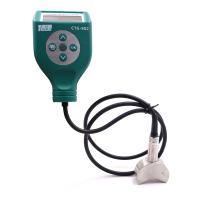
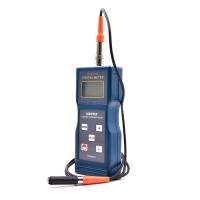
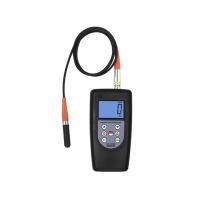
The first condition for choosing a putty is that the thick coating film can withstand the vibration deformation of the car shell without falling off. The outer shell of the car is thin, and the coating film will be subjected to severe vibration under high-speed operating conditions. Generally, there will be no problem with thin-layer coating films. If the coating film is thick, the adhesion to the steel plate is low (testing instrument: adhesion Tester), and it lacks flexibility, it cannot bear it. This is why composite putty generally cannot be directly applied to steel plates. Of course, good adhesion and flexibility alone cannot meet the practical conditions. The requirements for flexibility should meet the requirement that the coating film will not be peeled off or cracked due to vibration during operation.
The specific identification method is as shown in Figure 4-2-30, find a small piece of scrap steel plate, first remove the old coating film and oil, etc., knock out a pit of about 30mm with a hammerhead, and then thickly coat the required test surface. Putty, after it hardens, tap hard from the front of the coating film with a hammer head a few times, then flip the steel plate, and knock on the reverse side a few times, then observe whether there is peeling or cracks between the coating film and the steel plate, and how the adhesion is. This kind of two-sided knocking test is much more stressful than the condition of knocking from the front alone.