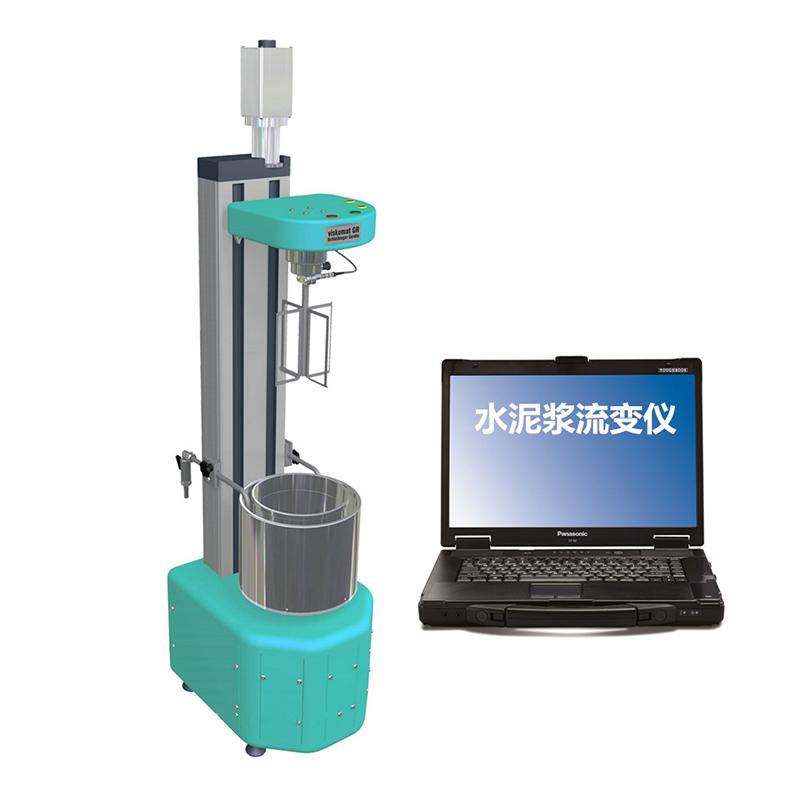

RONGJIDA LB-II cement slurry Rheometer cement slurry/putty/plaster/mortar for
RONGJIDA LB-II cement slurry Rheometer is used to detect the performance of building materials with particulate matter (PM) diameter greater than 2mm, and the LB-II cement slurry Rheometer has a measurement Max. Torque of +/- 250Nmm.
 RongJiDa
 LB-II
LB-II

-
NIRUN NTV-CAP3H Cone Plate Rheometer High Shear Rate Rheology Determination, Rotor Purchased Separately
$ 10884.00 -
NIRUN CAP-09 Cone Plate Rheometer Rotor 500~1000000mPa · s
$ 669.00 -
NIRUN CAP-05 Cone Plate Rheometer Rotor 300~600000mPa · s
$ 669.00 -
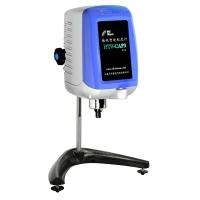
NIRUN NTV-HBP2 Digital Viscometer (Rheometer) 800-104MmPa · s
$ 4000.00 -
NIRUN CAP-03 Cone Plate Rheometer Rotor 75~ 150000mPa · s
$ 669.00
Introduction
It is used to test the construction properties of building materials with fine textures, such as cement slurry, mortar, fine concrete, and cement with a maximum particle diameter of 2 mm.
The cement mortar rheometer can directly obtain the following data:
1. Rheological curves and rheological parameters
2. The relationship between temperature and construction performance
3. The relationship between curing behavior and time at a certain stirring rate
4. Effect of concrete additives and inorganic admixtures on construction performance.
Equipment construction and operating principle
It is driven by a high-precision synchronous motor. The resolution of each turn is 200 steps. It can be rotated from 0.001 to 400 rpm in both directions and record the lower rheological curves and data points. The maximum torque measured is ±250 Nmm and is measured by a special microphone.
The standard measuring system consists of a fixed probe that is concentrically fixed in an optional cylindrical sample container. As the sample flows around the probe, the torque generated by the shear force is continuously recorded. The probe is fixed to the top of the gauge and runs and stops automatically, making it easy to fill, empty and clean the sample container. The sample vessel is fixed on a rotating drive shaft.
The temperature can be measured by a sensor located under the measuring probe.
Features
1. Durable tools for industrial environments;
2. Quality control, research and development;
3. Ease of use;
4. Pre-define test steps and run them automatically. These steps can be standardized or set according to requirements;
Inhomogeneous particles can be measured up to 2 mm in diameter. They can be effectively separated by means of special probes.
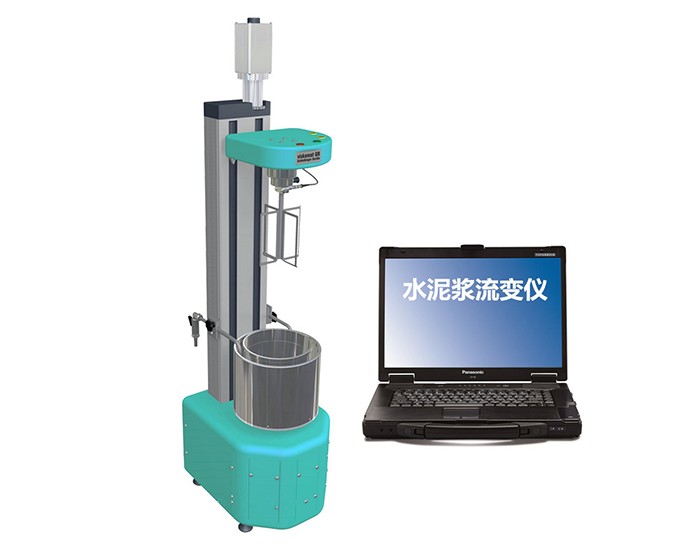
RongJiDa LB-II Cement RheoMeterSpecifications
| LIST | VALUE |
|---|---|
| Rotation resolution | 200 steps |
| Measurement Max. Torque | ±250Nmm |
| Rotor speed | 0.001~400rpm |
RongJiDa LB-II Cement RheoMeter Packing list
machine X1, manual X1, certificate X1, warranty card X1
[Note] Because the manufacturer's packaging may be updated or upgraded, the detailed packaging list shall be subject to the latest standard configuration of the manufacturer.
FAQ
- Viscometer vs Rheo-meter: What's the difference?
- What is rheological testing?
- Rheometer: Which Type is Right for You?
- What is a torque rheometer? How does a torque rheometer work?
- What is the difference between a rheometer and a viscometer? Read this, with table comparison