Search
    Cart(0)
      总价
      前往结算
      您的购物车是空的 : )
      Home> Mayer Rod> RDS> RDS 9# 1/4“ Applicator rod 1/4 "

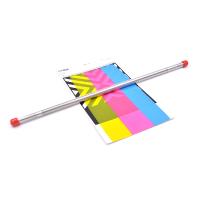
      RDS #9, Formed Mayer Rods Grooved Rods Applicator rod

      Formed process Mayer Rods, rod diameter 6.35mm, can be prepared 20.6 μm wet-film, easier to clean than wire-wound Applicator rod, continuous wire.

      Brand
      SKU: NB003680
      United States RDS
      Stock
      Loading…
      Price
      $ 155.00
      Promotion
      Service
        Service
        The delivery and service By NBchao.Com
        VS
        Genuinegoods
        • RDS 9# 1/4“ Applicator rod 1/4 "Overview

        • Specifications
        • Comments
        • FAQs
        9# 1/4“
        Applicator rod 1/4 "
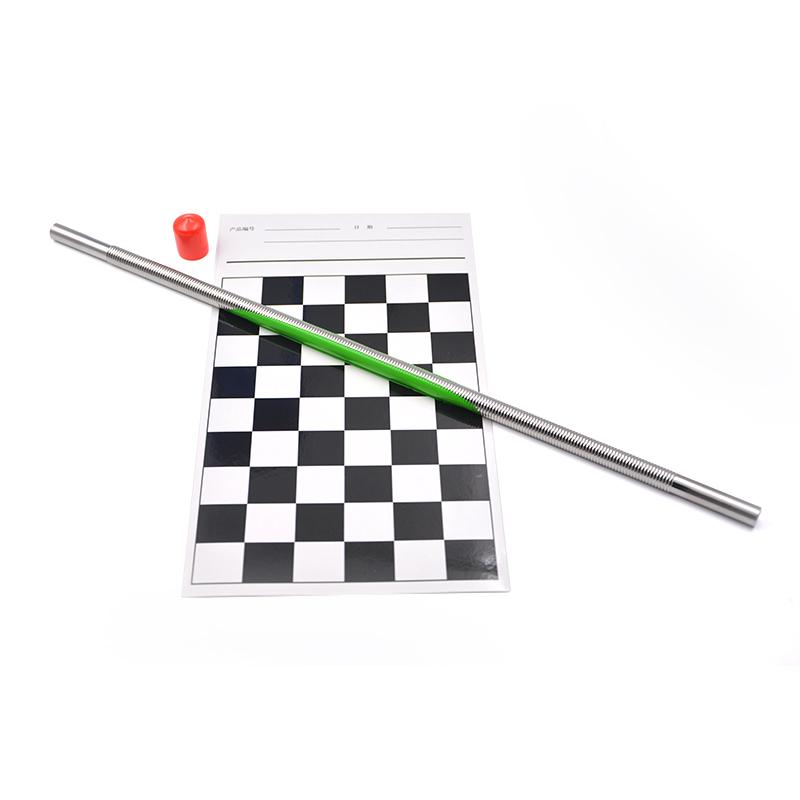
        • RDS #9, Formed Mayer Rods Grooved Rods Applicator rod
        • RDS #9, Formed Mayer Rods Grooved Rods Applicator rod Figure 1
        • RDS #9, Formed Mayer Rods Grooved Rods Applicator rod Figure 2
        Formed process Mayer Rods, rod diameter 6.35mm, can be prepared 20.6 μm wet-film, easier to clean than wire-wound Applicator rod, continuous wire.

        Product description

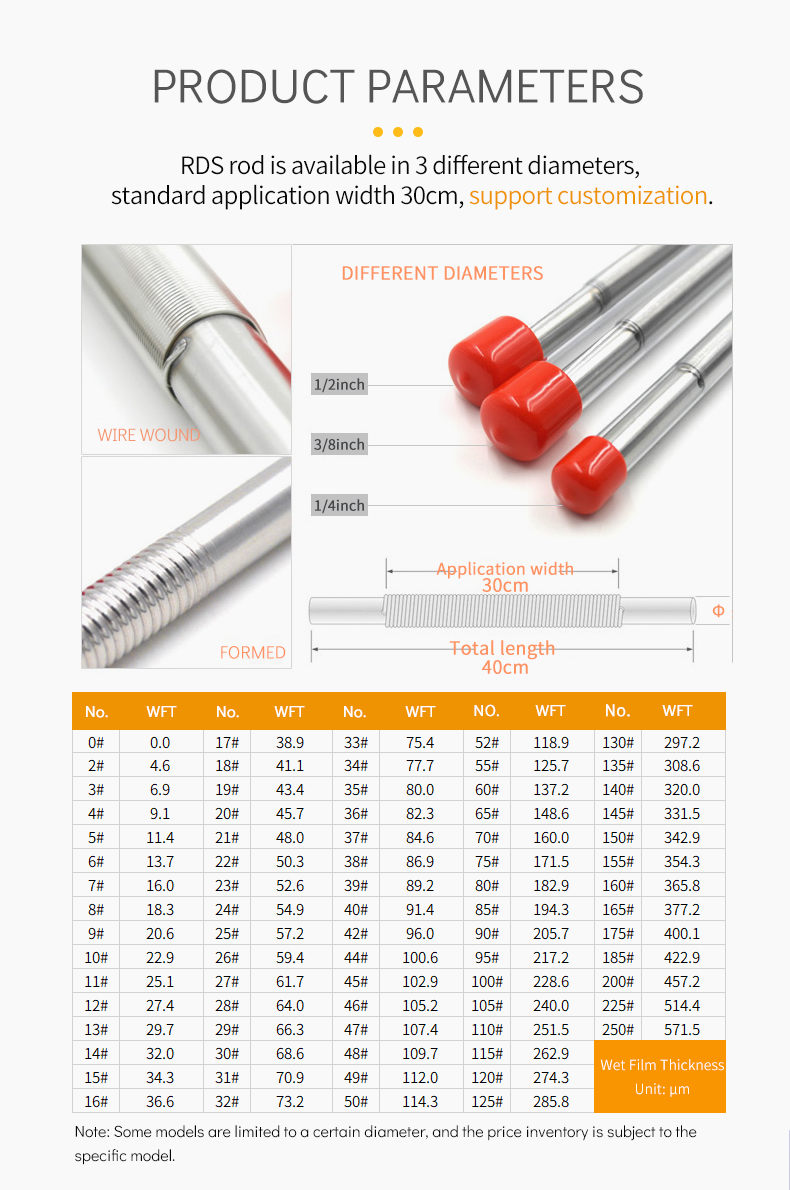
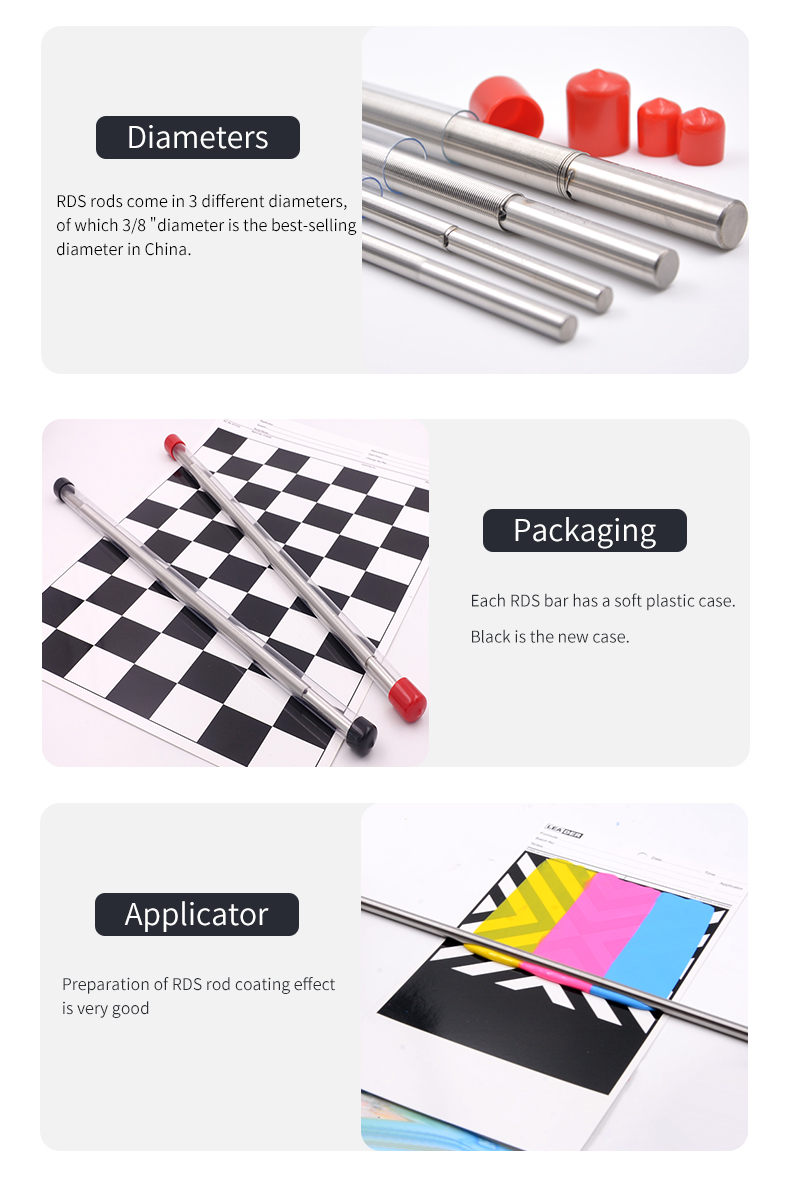
        The RDS wire rod coater has 80 years of experience in the coating industry, and enjoys a great familiarity with domestic (CN) coating inks. The accuracy scale of its coating film is as high as 0.1 micron. For users who pursue high-precision coating film thickness It is quite satisfactory. RDS#9 wire Bar Coater can prepare wet film thickness of 20.6 microns, divided into three diameters of 6.35mm, 9.5mm, and 12.7mm, mainly to adapt to different user habits, in terms of film thickness and precision. it's the same.

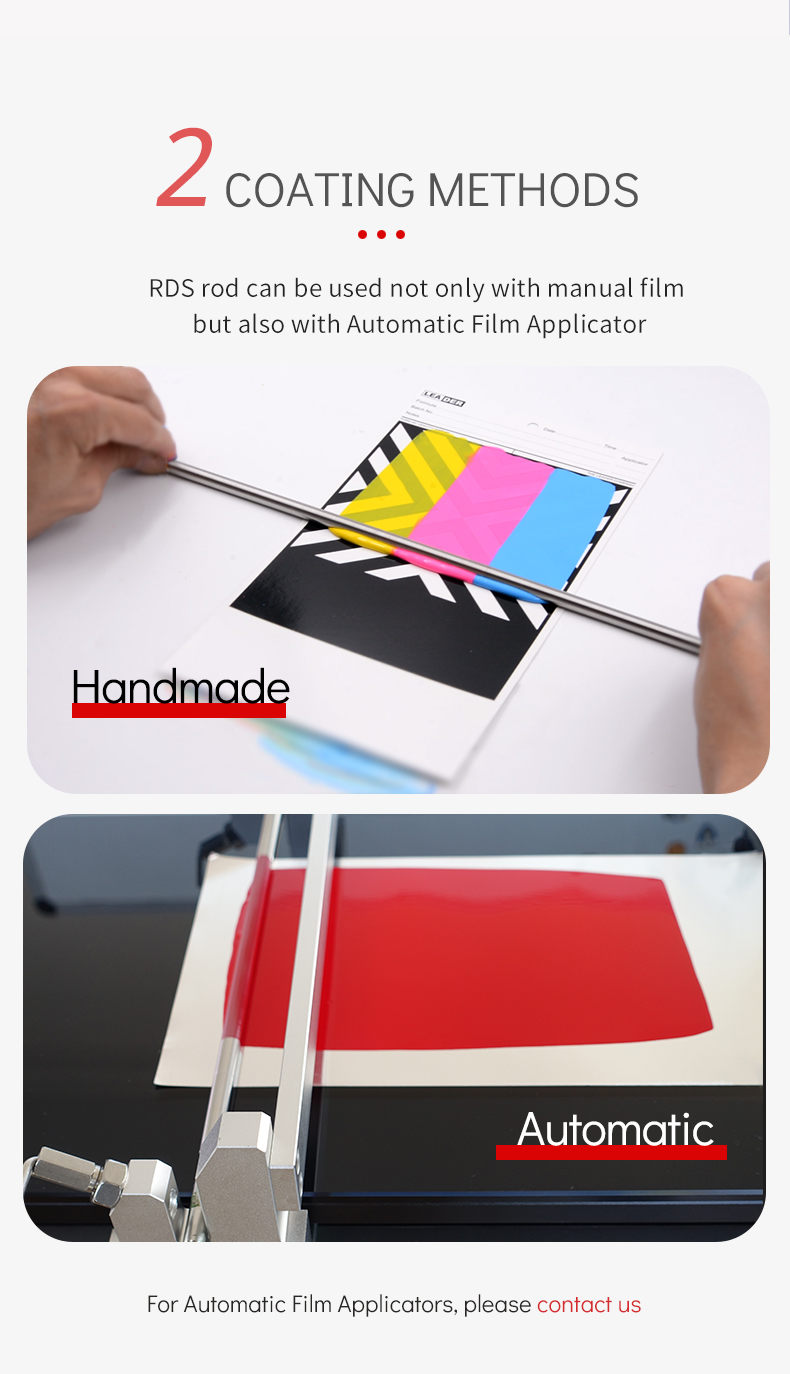
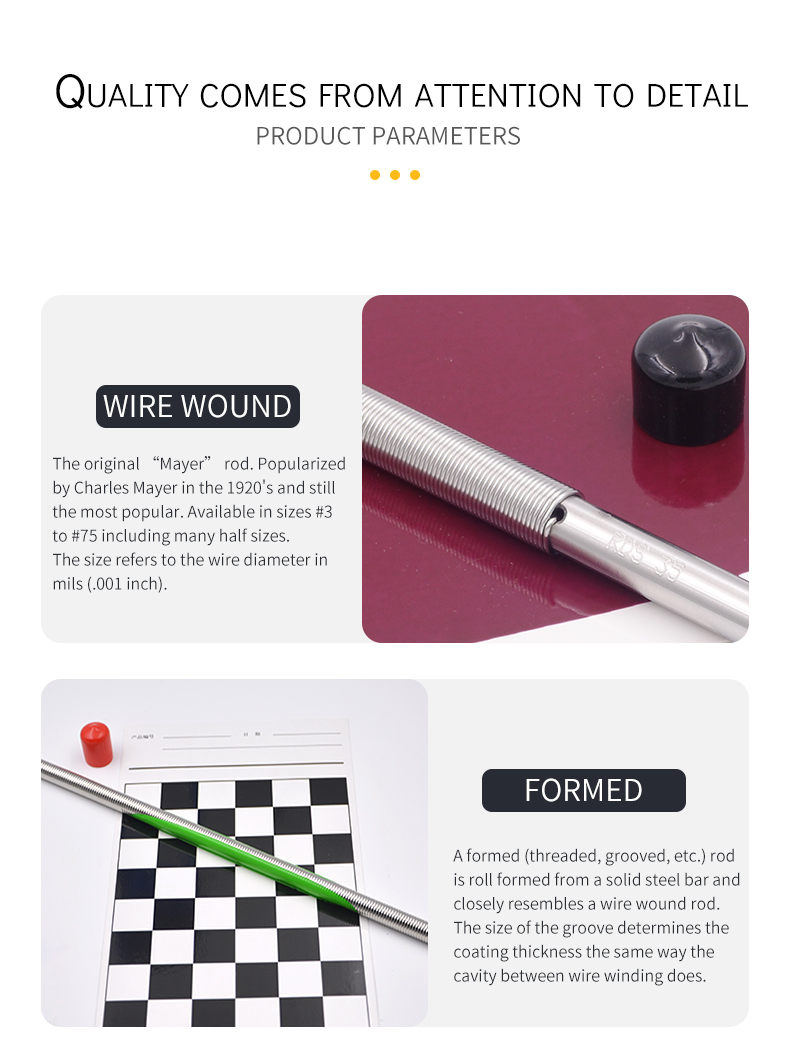
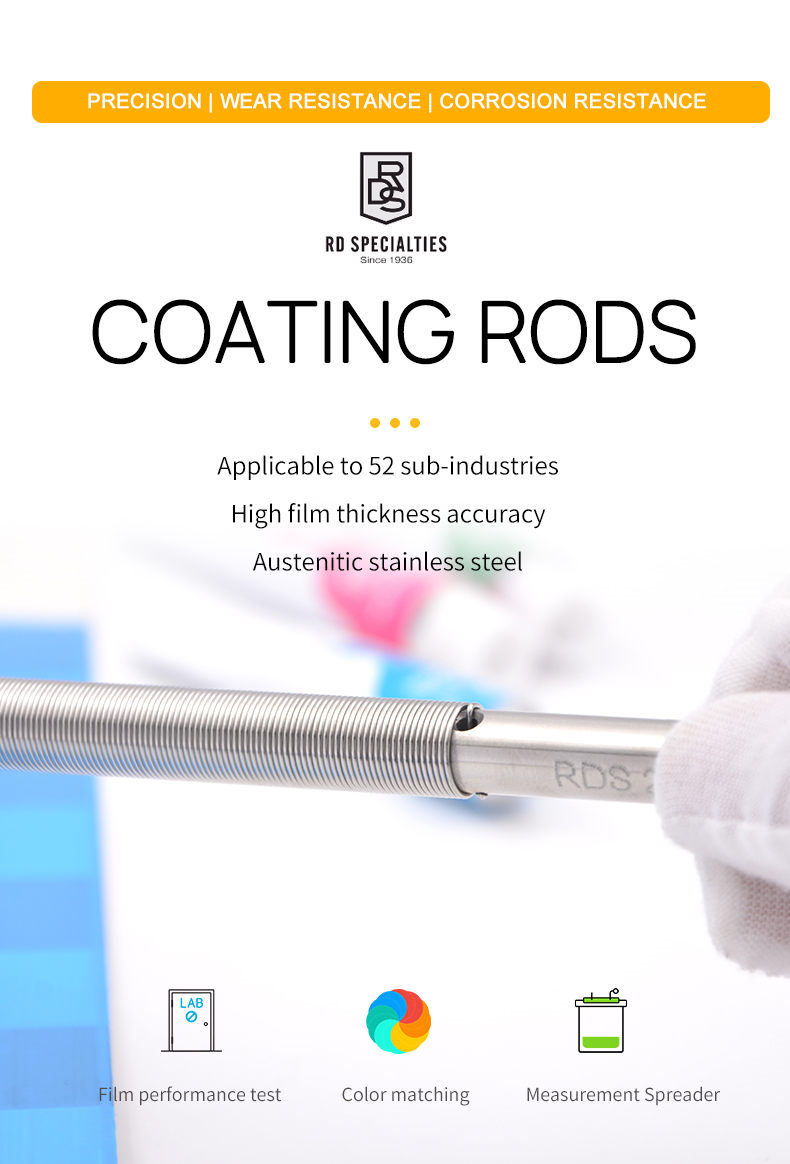
        RDS No. 9 Forming Rod Coater is a "non-" wire-wound rod with a diameter of 1/4 inch, which can prepare a wet film of 20.6 μm. Compared with the wire-wound film coating rod, it is easier to clean and has no wire.
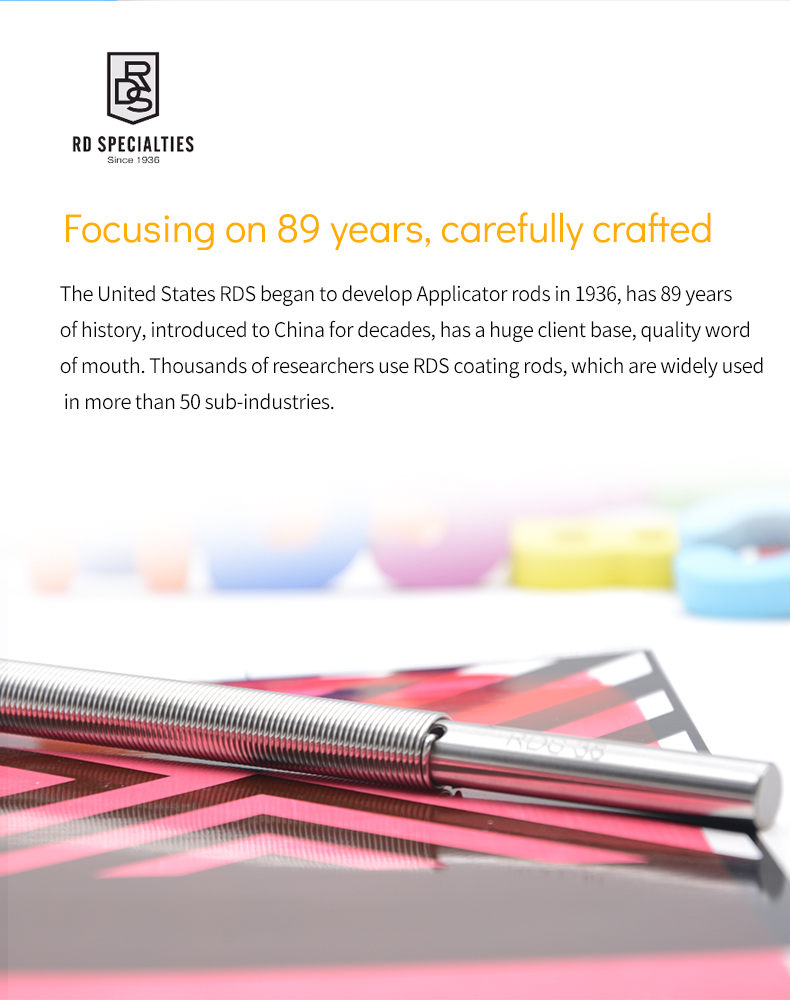
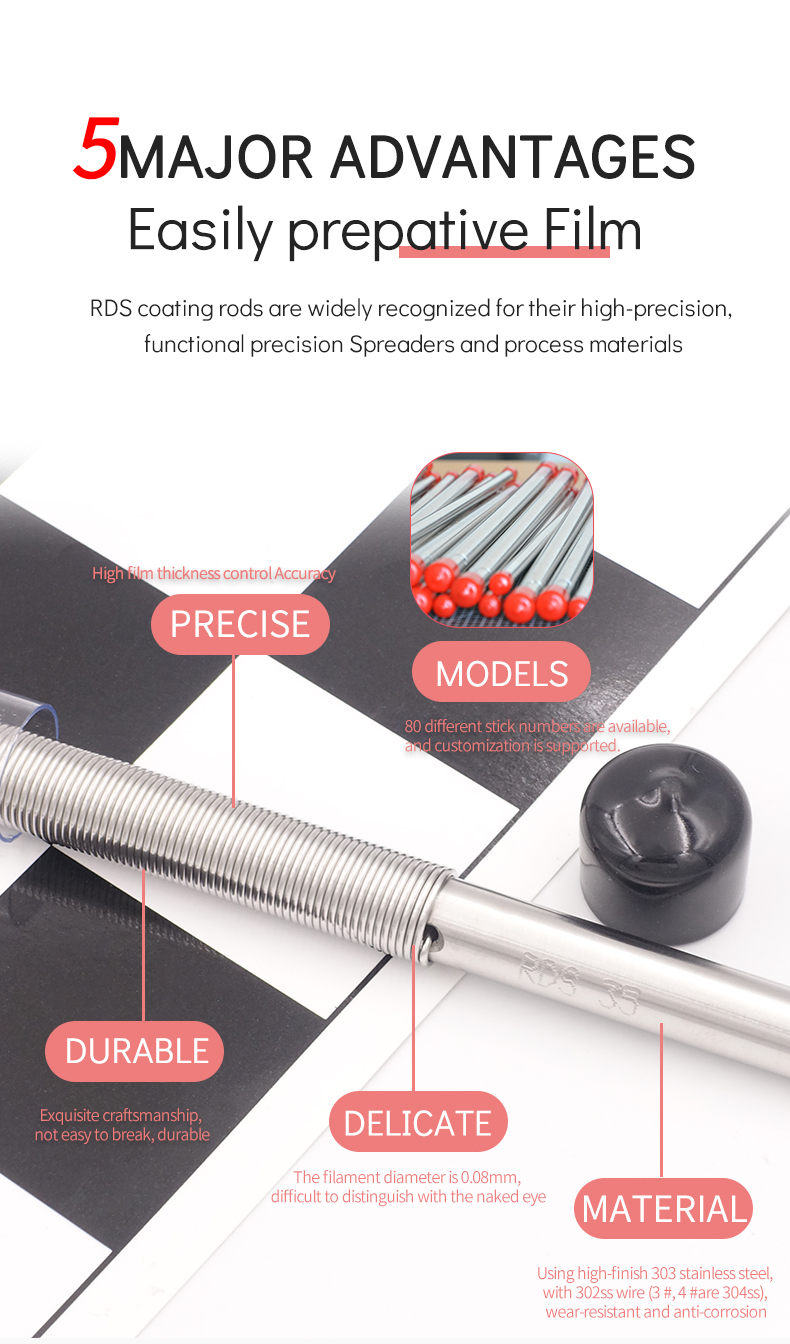
        RDS coating Rods Figure 1


        RDS coating Rods Figure 2


        RDS coating Rods Figure 3


        RDS coating Rods Figure 4


        RDS coating Rods Figure 5


        RDS coating Rods Figure 6


        RDS coating Rods Figure 7


        RDS coating Rods Figure 8


        RDS coating Rods Figure 9


        RDS coating Rods Figure 10


        VS

        RDS 9# 1/4“ Applicator rod 1/4 "Specifications

        LIST VALUE
        Production process formed
        WFT 20.6μm
        diameter 6.35mm
        Total length 400mm
        application width 300mm
        Grip Width 50+50mm
        material stainless steel

        RDS 9# 1/4“ Applicator rod 1/4 " Packing list

        Stainless Steel Rod X1 Transparent Encasement Hose X1

        [Note] Because the manufacturer's packaging may be updated or upgraded, the detailed packaging list shall be subject to the latest standard configuration of the manufacturer.

        FAQ

        [Q]
        Do you support customization? Such as wet film thickness and length?
        [A]
        Spreader rod length and main rod diameter support customization, but wet film thickness RDS has provided dozens of specifications covering more than 200 microns, and in principle does not accept customization.
        [Q]
        I want to do a test about the GB/T9270 standard. Is this extruded wire rod okay?
        [A]
        Sure
        [Q]
        Our company is a solar backplane, the laboratory needs to use a scraper, want to consult, want to achieve the film thickness in our mind, how to choose the rod number, no thickness of dry film can not refer to ah, before using the rds6 scraper, coated with a thickness of dry film is 4 microns, if I want to reach 6 to 8 microns, can you suggest?
        [A]
        It can be roughly calculated according to dry film = wet film × solid parts. The wet film of RDS No. 6 rod is 13.7 μm, and the solid content is about 29% by calculation. If you want to make 6 μm and 8 μm dry films, you need to scrape the wet film 20.5 microns and 27.4 microns, which corresponds to RDS rod, which can be close to RDS 9 #and RDS 12. Thank you for your consultation.
        [Q]
        Which model is the general emulsion paint?
        [A]
        Sorry, usually choose the scraper model, the customer is selected by the wet film thickness they need, and the model selected for the paint with Solid content and Spreader amount is different., In the end, it is still based on the wet film thickness you need to choose Oh Here is the wet film thickness calculator: http://tool.nbchao.com/mohou
        [Q]
        What is the difference between the formed scraper groove of the wire rod and the winding scraper groove?
        [A]
        The average user may ask another question in addition to the preparation requirements: wired or formed? Objectively speaking, the products of any manufacturer cannot be reviewed comprehensively, accurately, and without any profit purpose. Through experiments, we found that it can be replaced in terms of levelling, accuracy, and preparation of complete films. From a technological point of view, the advantage of the formed Applicator rod is that it is possible to have no broken wires and is easier to clean. The advantage of wired is that it more strictly follows the test principle of the Mayer-bar. Since wired and formed are different in the principle of forming grooves, the actual amount of Spreader used may vary during the experiment. Therefore, it is recommended that customers follow the type used in the past when choosing wired or formed Spreader rods to ensure the conformity of the experiment. It is undeniable that formed does not have the possibility of broken wire, which is advertised by the vast majority of formed manufacturers, but objectively speaking, according to the data disclosed by NBchao. Com Mall, the probability of broken wire caused by RDS winding due to various reasons (whether you deliberately break it or use it improperly) is 2/1000, which is very good. We might as well make an assumption that everyone will buy electronic products (not yet to the detection level), such as mobile phones. If you buy 1000 mobile phones and suddenly find that 2 cannot be used by Return & exchange, do you think it is normal? So whether it is winding or extrusion, what the customer used before, you can use it in the future. As for the advantage of formed easy cleaning, it is indeed an advantage. But another data disclosed by NBchao may be more objective for us to judge: the average replacement cycle of customers using Spreader sticks is 6.7 months, that is to say, most industry customers use Spreader sticks (regardless of domestic (CN), imported, winding or extrusion), and they are replaced almost every six months. According to my experience, this is mainly due to abrasion. Whether the cleaning is clean depends on the experimenter and the different cleaning methods applied by different scraping fluids. Abrasion is the main factor that makes it impossible for you to accurately prepare wet films. To sum up, the most fundamental reason for choosing extrusion or winding is not what advantages they have, but to return to the essence: What is the purpose of your film? Do you want a complete film? Or do you want an accurate film? Or both, accuracy and flatness are the fundamental, imported products in this piece of materials are more sufficient, accuracy is relatively high, on the contrary, if only to do a film layer is not high, then choose domestic (CN) products on it, the price is twice as low.
        RDS
        RDS #9, Formed Mayer Rods Grooved Rods Applicator rod
        Service
        Focus on online sales of Lab Testing Instruments