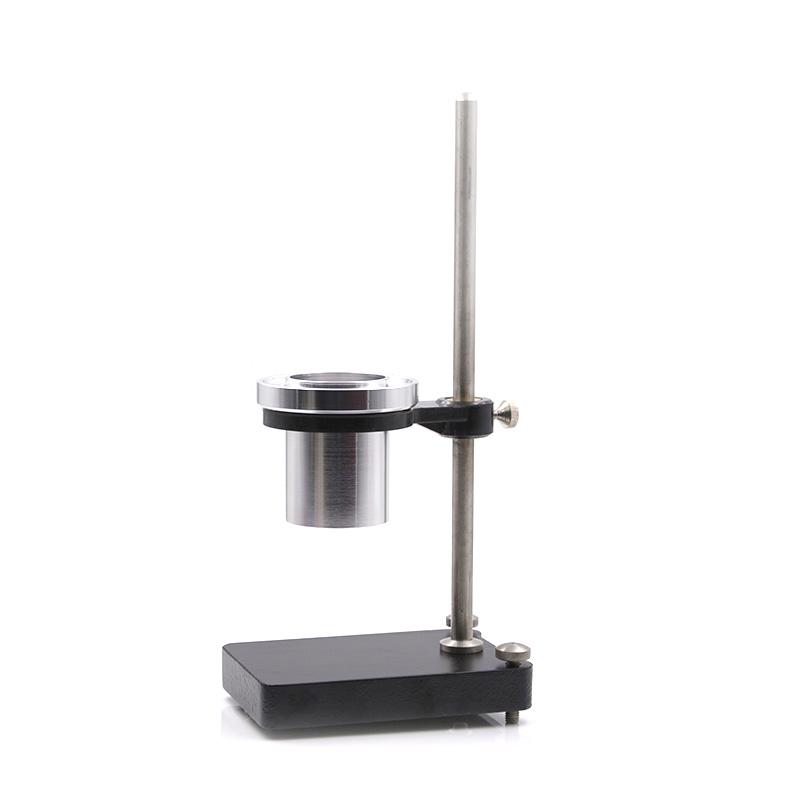


MODERNER FORD-4 No. 4 Ford Viscosity Cup viscosity range 49~ 220cst
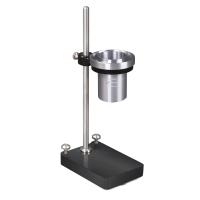
Desktop with stent; anodic oxidation aluminum cup + brass leakage; measurement range 70-370 centimeters; outflow time 20-100 seconds; ASTM/D 1200 standard.
 Moderner
 FORD-4

-
JINGKELIAN ZND-1 No. 3, Zain Viscometer 100~800 cis Viscosity 3.76mm Diameter
$ 132.00 -
JINGKELIAN QNC-4C Coating Viscosity Cup
$ 111.00 -
YONGLIDA FORD-2 Ford Viscosity Cup varnish viscosity measurement cup
$ 163.00 -
MODERNER ISO-4 ISO Flow Cup inks Viscosity Cup
Login -
TRUIT TR 1010/2 Portable Coat - 4 cups, Coat 4 Viscometer
$ 148.00


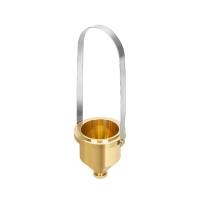
No. 4 Ford Cup FORD-4 is an anodized aluminum No. 4 Ford Cup produced in a MODERNER. The viscosity range of No. 4 Ford Cup FORD-4 is 49~220cst, and the outflow time is 20~100s. MODERNER No. 4 Ford Cup is designed and manufactured according to ASTM D1200 standard, and has been calibrated before leaving the factory.
Introduction to Ford Cup
FORD Ford cup is used to measure the viscosity of Newtonian fluids such as varnishes, spray paints and colored paints. By filling the Ford Viscosity Cup with varnish, spray paint, color paint and other fluids to be tested, calculate the time for the fluid to flow out from the standard hole of the Ford Cup. The Ford Viscosity Cup measurement method is highly recommended in the industry for the determination of paints, coatings and thin viscosities. Of course, this is limited to the determination of Newtonian fluids and similar viscosities. If it is necessary to obtain better reproducible measurement results, it is necessary to correctly select the appropriate measurement range Viscosity Cup model.
Note: The Ford Viscosity Cup is not suitable for measuring the physical viscosity of those high viscosity and pasty materials.
In addition, for the measurement of the viscosity of chemical raw materials, users must remember to operate in accordance with relevant safety regulations when using the Ford Viscosity Cup, especially any safety issues that come into contact with the chemical raw materials to be tested need to be taken seriously.
Ford Cup No. 4 FORD-4 Features
The Ford Viscosity Cups produced by Shanghai Hyundai are all based on ASTM D1200 standards, using anodized aluminum as the cup body and brass spout. Such a design provides good corrosion and solvent resistance, and can withstand wear and tear under frequent use and cleaning. The shape of the cup body is not the shape recommended by ASTM D1200, but a design similar to that of the ISO Viscosity Cup, which is more convenient for cleaning and placement. Every Ford Viscosity Cup is factory calibrated with a standard oil. If the leak nozzle is loosened or taken out due to customer reasons, it should be recalibrated according to the ASTM D1200 standard before it can be used.
operation method
1. The measurement should be carried out in a room with no ventilation and no sharp temperature changes, and the room temperature should be controlled between 22 and 28 °C.
2. When using FORD-2/ FORD- 4/ FORD- 5 Ford cups for measurement, the sample temperature should be 25°C or the temperature negotiated between customers. The temperature drift during the test shall be kept to a minimum and shall not exceed ±0.2°C.
3. The sample of the test material should be visually homogeneous without any foreign matter or air bubbles.
4. Make the sample temperature slightly lower than the required measurement temperature, then fill a 1 pint jar with 2/3 of the sample and stir vigorously on a reciprocating shaker for 10 minutes. After stirring the sample is allowed to stand undisturbed and the sample temperature is further adjusted to the desired temperature. The viscosity measurement was started after 10 minutes.
5. Use an appropriate bracket to keep the mouth of the Viscosity Cup in a horizontal position.
6. Block the leak with your hands or a rubber stopper, and fill the cup with test samples.
7. Use a clean and flat piece of glass to move inward from the edge of the cup along the mouth of the cup, scrape the excess sample into the outer groove, and seal the mouth of the cup. If you don't use a glass piece, you can use a ruler to scrape off the excess sample along the mouth of the cup.
8. First open the leak nozzle (remove the hand or the rubber stopper), then move the glass piece horizontally and start timing at the same time, and use a thermometer to measure the temperature of the sample stream. If the glass sheet is not used, timing is performed while opening the spout.
9. Stop timing when the flow line is cut off for the first time and read the counting seconds (accurate to 0.2 seconds), and confirm that the temperature drift meets the regulations (not exceeding ±0.2°C).
10. Repeat the measurement three times, each time using a new sample of the same material. The average value of three determinations is used as the outflow time of the sample, and the viscosity is calculated according to the aforementioned formula.
11. After each measurement, clean the cup with a suitable solvent and a soft brush. Under no circumstances should metal cleaning tools come into contact with the cup. Cleaning of the leak hole requires special care to avoid any film deposits on or scratches to the inner wall.
In the environment where the room temperature changes, the FORD-2/ FORD- 4/ FORD- 5 Ford Cup needs to use a constant temperature control sleeve.
Precautions
1. The reproducibility of the test method depends on: the dimensional accuracy of the Flow Cup, the temperature during measurement, and the Newtonian characteristics of the fluid.
2. In order to maintain the accuracy of the Ford Viscosity Cup, it must be cleaned in a timely manner, and it should be handled and stored with care to avoid bumping and falling. After using for a certain period of time, the cup should be calibrated according to ASTM D1200. The frequency of calibration checks depends on how often the cup is used and how well the user protects the cup. It is recommended that the user send it to the manufacturer or relevant organization for calibration once a year.
3. ASTM D 1200 has the following instructions on the precision of the Ford Cup:
Repeatability: Two results measured by the same operator at different times, if their difference is greater than 8%, it is considered suspicious.
Reproducibility: Two results measured by different operators in different laboratories are considered suspicious if their difference is greater than 20%.
Pictures
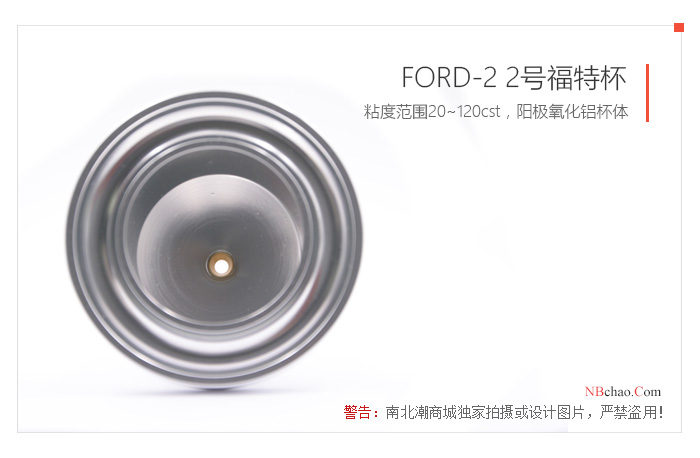
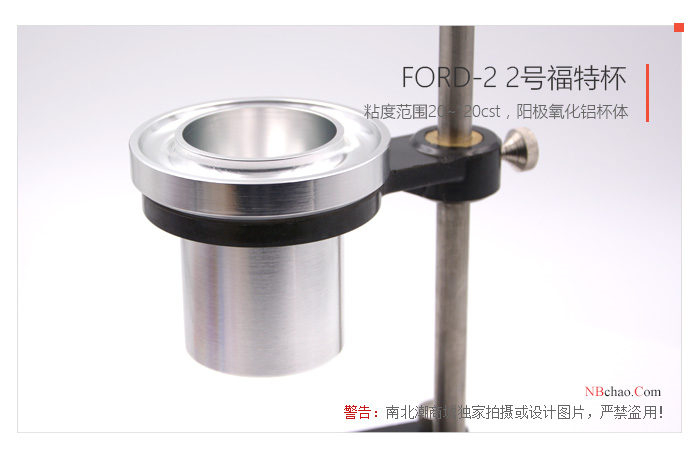
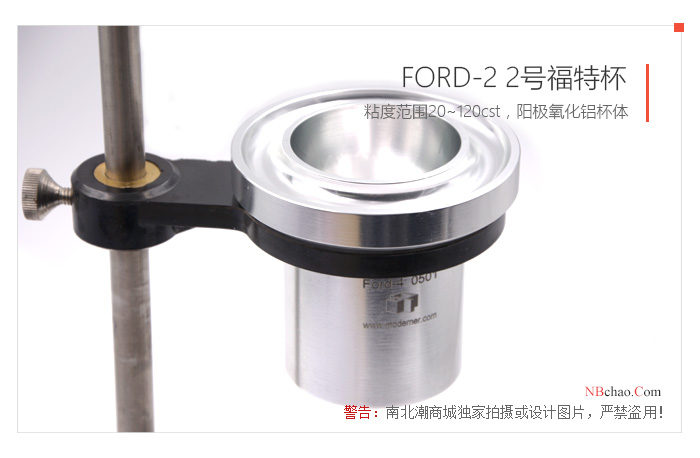
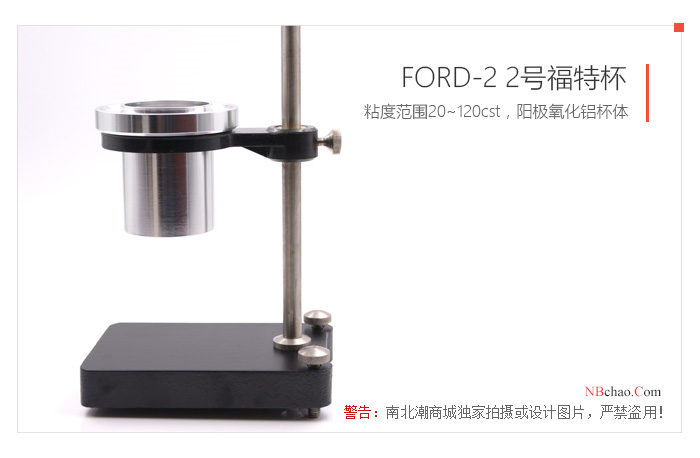
Moderner FORD-4 Ford Viscosity CupSpecifications
| LIST | VALUE |
|---|---|
| Viscosity range | 49~220cSt |
| outflow time | 20~100s |
| Cup body material | Aluminum anode oxidation |
| Filter material | Brass |
| Applicable standard | ASTM D1200 |
| Certificate | without |
Moderner FORD-4 Ford Viscosity Cup Packing list
Viscosity cup x1, bracket x1
[Note] Because the manufacturer's packaging may be updated or upgraded, the detailed packaging list shall be subject to the latest standard configuration of the manufacturer.
FAQ


- ActiveASTM ASTM D1200
- ReplacedASTM
- ReplacedASTM D1200-2010
- ActiveASTM D5125-2020
- ActiveJJG 743-2018
- ReplacedASTM D1200-2018
- AbolishGB/T 2794-1995