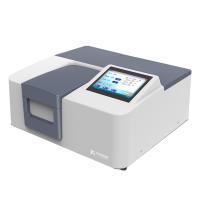
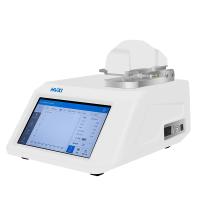
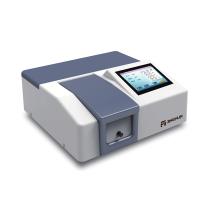
A Spectrophotometer is an instrument used to measure the absorption or transmission of light by a substance. Its basic principle is based on the Beer-Lambert Law, which describes the relationship between the concentration of a substance and its absorbance.
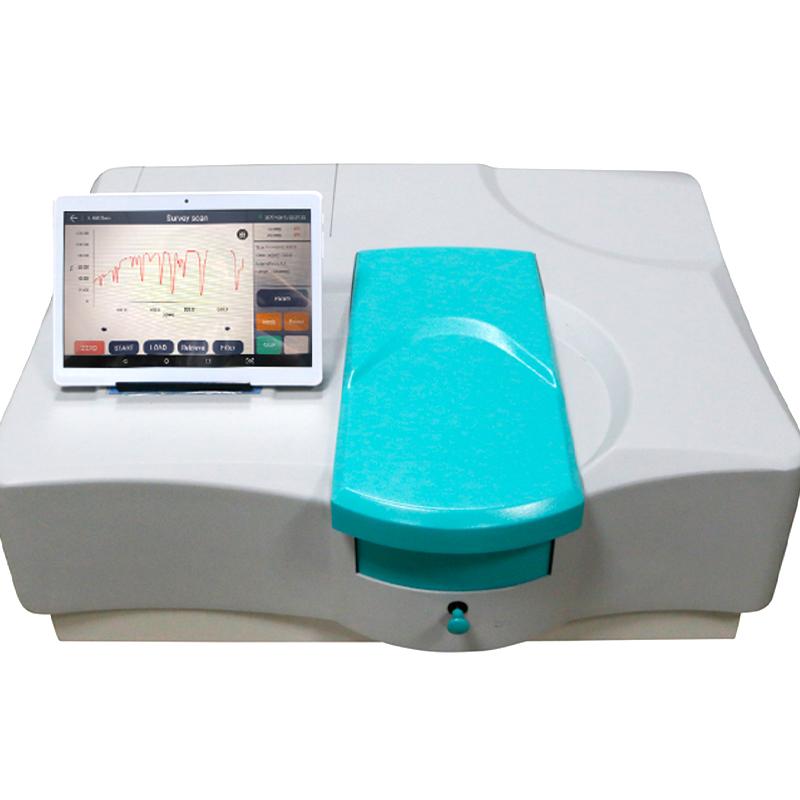
Basic principle
Light source: Spectrophotometers use a light source to produce visible or ultraviolet light. Commonly used light sources include incandescent lamps, deuterium lamps (for the ultraviolet spectrum), and tungsten lamps (for the visible spectrum).
Spectroscopic device: After light is emitted from the light source, it is dispersed into light of different wavelengths through a spectroscopic device, such as a grating or prism. Spectroscopic devices can select a specific wavelength range for measurement.
Sample Chamber: The sample chamber is the area where the sample is placed. The sample can be a liquid or a solution, or a solid substance can be converted into a solution after proper pretreatment. The sample chamber is usually made of transparent optical materials to ensure that light can penetrate the sample.
Detector: After light passes through the sample, it enters the Detector. The Detector converts the light into an electrical signal, such as a photodiode or a photomultiplier tube. The Detector measures the intensity of light and converts it into a voltage or current signal.
Data processing: By comparing the absorbance of the sample with the absorbance of the reference, the absorbance of the sample to specific wavelengths of light can be calculated. According to the Beer-Lambert law, the absorbance is proportional to the concentration of the substance in the sample. By measuring the absorbance and using a pre-established standard curve or concentration calculation formula, the concentration of a specific substance in the sample can be inferred.
The specific operation and data processing steps of the Spectrophotometer may vary by instrument model and manufacturer. Therefore, before using the Spectrophotometer for measurement, you should carefully read the instrument's operation manual and follow the instructions provided by the manufacturer for operation and data processing.