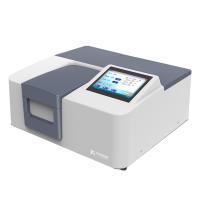
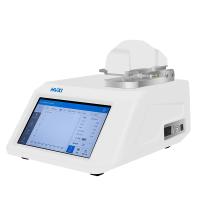
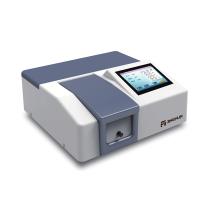
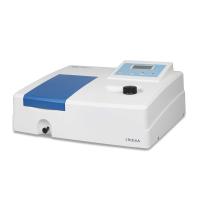
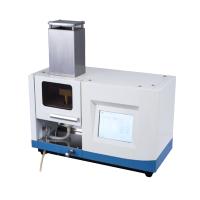
UV Spectrophotometer is a commonly used spectral analysis instrument, widely used in chemistry, biology, medicine, environment and other fields. This article will introduce the working principle, structural characteristics and applications of UV Spectrophotometer s in different fields to help readers gain a deeper understanding of this important scientific instrument.
working principle
The working principle of the UV Spectrophotometer is based on spectrophotometry, which uses the absorption characteristics of ultraviolet light in the measured sample to analyze the composition and concentration of the sample. The workflow includes passing UV light through a sample, absorption in the sample will cause the intensity of the light to weaken, and then measuring the intensity change of the light through a Detector. Based on the degree of light absorption, the composition and concentration of the sample can be inferred.
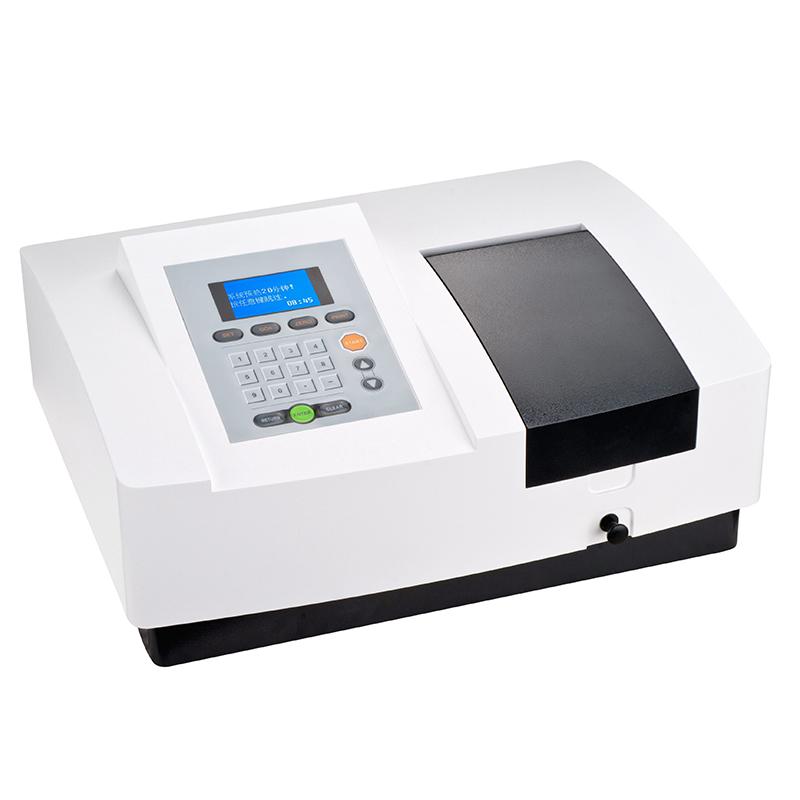
Structural features
UV Spectrophotometer usually consists of light source, monochromator, sample chamber, Detector and data processing system. Among them, the light source generates ultraviolet light, the monochromator separates the light according to wavelength, the sample chamber accommodates the sample to be measured, the Detector measures the light intensity absorbed by the sample, and the data processing system processes and analyzes the measurement results. It has a simple structure and easy operation, and is suitable for various spectral analysis needs.
Application areas
UV Spectrophotometer s are widely used in chemistry, biology, medicine, environment and other fields. In the field of chemistry, it is often used to analyze the structure and concentration of organic and inorganic substances; in the field of biology, it is used to study the structure and function of biomolecules; in the field of medicine, it is often used for drug quality control and efficacy evaluation; in the environment In the field, it is used to monitor environmental problems such as air pollution and water pollution. Its high sensitivity, high resolution and high accuracy make it an indispensable tool in scientific research and production practice.
With the continuous advancement of technology, UV Spectrophotometer s are also constantly developing and improving. Modern UV Spectrophotometer s are often equipped with advanced functions such as digital control systems, automated sample processing devices, and high-resolution Detectors, which improve measurement accuracy and data processing efficiency. In the future, as the demand for spectral analysis technology in scientific research and industrial production continues to grow, UV Spectrophotometer s will continue to play an important role and make more breakthroughs in new material research and development, life sciences, environmental protection and other aspects.
Conclusion
As an important spectral analysis instrument, UV Spectrophotometer plays an irreplaceable role in various fields. By in-depth understanding of its working principle, structural characteristics and application fields, we can better utilize this equipment, promote the development of scientific research and industrial production, and make greater contributions to the progress and development of human society. It is believed that with the continuous advancement of technology and the growing demand for applications, UV Spectrophotometer s will continue to explore the mysteries of spectral analysis for mankind and open a new chapter in scientific research.