As the core equipment for material mechanical property testing, tensile testing machines are widely used in metals, plastics, rubber, textiles, building materials and other industries, and are an important tool to ensure product quality and optimize production processes. For novices, a precise grasp of core terminology is the basis for correctly operating equipment, interpreting test data, and avoiding operational errors. This article sorts out the high-frequency core terms of tensile testing machines, and classifies and analyzes them according to "basic concepts-test process-performance results" to help novices get started quickly.
1. Basic concepts and equipment component terminology
Core components
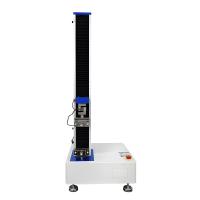
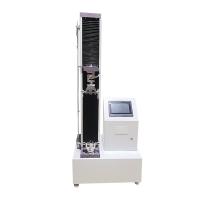
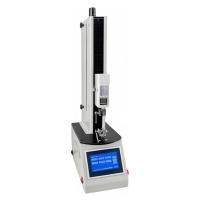
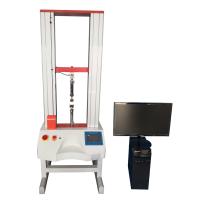
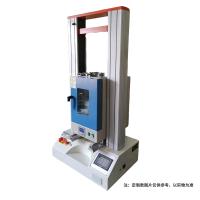
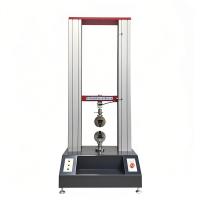
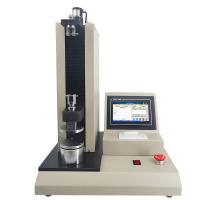
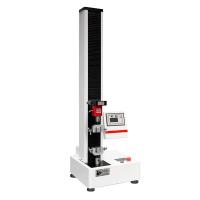
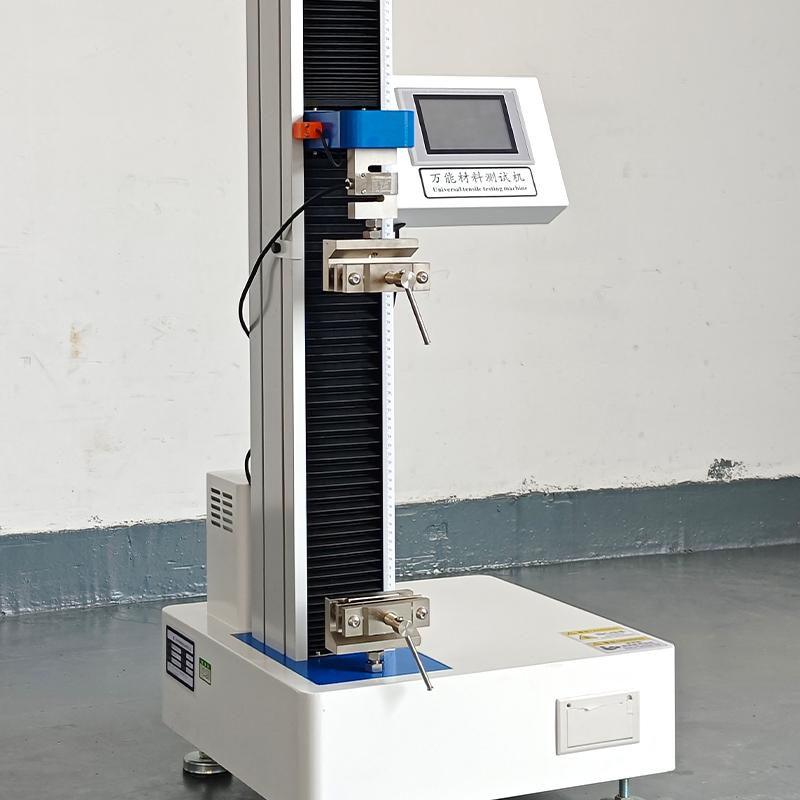
The frame is the support structure of the whole machine, which is divided into single-column type and double-column type: the single-column type is suitable for small force value testing below 5kN, and the body is light and occupies little space; The double-column type has stronger stiffness and is mostly used for force testing above 10kN, with better stability. The beam is a movable actuator part, through the up and down displacement to apply tension or pressure, the clamp is directly installed on the beam and the base of the machine, the clamp type needs to be adapted to the specimen material, common are wedge clamp (metal specimen), flat clamp (plastic, plate), pneumatic clamp (high-precision test), etc.
Key components
The force sensor is the core measuring element, which is used to accurately capture the load applied to the specimen, in units of Newtons (N) and kilonewtons (kN), and its accuracy level directly determines the reliability of the test data, with the mainstream accuracy being 0.5 or 0.3. The extensometer is used to measure the real deformation in the gauge of the specimen, which is different from the indirect measurement of beam displacement, and can accurately obtain the small deformation of the material, which is an essential tool for calculating elastic modulus and yield strain. The drive system is divided into servo motor drive (small and medium-sized force value, high-precision test) and hydraulic drive (high force value test above 100kN level), the former is precise control and rapid response, and the latter is sufficient power and strong stability.
2. Core terms of the testing process
The maximum test force refers to the maximum tensile load that the equipment can safely bear, and a margin of about 20% should be reserved according to the estimated strength of the specimen when selecting to avoid too large or too small a range affecting the test accuracy. The test speed is the movement rate of the beam, the unit is mm/min, and there are clear standards for testing different materials, such as 1-5mm/min for metal materials, and up to 500mm/min for rubber materials, which need to be steplessly adjusted through the control system.
The gauge is the starting length of the measurement specified on the specimen, which is divided into the original gauge (the length marked before the test) and the post-break gauge (the length measured after the specimen breaks), and the gauge setting must comply with the corresponding industry standards. The stress is the force of the specimen per unit area, and the calculation formula is σ=F/A (F is the load, A is the original cross-sectional area of the specimen), and the unit is megapascals (MPa); The strain is the ratio of the deformation amount of the sample to the original gauge, and the calculation formula is ε=ΔL/L₀ (ΔL is the deformation amount, L₀ is the original gauge), usually expressed as a percentage (%).
3. Terms of material performance indicators
The elastic modulus, also known as Young's modulus, is the slope of the elastic stage of the stress-strain curve, which characterizes the ability of the material to resist elastic deformation. Yield strength refers to the stress when the material begins to produce plastic deformation, and for materials without obvious yield points (such as plastics and aluminum alloys), it is often replaced by non-proportional elongation strength (Rp0.2), that is, the stress when the sample produces 0.2% plastic deformation.
Tensile strength is the maximum stress of the specimen before fracture, and is the core index for evaluating the ultimate strength of the material, which is calculated by the maximum load and the original cross-sectional area. The post-break elongation and cross-sectional shrinkage both reflect the plasticity of the material, the post-break elongation is the percentage of (post-break gauge - original gauge distance) and the original gauge, and the cross-sectional shrinkage is the percentage of (original cross-sectional area - post-break cross-sectional area) and the original cross-sectional area.
summary
The terminology system of the tensile testing machine forms a complete logic around "equipment-process-result", the basic component terminology is the premise of operating the equipment, the test process terminology is the core of the standardized operation, and the performance index terminology is the key to interpreting the data, all of which are interrelated and indispensable. For novices, it is not only necessary to memorize the definition of terms, but also to understand their practical meaning in combination with test scenarios - for example, clarify the difference between extensometer and beam displacement in order to accurately obtain strain data; Only by mastering the calculation logic of stress and strain can we understand the material properties behind the stress-strain curve. It is recommended that novices collect this article, compare and consult it in practice, and gradually realize the combination of terminology and practice, so as to improve the standardization of the operation of the tensile testing machine and the accuracy of the test data, and lay a solid foundation for the subsequent in-depth testing of material mechanical properties.