Benchtop and floor-mounted testing machines are two types of core equipment for material mechanical property testing, and the core differences stem from the difference in structural design, which is reflected in the load range and accuracy performance, and finally adapts to the testing needs of different industries. There is no absolute advantage or disadvantage between the two, and accurate matching of scenarios can take into account both test efficiency and data reliability. The following analyzes the differences and applicable boundaries of the two types of equipment from three aspects: core accuracy differences, subdivided application scenarios, and scientific selection principles, and provides professional reference for testing work.
Core precision differences
The accuracy performance of the two types of equipment is deeply bound to the structural design, and due to the different load adaptation requirements, obvious performance differentiation is formed, and the context is smoothly connected to ensure the coherence of technical logic.
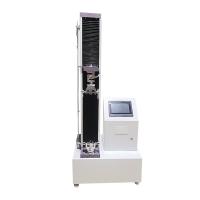
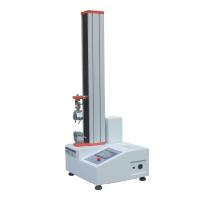
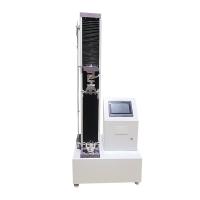
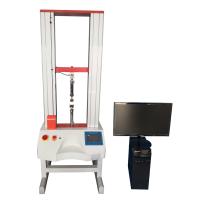
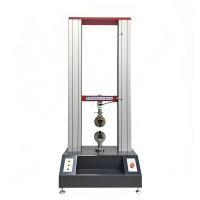
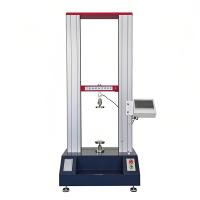
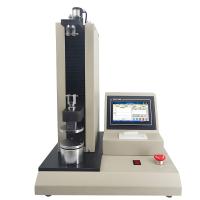
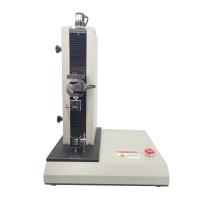
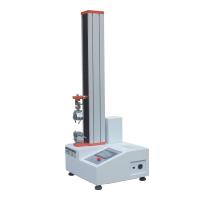
1. Desktop testing machine - compact and lightweight, using integrated servo motor and ball screw transmission, compact structure and easy installation, no special foundation, stable desktop can meet the operating needs. The force value range is usually 0.1N~50kN, the accuracy level can reach 0.5 and above, the displacement control accuracy is high, and the low-speed loading of 0.001mm/min can be realized, which can accurately capture the subtle mechanical response of lightweight materials, and the operating noise is low, the vibration is small, the test stability is strong, and it is suitable for the core requirements of light load precision testing.
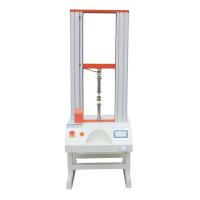
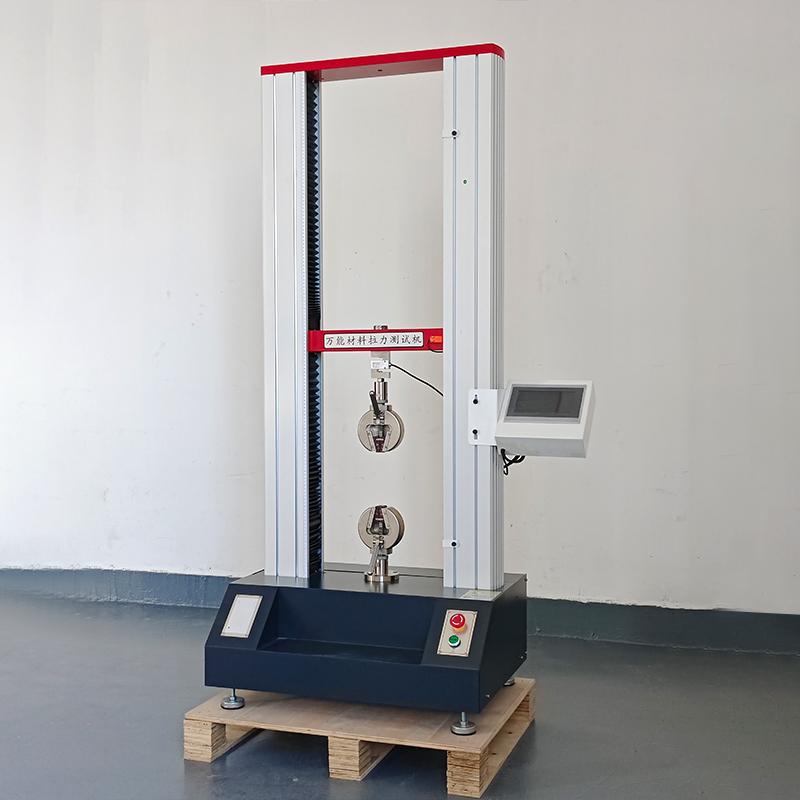
2. Floor-mounted testing machine - in order to carry a larger load, it adopts a split structure design, the body is bulky and needs to fix the foundation, and the transmission parts are driven by high-power servo motors or hydraulic systems, and the transmission parts are stronger. The force value range is generally above 50kN, up to thousands of kN, and the accuracy level is mostly 0.5~1 level, and the displacement control accuracy is comparable to that of the desktop type, but the force stability is better in the long-term load holding test of large loads. Affected by the weight of the structure and the loading mode, the operating vibration is slightly greater than that of the desktop type, and the interference needs to be offset by foundation reinforcement to ensure that the accuracy under the heavy load test meets the standard.
Application scenario segmentation
The differentiation of application scenarios is based on load requirements and space conditions, and the accuracy characteristics and structural advantages further strengthen the adaptability, covering multi-industry test scenarios, and the scene description corresponds to the equipment performance one by one.
1. Benchtop testing machine - focusing on light load and high-precision testing scenarios, widely used in electronic components, medical devices, packaging materials, textile fibers, plastic films and other fields. In laboratories, quality inspection rooms and other environments with limited space, its small size can save site resources, and high precision can accurately complete light load tests such as stretching, peeling, and bending of materials, meeting the standard requirements of GB/T 1040 plastic stretching and YY/T 0148 medical tape peeling, especially suitable for scientific research and development, small-batch quality inspection and other scenarios that require high precision and convenience.
2. Floor-mounted testing machine - mainly for medium and heavy-duty testing needs, mainly used in metal processing, building materials, auto parts, aerospace and other industries. For heavy-duty materials such as steel, aluminum alloy, concrete test blocks, and large structural parts, its ultra-large load output capacity can complete destructive testing and strength verification, and it is suitable for GB/T 228 metal tensile and GB/T 50081 concrete mechanical property test and other standards. In scenarios with sufficient space such as factory workshops and large laboratories, floor-mounted equipment can reduce vibration through foundation fixation, which is suitable for mass production quality inspection, heavy material research and development and other scenarios.
Scientific selection principle
The selection should be based on actual testing needs, avoid the misunderstanding of "heavy parameters, light adaptation", ensure that the equipment performance is highly consistent with the scenario, cost, and standards, and take into account the practical feasibility.
Prioritize matching load and accuracy requirements
Testing lightweight and precision materials, and focusing on R&D or small-batch quality inspection, priority is given to desktop testing machines, whose high precision and convenience can reduce the cost of use; It is necessary to test heavy-duty materials, or carry out large-scale medium and heavy-duty tests, and the load advantage and stability of the floor-mounted testing machine are more in line with the needs, and at the same time, it is necessary to confirm whether the accuracy level meets the standard according to the requirements of load holding time and deformation.
Adapt to the use environment and installation conditions
The desktop type is suitable for a clean and stable laboratory environment, without the need for additional modification of the site, and is more flexible when moving or adjusting the layout; The floor-to-ceiling type needs to plan the installation space in advance, do a good job of foundation reinforcement, and be equipped with dust-proof and temperature control devices in complex scenarios such as workshops to avoid environmental factors affecting the test accuracy.
Balance industry standards and costs
It is necessary to strictly check the corresponding industry test standards to confirm whether the equipment load and accuracy meet the requirements; At the same time, considering the whole life cycle cost, the initial procurement and maintenance cost of the desktop type is low, and the initial installation and later maintenance cost of the floor-to-ceiling type is higher due to the complex structure, so it needs to be reasonably selected based on the frequency of testing and budget.
In summary, the accuracy difference and scene adaptation of desktop and floor-mounted testing machines revolve around structural design and load requirements, the former adapts to light load precision testing with high precision and convenience, and the latter supports heavy load testing with large load and strong stability. The key to selection is to make the equipment performance highly match the actual testing needs, environmental conditions, and industry standards, so as to give full play to the value of the equipment, provide accurate and reliable mechanical data for material research and development, quality control, and ensure the scientific and rigorous testing work.