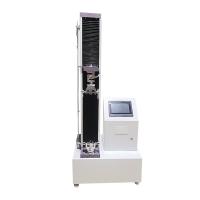
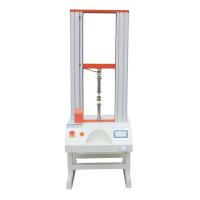
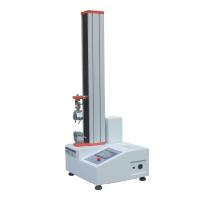
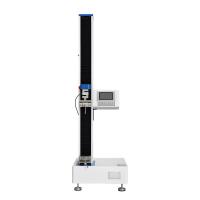
Tensile test is the core method of mechanical property testing of materials, and its data repeatability directly determines the reliability of test conclusions, product quality judgment and R&D data credibility. In the fields of metals, plastics, composites, rubber, etc., data fluctuations often stem from small deviations in the four major links of specimens, equipment, operation, and environment. This paper focuses on the four dimensions of "specimen standardization, equipment precision, operation standardization, and environmental controllability", and refines the key operational points that can be implemented to help laboratories steadily improve data repeatability.
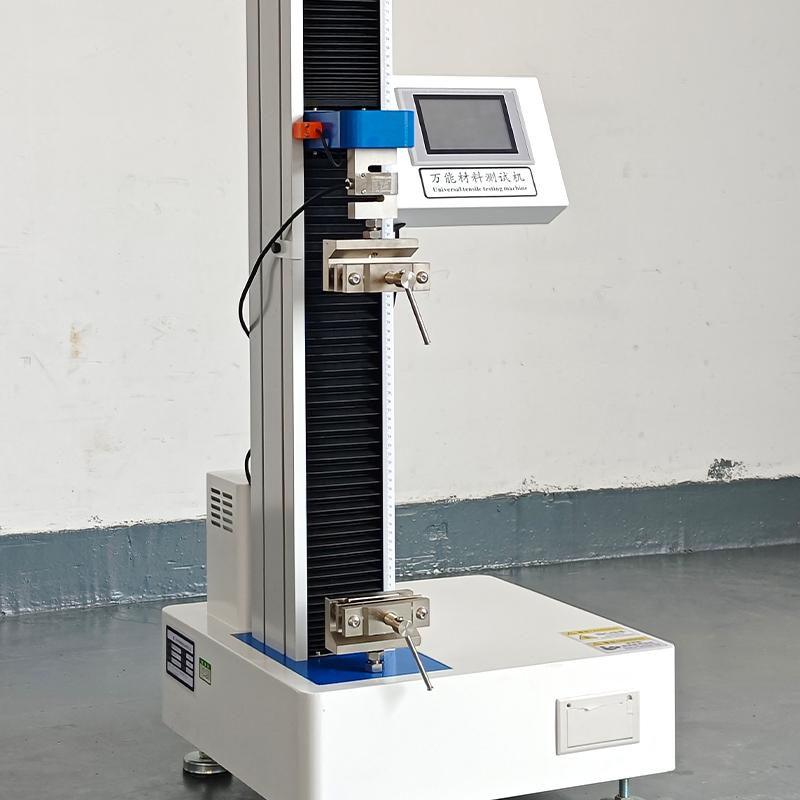
1. Sample preparation: eliminate discreteness from the source
The specimen is the carrier of data, and processing and state consistency are the basis for repeatability.
1. Strictly follow the standard processing
Specimens were prepared according to GB/T 228.1 (metal), GB/T 1040 (plastic) and other standards, and the dimensional tolerance of the parallel section was controlled ≤±0.02 mm, and the surface roughness Ra≤ was 1.6 μm to avoid stress concentration caused by burrs, knife marks and notches.
2. Unified sampling and state adjustment
the sampling direction, position and process of the same batch of specimens are consistent; Before the test, it was placed in a standard environment (23 °C±2 °C, 50 %RH± 10 %RH) for no less than 24 h to stabilize the material state.
3. Accurate dimensional measurement
Using a micrometer with an accuracy of 0.01 mm, 3 points are taken to measure the width and thickness in the gauge section, and the cross-sectional area is calculated by the average value to avoid the systematic error caused by single-point measurement.
2. Equipment status: ensure the accuracy of force and displacement
Equipment accuracy is the prerequisite for data stability, and must be calibrated, maintained and adapted.
Regular measurement and calibration - force sensors, displacement systems, and extensometers should be calibrated at least once a year, and high-frequency equipment should be calibrated every six months to ensure that the force accuracy meets the requirements of 0.5 level and above.
Fixture selection and maintenance - according to the material and shape of the specimen to select the adapted fixture, soft materials with anti-slip padding, hard materials with toothed fixtures; Keep the jaw surface clean and free of wear to prevent slippage or pinch of the specimen.
Alignment and preloading - ensure that the specimen axis coincides with the equipment stress axis during clamping to avoid additional bending moments caused by eccentricity; Before the test, apply 5%~10% of the expected force value preload to eliminate the gap and ensure that the force is stable.
3. Operation process: use standard actions to reduce human error
Unified operation SOP can significantly reduce data fluctuations caused by human factors.
Fixed loading rate
Priority is given to closed-loop control of strain rate, and the strain rate (such as 0.00025~0.0025 s⁻¹) is set according to the standard in the yield stage, and the rate is unified for the same material to avoid strength deviation caused by rate difference.
Standardize the use of extensometers
The extensometer is firmly clamped in the middle of the gauge distance to avoid the transition arc; Clear the calibration before the test, and remove it smoothly before fracture to prevent damage and ensure continuous strain data.
Unified data collection
Set the acquisition frequency ≥ 100 Hz to automatically capture key feature points such as yield and fracture; Each group of parallel specimens should not be less than 5, and the average value and discrete coefficient should be calculated after eliminating the outliers.
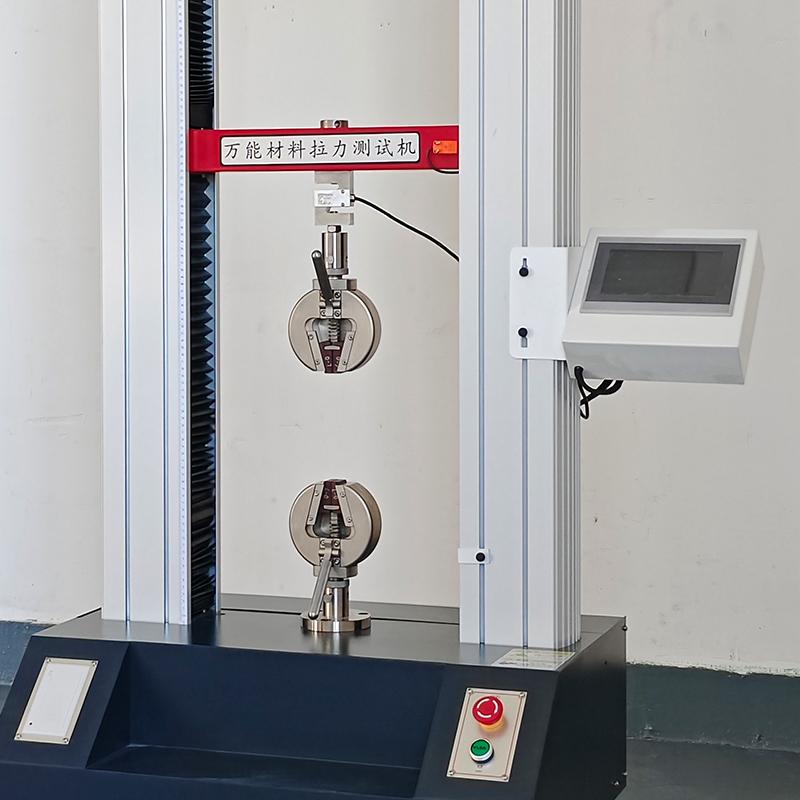
4. Environmental control: stabilize external conditions
The test is carried out in a constant temperature and humidity area, away from vibration sources and strong electromagnetic interference.
Record the temperature and humidity of each trial to ensure minimal environmental differences between groups.
Avoid direct sunlight and direct airflow blowing the specimen to prevent local temperature changes.
5. Summary
To improve the repeatability of tensile test data, the essence is to turn "all variables into constants". Through "specimen standardization, equipment precision, operation standardization, and environmental controllability", the data discrete coefficient can be controlled within a reasonable range to meet the high reliability requirements such as factory inspection, R&D verification, and arbitration testing. The laboratory should solidify the above points into SOPs, conduct regular training and review, form a stable and controllable testing system, and provide solid data support for material quality and product safety.