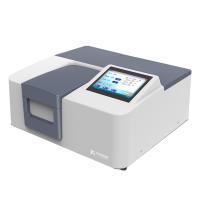
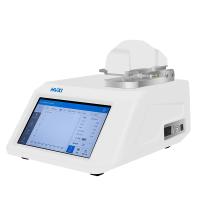
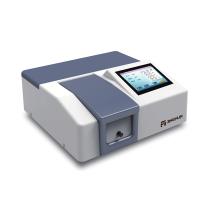
Because of its beauty and utility, glass offers endless possibilities as a central structural and design element of architecture. Architectural glass used as a building material can integrate indoor spaces with the outdoors, allowing creative use of natural light to illuminate indoor environments, stimulating imagination and creating elegant and beautiful buildings. In this article, we will learn more about the role of Spectrophotometer s in testing the quality of glass materials.
Controlling the color of architectural glass is very important to ensure the designer's creative and artistic intention and to better reduce the high cost of replacing colored panels in the structure. There are two ways to measure the color of glass: a simple transmission color measurement tells us the color of the glass as seen from the inside, and a reflectance measurement on the coated side tells us the color of the glass as seen from the outside. Reflected color results can help determine the thickness of AR and other coatings.
Glass offers a nearly limitless medium for creativity and can be manipulated into almost any form and/or color building material. The integrity and consistency of glass color cannot be overemphasized for its design and function importance, and requires continuous spectral monitoring throughout the production process to ensure product quality. Transparency, color and reflectance can all be measured using Spectrophotometer s, professional Technology has made this process simple and easy.
There are two methods of glass color measurement: by transmission measurement or reflectance values. When measuring glass products with functional or aesthetic coatings, transmission and reflection measurements work together for accurate color analysis. The transmittance value represents how the color is seen from the inside, and the reflectance value represents the perspective of the color seen from the outside.