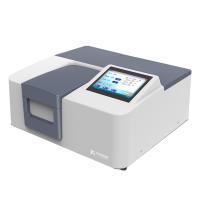
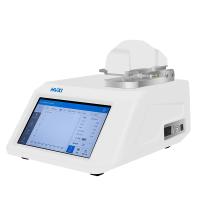
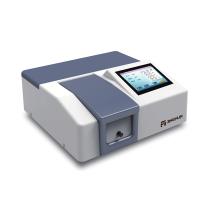
A gray scale was recently added to the list of color indices for Spectrophotometer s. Gray scale is one of the important tools for assessing color shades and stains, and is widely used by the automotive industry to measure the fading of fabrics in automotive interiors. It is based on ISO and AATCC specifications.
Typically, grayscale evaluation is performed by comparing a dyed or weathered fabric sample to a set of sample bricks in different shades of gray. The gray scale is 1-5, increasing by half (1, 2, 2, 2, 2-3, 3, 3-4, 4, 4-5 and 5), of which 5 is very good. Usually grade 4 is acceptable, some clients accept grade 3-4.
Use the unweathered fabric as a standard and turn on "Grayscale" in the instrument. GreyScale is at the very end of the installed Index list, under the Option header. The instrument needs to be set to differential mode. When measured as a standard, the grayscale display on the instrument is 0 (zero). If you measure the same piece of cloth again without weathering, it will show a gray scale of 5. This indicates that no fading has occurred. However, after various weathering times in a sunny environment (Arizona or Florida) or in a weathering cabinet, the fabric should be inspected using a xenon lamp and the grayscale measured again against a stored unweathered standard. Fabric fade needs to show a grade better than a 3-4 or 4 gray scale to pass. These standards are company-specific.
Another test that is often run with the gray index is the stain test. The wet and dry part of the dry cotton fabric is rubbed 10 times with a force of 1 kg on a piece of dyed fabric. The gray scale difference between the original undyed white cloth and the dry erase cloth should not be less than 4. The gray scale of the wet cloth (dry again before measuring) should be no greater than 3-4 relative to the cotton cloth measurement. Raw white cotton fabric.
Using a Spectrophotometer takes away a lot of the guesswork when determining the difference in grayscale between two samples. Most fabrics in cars are not shades of gray, and evaluating a blue or beige color change using a gray standard requires a skilled inspector. Grayscale's instrumental calculations bring subjectivity and experience to the fore. Untrained operators and trained inspectors should achieve the same results.