Color and appearance measurements in the beverage industry are used to ensure that the overall product appearance is the same from batch to batch. In markets, few consumers are allowed to taste food before buying. However, they can often view products. They base their judgments primarily on overall appearance, including color.

Add color to your consumers:
In this digital age, consumers are more empowered than ever as they are given the knowledge to buy a product with a click or a swipe, proving the restaurant industry's ongoing demand for products made with it. increase. Attractive visual properties such as color and haze without compromising high quality. The food and beverage industry has been hit hard by similar "green initiatives", influencing consumers to choose naturally colored products over artificially bright and unnaturally colored products, which has created a need to test the quality of food. The color consistency of the beverage throughout various stages of the process (e.g. production and storage), as changes in ingredients can change the basic color of the beverage,
Various optical properties and their measurement methods:
The complexity of successfully measuring color and appearance in the beverage industry is further compounded by the fact that beverages are either opaque, translucent or transparent, and each form requires different instruments and techniques. Opaque liquids have a high solids content and have a high Brix value when light passes through them, while translucent liquids have medium levels of solids and have a low Brix value when light passes through them. Therefore, it cannot be overemphasized that it is important for food processors to evaluate the correct measurement mode, such as reflectance or transmittance, before measuring color at any stage of processing. This significantly increases the need to use a Spectrophotometer to measure spectral data values as well as to measure transmitted haze.
Color retention through various food processing processes:
Food and beverages are highly volatile as they tend to change color during production, transport and even storage. The cost and labor of adjusting the color of food or beverages at the final stages of production is very high, so color consistency needs to be measured at every stage of production.
Additionally, food and beverage regulators have emphasized the importance of maintaining industry-specific product color standards through well-crafted regulations. This makes the measurement of color and haze maintaining high color quality a top priority for producers and making them more focused on protecting their license to operate.
Therefore, this makes the use of Spectrophotometer s undeniable in importance as it addresses both the challenge of meeting regulations and the ability to measure color and haze at any stage of the production process.
Rugged housing for HunterLab Spectrophotometer (Vista) for color and haze measurement:
HunterLab's Vista stands out in the market because it offers a variety of color measurement options.
Its dual capability of simultaneously measuring color and haze of a product makes it a viable option for accurate and reliable measurements in the food and beverage industry. HunterLab can measure the inherent batch-to-batch color and turbidity of different beverages (or the absence of turbidity for clear beverages).
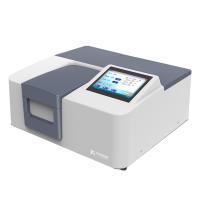
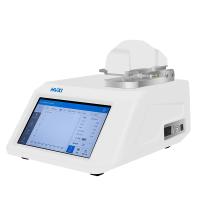
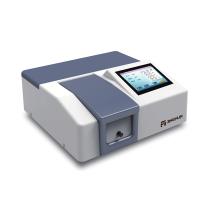
The Vista is a sleek new age measuring instrument with a digital touchscreen display for viewing instant results. It can connect to a computer via a network, an Ethernet cable, or a wireless access point, and it also has additional connectivity features for printers, keyboards, and mice. It is also manufactured to comply with all regulatory requirements for the food and beverage industry.
Vista has its own embedded color management software built on Smart OS Technology called EasyMatch Essentials. Essentials comes preloaded with most scales and indices, including Pt-Co/Hazen/APHA, Gardner Colour, four pharmacopoeial standards (US, EU, and Japan), haze, opacity, Y total transmittance, CIE spectral data wait. It also has various data views such as color data, color view, spectral data and spectrogram.
Vista offers electronic calibration, a spill-resistant sample compartment and a smaller footprint for increased accuracy, longevity and flexibility
All in all, Vista is set to be a pioneer in meeting the measurement needs of the food and beverage industry, and HunterLab has built a reputation as a veteran in this field over the past 65 years.