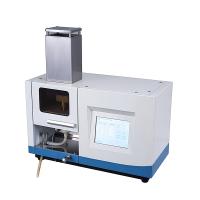
Measuring the color of liquids can be an important part of creating aesthetically pleasing products and ensuring the correct formulation. From beverages to beauty products, from pharmaceuticals to petrochemicals, spectrophotometric colorimetry plays an important role in quality control that cannot be overemphasized.
However, the spectrophotometric analysis of liquids is also important for measuring the color of certain powder or crystalline materials that are not ultimately liquid. This is due to the fact that particle surfaces can present unique challenges to color measurement due to optical reflection and refraction, compromising the Spectrophotometer 's ability to detect small color differences. Dissolving or heating powder and crystalline materials removes this optical noise, allowing for more accurate color measurements.
But while converting the material to liquid form can correct the color measurement difficulties posed by particles, working with hot liquids can present new challenges. Therefore, the importance of using the correct instrument, accessories and measurement method to ensure the accuracy of color measurement and obtain meaningful data cannot be overemphasized.

Precautions for Measuring Hot Liquids
Hot liquids can present many challenges to accurate color measurement, including:
Accessory Suitability: High heat can alter the structure of some accessories, including cuvettes and lids, resulting in discoloration or damage. Additionally, accessories need to be easy to handle and suitable for volatile liquids.
Temperature Stability: To ensure the integrity and stability of the fluid, the temperature needs to remain constant. Temperature instability can cause unwanted material or color changes in your sample, affecting your ability to obtain accurate color measurements. As mentioned above, the temperature needs to be compatible with your accessory. Failure to generate precise and stable temperatures can lead to inadvertent damage to even robust materials.
Instrument damage: Just as hot liquids can damage accessories, they can damage the Spectrophotometer itself. In particular, heat can damage sensors, so care needs to be taken to avoid this potentially expensive effect.
Overcoming these challenges depends on choosing the right tools and methods to measure hot liquid samples.
Choose the right instrument, accessories and method
The first step in making accurate color measurements is to select a technically specialized Spectrophotometer designed for transmission color measurements. However, accurate measurements can only be ensured if the proper tools and measurement methods are used. Therefore, the importance of choosing an instrument that is compatible with high-quality accessories dedicated to hot liquid samples cannot be overstated and helps to implement the correct method. For accurate measurements, consider the following factors:
Vial design: Vials need to be made of high-quality materials that are not affected by high temperatures or sample volatility. Borosilicate glass is extremely durable and can be heated to around 400°C, "which is higher than any application needs." It is extremely durable and ideal for measuring hot and volatile liquid samples. In addition, it also has great light transmission, longevity and durability. Easy to clean using a variety of methods. It is also important to consider the shape and size of the vial. Look for round vials that are easy to grasp with tweezers or gloves, and make sure the vial is the right size for your sample, Spectrophotometer , and heating mantle. Screw caps designed to avoid contact with the heating jacket and compatible with a range of liners as well as various cleaning procedures are also important for safety and color measurement accuracy. HunterLab recommends the use of ISO compliant vials. ISO 8362-4:2011 specifies the shape, size and capacity of glass vials for parenteral preparations. It also specifies the materials from which such containers are made and the performance requirements for the containers. By default, ISO-compliant vials are manufactured to tighter specifications and tolerances, and they are more consistent in size than non-ISO-compliant vials.
Heating Mantle and Temperature Controller: Temperatures up to 100°C can be achieved using a Water Bath, while temperatures above 300°C usually depend on the use of a hot air stove. However, if the sample is to be heated from 100°C to approximately 250°C, a heating mantle is recommended. The importance of combining a heating mantle with a temperature controller designed to automatically and reliably generate the desired temperature cannot be overemphasized to ensure proper sample preparation and stability. Without a temperature controller, it is possible to overheat or overheat the sample, resulting in inaccurate measurements. It is helpful to choose a heating mantle that can heat multiple samples.
Where to heat: No matter how the sample is heated, it should always be heated inside the vial and outside the Spectrophotometer to prevent damage to its sensor.
A good Spectrophotometer manufacturer will provide a complete range of accessories for hot liquid color measurement to ensure that you can easily measure liquefied powders and crystalline samples. The HunterLab Vista, for example, is designed to simultaneously measure color and haze in liquid samples with the highest level of accuracy and is designed for compatibility with hot liquid samples and National's professional hot liquid sample accessories. HunterLab's vials for Vista are designed to ISO vial specifications, which means that they are in turn guaranteed to fit correctly in our vial holders. Additionally, Vista comes with EasyMatch Essentials, a customizable software package that gives you greater product and process insight through flexible data collection, display and storage.