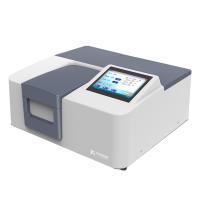
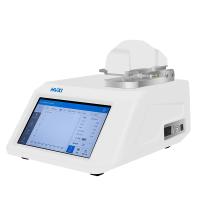
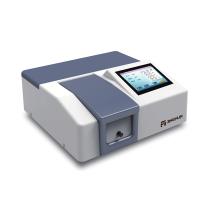
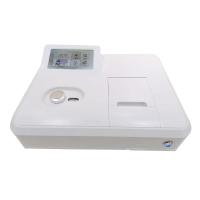
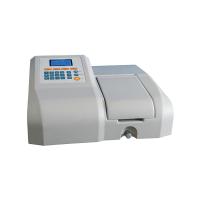
The chemical mixture absorbs, transmits and reflects light in specific wavelength ranges. Spectrophotometers measure the amount of absorption and transport of chemicals. It is widely used in quantitative analysis in many fields such as biochemistry, industrial application, physics, chemistry, etc.

application
In biochemistry, Spectrophotometer s are used to determine reactions catalyzed by enzymes.
In clinical applications, it can be used to test blood or tissue for clinical diagnosis.
For agriculture and soil quality analysis. It includes qualitative analysis of phosphate and nitrogen in fertilizer products.
Proteins tend to absorb specific wavelengths of light. A Spectrophotometer measures the concentration of purified protein in solution.
A portable Spectrophotometer measures the absorbance of light intensity after it passes through a sample solution. Using this instrument, the amount of a chemical can be detected by evaluating the light intensity.
The type of Spectrophotometer is
UV-Vis Spectrophotometer: It uses light in the ultraviolet range (185 -400 nm) and visible range (400-700nm) of the electromagnetic radiation spectrum. It can be used to study biological macromolecules.
Infrared Spectrophotometer: It uses light in the infrared range (700-15000 nm) of the electromagnetic radiation spectrum. It can be used to study chemical substances.
In visible light spectrophotometry, the absorption or transmission of a particular substance is determined from the observed color. For example, a solution sample that absorbs light in all visible ranges will appear black. If all wavelengths are transmitted, meaning it absorbs nothing, the solution sample will appear white. If a solution sample absorbs red light near 700 nm, it will appear green because green is the complementary color of red. Visible Spectrophotometer s use prisms to reduce the wavelength range so that a given beam of light passes through a solution sample.
A Spectrophotometer is an instrument that measures the amount of light that a sample can absorb. The working principle is simple. The light beam passes through the sample, which measures the light intensity of the sample. It is used to measure color and monitor color accuracy throughout the production process. These devices are used by researchers and manufacturers worldwide for industrial and commercial purposes. It is used to measure color absorption in metals, fabrics, plastics, etc. It helps to ensure that the selected color remains consistent from its actual conception to the final product.