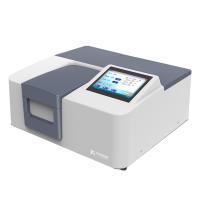
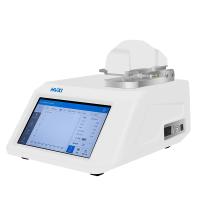
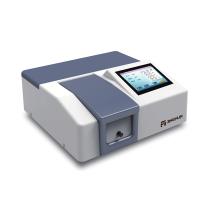
A chemical reaction between amino acids and reducing sugars (called the Maillard reaction) gives beer its distinct brown and amber color. Not only does color become important by influencing consumers' sensory expectations of how beer will taste, but monitoring color will also help in diagnosing any problems in beer production.
In order to maintain the same quality of beers and lagers, producing the same distinctive color throughout the production process, batches need to be regularly tested to meet standards. A popular and reliable route for brewers is to use a Spectrophotometer to test for consistency.

Spectrophotometers use discrete wavelengths of light to determine the concentration of certain components in a sample. The EBC (European Brewing Convention) states that a beer test works by detecting how much of the yellow spectrum absorbs at 430nm at a fixed path length of 10mm.
To take a reading, a sample of decarburized beer/wort is added to a glass cuvette, which is placed in a Spectrophotometer through which a beam of specific wavelength is passed and the amount of light absorbed/transmitted by the substance is measured. The more light absorbed, the more compounds are present in the sample. Beer samples need to be measured against a blank sample.