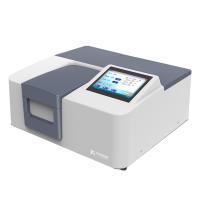
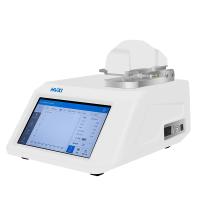
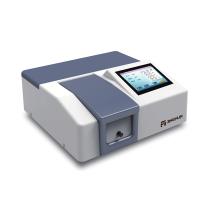
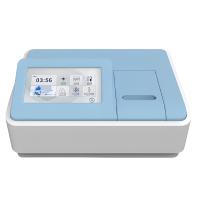
A Spectrophotometer , also known as a Spectrophotometer , is a scientific instrument that decomposes complex light into spectral lines. The Spectrophotometer uses spectrophotometry to measure the absorbance of the measured substance at a specific wavelength or within a certain wavelength range, and conduct qualitative and quantitative analysis of the substance. The basic principles of the different types of Spectrophotometer s are similar. They all use light sources that can generate multiple wavelengths, and form light sources with specific wavelengths through a series of spectroscopic devices. After the light source passes through the test sample, part of the light source is absorbed. Subsequently, by measuring the absorbance of the sample, it can be converted to the concentration of the sample after calculation.

According to different wavelengths and application fields, Spectrophotometer s can be divided into visible Spectrophotometer s, ultraviolet-visible Spectrophotometer s, infrared Spectrophotometer s, fluorescence Spectrophotometer s, and atomic absorption Spectrophotometer s.
Visible Spectrophotometer
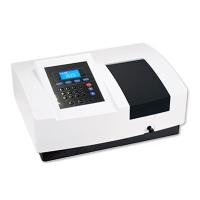
The measurement wavelength range of the visible Spectrophotometer is the visible light region of 400~1000nm. A visible Spectrophotometer is a single beam Spectrophotometer . It is an instrument used to measure the absorbance of the substance to be tested to visible light and perform qualitative and quantitative analysis on it. The instrument is widely used in medicine and health, clinical testing, environmental monitoring, food production and other fields.
UV-visible Spectrophotometer
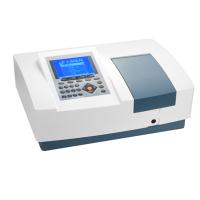
The measurement wavelength range of the UV-Vis Spectrophotometer is 200~1100nm in the ultraviolet region. The UV-Vis Spectrophotometer based on the principle of UV-Vis spectrophotometry is an analytical instrument that analyzes the absorption of radiation in the UV-Vis spectral region by material molecules. This instrument is used to measure the absorbance of the sample to visible light or ultraviolet light, and perform qualitative and quantitative analysis on it. The optical path of the product can be divided into single beam, pseudo double beam and double beam. The instrument is currently one of the most widely used analytical instruments with the widest coverage. It is widely used in many fields such as life science, material science, environmental science, agricultural science, chemistry and chemical engineering. The instrument is mainly composed of light source, monochromator, absorption pool, Detector and signal processor. The role of the light source is to provide a stable continuous spectrum of sufficient intensity. Hydrogen or deuterium lamps are usually used in the ultraviolet region; tungsten or halogen lamps are usually used in the visible region. The function of the monochromator is to decompose the composite light emitted by the light source, and separate the monochromatic light of the desired wavelength from it. Dispersive elements are prisms and gratings. The glass absorption cell is used for measuring in the visible region, and the quartz absorption cell is used for measuring in the ultraviolet region. The function of the Detector is to detect the intensity of the transmitted light through the photoelectric conversion element, and convert the optical signal into an electrical signal.
Infrared Spectrophotometer
Infrared Spectrophotometer exactly refers to the light emitted by the light source, which is divided into two beams of light with equal energy and symmetry. One is the sample light that passes through the sample, and the other is the reference light that serves as a reference. After the two beams of light enter the photometer through the sample chamber, they are modulated at a certain frequency by the fan mirror to form an alternating signal. The general infrared spectrum refers to the infrared spectrum greater than 760nm. This is a common spectral region for the study of organic compounds and thus can be used to analyze samples in various states (gases, liquids and solids). The spectrum has the characteristics of fast speed, small sample volume, strong characteristics, and no damage to the sample.
Fluorescence Spectrophotometer
A spectrofluorometer is an instrument used to scan the spectrum of fluorescence emitted by a liquid fluorescent marker. It can provide a variety of physical parameters including excitation spectrum, emission spectrum, fluorescence intensity, quantum yield, fluorescence lifetime, fluorescence polarization, etc., and can reflect the bonding and structure of molecules from various angles. The measurement of these parameters can not only do general quantitative analysis, but also infer the conformational changes of molecules in various environments, thus elucidating the relationship between molecular structure and function. The scanning range of the excitation wavelength of the fluorescence Spectrophotometer is generally 190~650nm, and the scanning range of the emission wavelength is 200~800nm. Therefore, the instrument can be used for spectral scanning of liquid and solid samples such as gel sticks. The instrument is widely used in scientific research, clinical testing, food testing, teaching experiments, chemical industry, medicine, biochemistry, environmental protection and many other fields.
Atomic Absorption Spectrophotometer
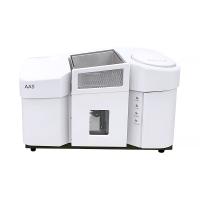
Atomic absorption Spectrophotometer is also called atomic absorption Spectrophotometer . The instrument analyzes metallic elements based on the effect of the atomic vapor in the ground state of matter on the absorption of characteristic radiation. The light source emits the characteristic spectral radiation to be measured, which is absorbed by the ground state atoms of the measured elements in the sample vapor after passing through the nebulizer. The content of the measured element can be obtained by measuring the size of the characteristic radiation absorbed. It provides sensitive and reliable determination of trace or trace elements and has therefore become a powerful tool in the analysis of major and trace metals (semi-metals) in the materials analysis and quality control departments.