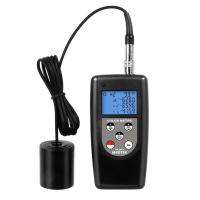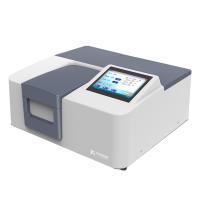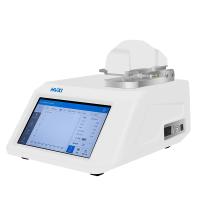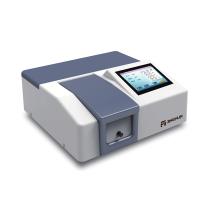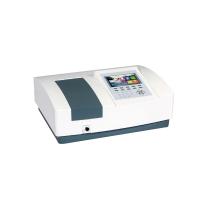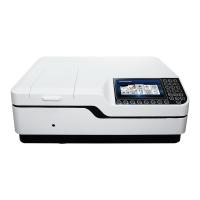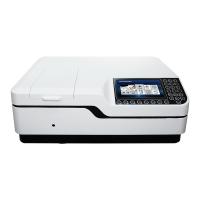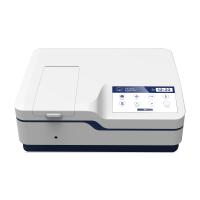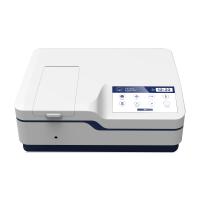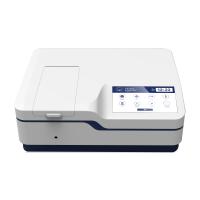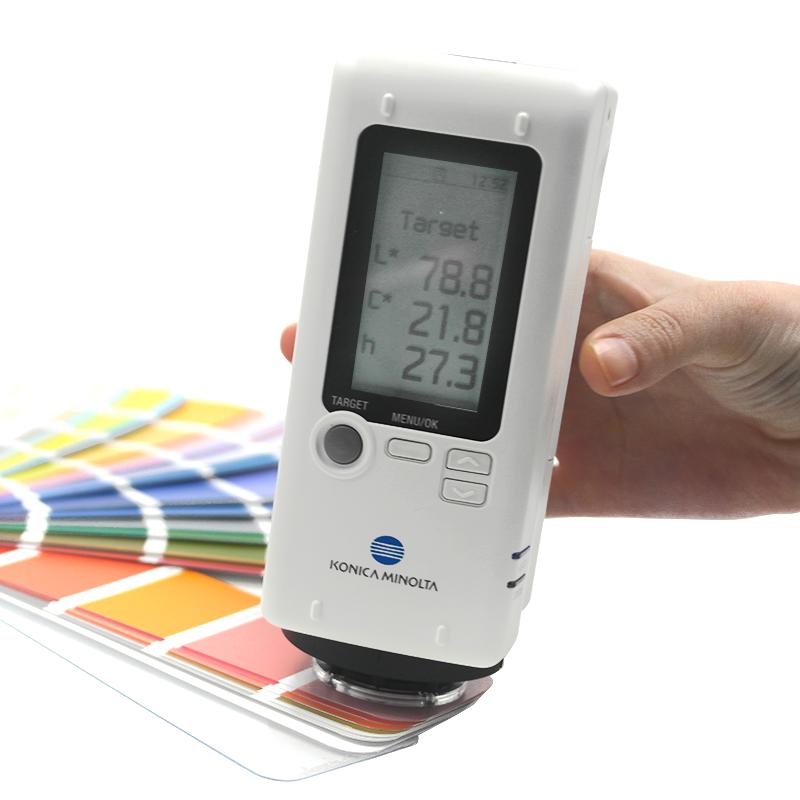
How do Colorimeters, Spectrophotometer s or spectroColorimeters measure color?
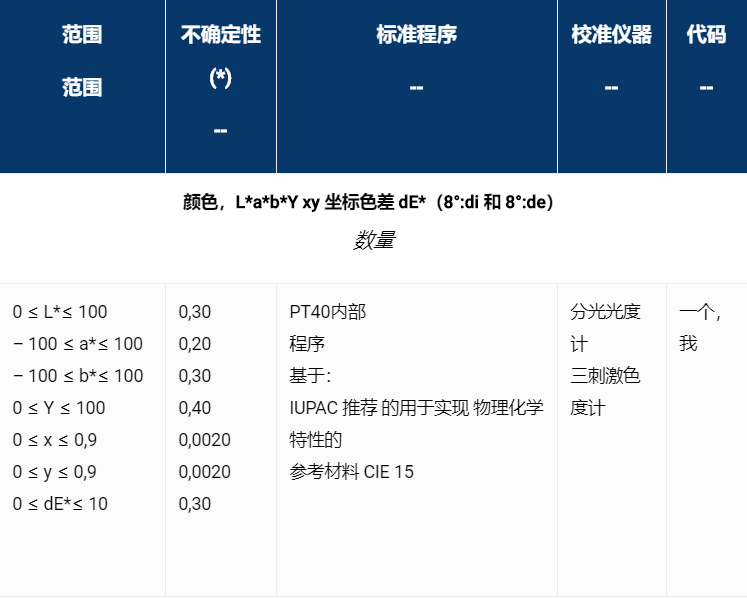
A common method of objectively measuring color is to take an L*a*b* coordinate measurement and calculate the color difference between the standard and sample, eg DE*. However, some industries, such as signage, use Yxy coordinates for color evaluation.
Color Measurement Conditions
Color is not an intrinsic property of the material, but a result of radiation (light/source) interacting with the object, detected by a Detector (observer) and taking into account the way the light interacts with the object (geometry).
Therefore, to measure color, one needs to know the measurement conditions, namely: geometry, light source and observer. Any change in the measurement conditions will result in a change in the color coordinates. Therefore, it is important for companies that want to calibrate their equipment to provide laboratories with the measurement conditions they typically use.
The following are some examples of measurement conditions:
geometry
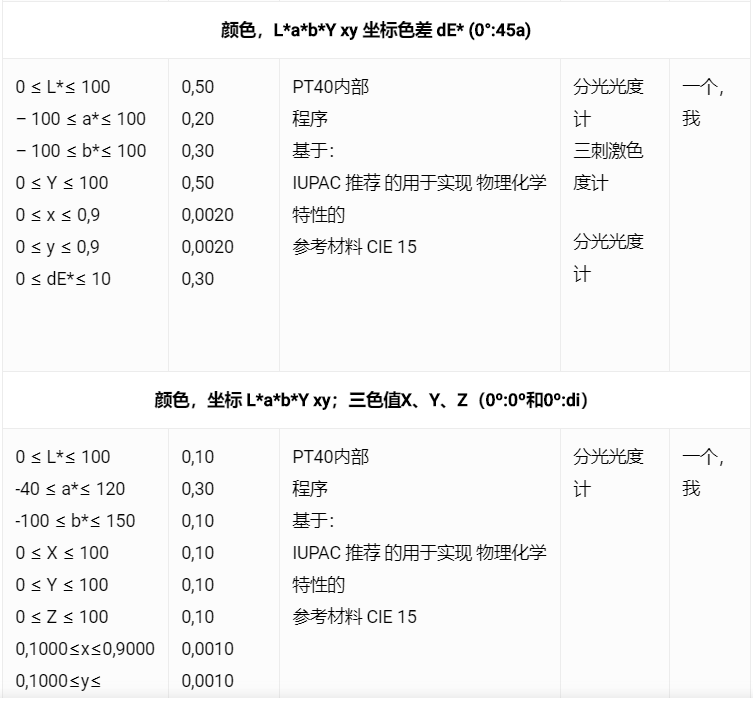
Geometry 45º:0º. With this geometry, the instrument will illuminate the sample from an angle of 45º and measure the reflected light at 0º; whereas if the instrument has a geometry of 0º:45º, it will illuminate the sample at 0º and detect the reflected light at 45º. This geometry is often used in the graphic arts field and the signage industry because it does not include brightness in color measurements.
Sphere geometry. The integrated illumination sphere system can perform measurements in Specular Included mode (SCI) and Specular Excluded mode (SCE). Spherical geometries are common in all fields.
Geometry 0º:0º. This form of measurement is used in devices that measure color by transmission and is used to measure liquids or translucent solids (glass, plastic, etc.). Eyco is an accredited laboratory in Spain that can calibrate devices of this geometry.
observer
Without an observer, color cannot be detected and therefore measured. The types of observers are standardized by the CIE: 2º and 10º. Each of them represents a different field of view. 10º observers are common, although it always depends on the type of company and department.
light source
A light source is the type of light that falls on the sample of which we want to measure color. The light source is the spectral distribution curve of the light source.
Common illuminants in Colorimeters and Spectrophotometer s are: D65, D50, A and C. Specifically, illuminants D65 and D50 correspond to daylight. The first is widely used in various fields, while the second is usually common in the field of graphic arts. As for light source A, it refers to artificial light, specifically, it simulates an incandescent light bulb.
In addition, there are other light sources that mimic fluorescent light sources, although their use is usually limited to very specific applications or certain test regulations that require it.
Technical scope for Spectrophotometer and Colorimeter calibration